
About This Book
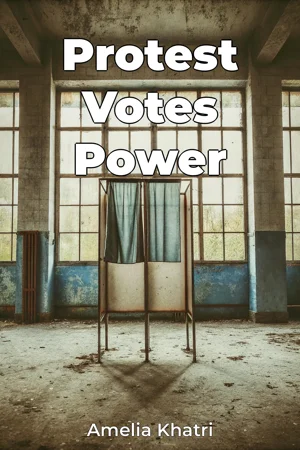
Have you ever felt your vote doesn't truly represent your views, leading you to consider alternatives beyond the mainstream candidates? "Protest Votes Power" delves into the often-overlooked realm of protest voting, exploring its historical significance, diverse motivations, and tangible impact on major political races. This book examines why voters choose to cast ballots for alternative candidates or engage in other forms of electoral dissent, and whether these actions exert a meaningful influence on political outcomes. This book addresses two fundamental and interconnected questions: What motivates voters to cast protest votes, and what impact do these votes have on the mainstream political landscape? These questions are vital because they speak to the heart of democratic representation and the responsiveness of political systems to the needs and desires of their citizens. Understanding the dynamics of protest voting can illuminate deeper issues of voter dissatisfaction, policy shortcomings, and the potential for political realignment. To provide context, we will journey through key moments in history where protest votes have played a pivotal role, examining instances such as the rise of third-party movements in the United States, the impact of protest votes on European parliamentary elections, and the role of spoiled ballots in highlighting specific grievances. This historical grounding is essential for understanding the recurring patterns and evolving forms of protest voting. "Protest Votes Power" argues that while protest votes may not always lead to immediate policy changes, they serve as crucial signals of discontent, forcing mainstream parties to address neglected issues and potentially paving the way for future political shifts. This argument is significant because it challenges conventional understandings of electoral success, highlighting the value of even seemingly "wasted" votes in shaping the political discourse. The book is structured in three parts. First, it introduces the theoretical frameworks for understanding protest voting, including rational choice theory, social psychology, and theories of political alienation. Second, it presents a series of case studies, analyzing specific elections where protest votes had a notable impact. And finally, it examines the broader implications of protest voting for democratic governance, considering both its potential benefits and its potential drawbacks. The analysis relies on a diverse range of evidence, including electoral data, public opinion surveys, content analysis of media coverage, and qualitative interviews with voters and political activists. A unique aspect of the research is its comparative approach, drawing on examples from different countries and political systems to identify common patterns and contextual variations. "Protest Votes Power" connects to several related disciplines, including political science, sociology, and communication studies. By drawing on insights from these fields, the book offers a comprehensive and multi-faceted understanding of protest voting. It also touches on areas as diverse as behavioral economics, when exploring voter motivations. The book distinguishes itself by taking a nuanced and evidence-based approach to a topic often characterized by speculation and anecdotal evidence. It moves beyond simple descriptions of protest votes, offering a rigorous analysis of their causes and consequences. The tone is scholarly but accessible, aiming to engage both academic readers and informed members of the public. The writing style is clear and concise, avoiding jargon and technical terms where possible. This book is primarily targeted toward students and scholars of political science, history, and sociology, as well as anyone with an interest in electoral politics and social movements. It is designed to be valuable to those seeking a deeper understanding of the forces shaping contemporary political landscapes. As a non-fiction book, we will use verifiable data and well-sourced historical reports to provide the most accurate depictions of protest votes. The book focuses primarily on protest voting within established electoral systems, acknowledging that other forms of political protest, such as demonstrations and civil disobedience, are also important but lie outside the scope of this particular study. The information presented can be used by political parties to better understand and respond to voter concerns, by activists to strategize more effective campaigns, and by citizens to make more informed decisions about how to exercise their right to vote. One of the central debates addressed in the book is whether protest voting is an effective means of political expression or simply a futile gesture. The book explores the arguments on both sides of this issue, offering a balanced assessment of the potential benefits and limitations of protest voting.
Have you ever felt your vote doesn't truly represent your views, leading you to consider alternatives beyond the mainstream candidates? "Protest Votes Power" delves into the often-overlooked realm of protest voting, exploring its historical significance, diverse motivations, and tangible impact on major political races. This book examines why voters choose to cast ballots for alternative candidates or engage in other forms of electoral dissent, and whether these actions exert a meaningful influence on political outcomes. This book addresses two fundamental and interconnected questions: What motivates voters to cast protest votes, and what impact do these votes have on the mainstream political landscape? These questions are vital because they speak to the heart of democratic representation and the responsiveness of political systems to the needs and desires of their citizens. Understanding the dynamics of protest voting can illuminate deeper issues of voter dissatisfaction, policy shortcomings, and the potential for political realignment. To provide context, we will journey through key moments in history where protest votes have played a pivotal role, examining instances such as the rise of third-party movements in the United States, the impact of protest votes on European parliamentary elections, and the role of spoiled ballots in highlighting specific grievances. This historical grounding is essential for understanding the recurring patterns and evolving forms of protest voting. "Protest Votes Power" argues that while protest votes may not always lead to immediate policy changes, they serve as crucial signals of discontent, forcing mainstream parties to address neglected issues and potentially paving the way for future political shifts. This argument is significant because it challenges conventional understandings of electoral success, highlighting the value of even seemingly "wasted" votes in shaping the political discourse. The book is structured in three parts. First, it introduces the theoretical frameworks for understanding protest voting, including rational choice theory, social psychology, and theories of political alienation. Second, it presents a series of case studies, analyzing specific elections where protest votes had a notable impact. And finally, it examines the broader implications of protest voting for democratic governance, considering both its potential benefits and its potential drawbacks. The analysis relies on a diverse range of evidence, including electoral data, public opinion surveys, content analysis of media coverage, and qualitative interviews with voters and political activists. A unique aspect of the research is its comparative approach, drawing on examples from different countries and political systems to identify common patterns and contextual variations. "Protest Votes Power" connects to several related disciplines, including political science, sociology, and communication studies. By drawing on insights from these fields, the book offers a comprehensive and multi-faceted understanding of protest voting. It also touches on areas as diverse as behavioral economics, when exploring voter motivations. The book distinguishes itself by taking a nuanced and evidence-based approach to a topic often characterized by speculation and anecdotal evidence. It moves beyond simple descriptions of protest votes, offering a rigorous analysis of their causes and consequences. The tone is scholarly but accessible, aiming to engage both academic readers and informed members of the public. The writing style is clear and concise, avoiding jargon and technical terms where possible. This book is primarily targeted toward students and scholars of political science, history, and sociology, as well as anyone with an interest in electoral politics and social movements. It is designed to be valuable to those seeking a deeper understanding of the forces shaping contemporary political landscapes. As a non-fiction book, we will use verifiable data and well-sourced historical reports to provide the most accurate depictions of protest votes. The book focuses primarily on protest voting within established electoral systems, acknowledging that other forms of political protest, such as demonstrations and civil disobedience, are also important but lie outside the scope of this particular study. The information presented can be used by political parties to better understand and respond to voter concerns, by activists to strategize more effective campaigns, and by citizens to make more informed decisions about how to exercise their right to vote. One of the central debates addressed in the book is whether protest voting is an effective means of political expression or simply a futile gesture. The book explores the arguments on both sides of this issue, offering a balanced assessment of the potential benefits and limitations of protest voting.
"Protest Votes Power" examines the phenomenon of protest voting, exploring why voters choose to support alternative candidates or engage in electoral dissent. It delves into the motivations behind these choices, such as voter dissatisfaction and feelings of inadequate representation, and investigates the impact of protest votes on mainstream political races. Did you know that protest votes can actually force mainstream parties to address neglected issues? The book argues that these votes, though sometimes seen as wasted, act as crucial signals of discontent. The book provides historical context by examining key moments where protest votes played a significant role, including the rise of third-party movements and the impact of spoiled ballots. Structured in three parts, it begins with theoretical frameworks, moves into case studies analyzing specific elections, and concludes by examining the broader implications for democratic governance. By drawing on electoral data, surveys, and interviews, this book offers a nuanced, evidence-based understanding of protest voting's causes and consequences, highlighting its unique value in shaping political discourse and potential for political realignment.
Book Details
ISBN
9788233964078
Publisher
Publifye AS
Your Licenses
You don't own any licenses for this book
Purchase a license below to unlock this book and download the EPUB.
Purchase License
Select a tier to unlock this book
Need bulk licensing?
Contact us for enterprise agreements.