
About This Book
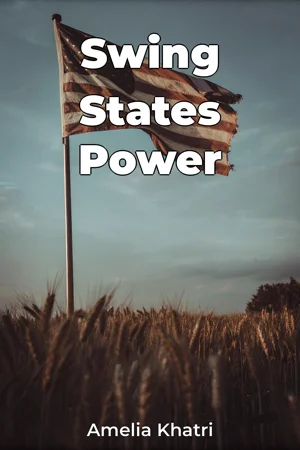
Have you ever wondered why presidential candidates spend so much time and money campaigning in a select few states? This book, *Swing States Power*, provides a comprehensive investigation into the crucial role these states play in determining the outcome of U.S. presidential elections and shaping the trajectory of national politics. We explore not just the "what" of swing states, but the "why" and "how," revealing the intricate dynamics that make them the ultimate battlegrounds of American democracy. This book delves into three core aspects of swing state power. First, we present a detailed historical analysis of how specific states have transitioned into and out of swing state status, examining the demographic shifts, economic changes, and political realignments that underpin these transformations. Second, we scrutinize the voting patterns and political preferences within these states, uncovering the key demographic groups and issues that influence voter behavior. Finally, we analyze the strategic importance of swing states in presidential campaigns, exposing the resource allocation, messaging tactics, and get-out-the-vote efforts employed by candidates and parties. Understanding swing states requires a grasp of American political history, electoral processes, and demographic trends. We provide this background, offering a clear explanation of the Electoral College system, the evolution of party platforms, and the impact of social movements on voting behavior. The book’s central argument is that swing states, due to their unique characteristics and the intense focus they receive, wield disproportionate influence over national policy and political discourse. This influence often overshadows the needs and priorities of other states, creating both opportunities and challenges for American democracy. The book is structured to guide the reader through a logical progression of ideas. We begin by defining swing states and outlining their historical evolution. We then dedicate chapters to analyzing specific swing states, examining their demographic compositions, economic landscapes, and political cultures. This includes explorations of states like Ohio, Pennsylvania, Florida, and Wisconsin, among others. Subsequently, we dissect the campaign strategies employed in swing states, focusing on the use of polling data, advertising techniques, and grassroots mobilization. The book culminates by considering the implications of swing state dominance for national policy, electoral fairness, and the future of American democracy. Our analysis relies on a range of evidence, including historical election data, public opinion polls, demographic statistics, campaign finance reports, and case studies of past presidential elections. We also draw from interviews with political strategists, campaign managers, and voters in swing states, providing firsthand accounts of the political dynamics at play. This book connects to various disciplines, including political science, history, sociology, and communications. Understanding the power of swing states requires insights into electoral behavior, demographic trends, social stratification, and the impact of media messaging. This book takes a data-driven and analytical approach, presenting evidence-based arguments in a clear and accessible style. While grounded in academic rigor, the writing is designed to be engaging and informative for a broad audience interested in American politics. The primary target audience includes students of political science and history, journalists, political professionals, and engaged citizens who seek a deeper understanding of the American electoral system. This book fills a gap by providing a focused and in-depth analysis of swing states, moving beyond superficial observations to uncover the underlying dynamics that drive their influence. The book's scope is limited to U.S. presidential elections and focuses primarily on states that have consistently exhibited swing state characteristics in recent election cycles. It does not delve into state-level politics or local elections in detail. The information in this book can be applied to better understand current election cycles, evaluate campaign strategies, and participate more effectively in the political process. One of the ongoing debates in the field concerns the fairness of the Electoral College system and whether it gives disproportionate power to swing states, potentially marginalizing the voices of voters in other states. This book contributes to that discussion by providing a comprehensive analysis of the dynamics at play.
Have you ever wondered why presidential candidates spend so much time and money campaigning in a select few states? This book, *Swing States Power*, provides a comprehensive investigation into the crucial role these states play in determining the outcome of U.S. presidential elections and shaping the trajectory of national politics. We explore not just the "what" of swing states, but the "why" and "how," revealing the intricate dynamics that make them the ultimate battlegrounds of American democracy. This book delves into three core aspects of swing state power. First, we present a detailed historical analysis of how specific states have transitioned into and out of swing state status, examining the demographic shifts, economic changes, and political realignments that underpin these transformations. Second, we scrutinize the voting patterns and political preferences within these states, uncovering the key demographic groups and issues that influence voter behavior. Finally, we analyze the strategic importance of swing states in presidential campaigns, exposing the resource allocation, messaging tactics, and get-out-the-vote efforts employed by candidates and parties. Understanding swing states requires a grasp of American political history, electoral processes, and demographic trends. We provide this background, offering a clear explanation of the Electoral College system, the evolution of party platforms, and the impact of social movements on voting behavior. The book’s central argument is that swing states, due to their unique characteristics and the intense focus they receive, wield disproportionate influence over national policy and political discourse. This influence often overshadows the needs and priorities of other states, creating both opportunities and challenges for American democracy. The book is structured to guide the reader through a logical progression of ideas. We begin by defining swing states and outlining their historical evolution. We then dedicate chapters to analyzing specific swing states, examining their demographic compositions, economic landscapes, and political cultures. This includes explorations of states like Ohio, Pennsylvania, Florida, and Wisconsin, among others. Subsequently, we dissect the campaign strategies employed in swing states, focusing on the use of polling data, advertising techniques, and grassroots mobilization. The book culminates by considering the implications of swing state dominance for national policy, electoral fairness, and the future of American democracy. Our analysis relies on a range of evidence, including historical election data, public opinion polls, demographic statistics, campaign finance reports, and case studies of past presidential elections. We also draw from interviews with political strategists, campaign managers, and voters in swing states, providing firsthand accounts of the political dynamics at play. This book connects to various disciplines, including political science, history, sociology, and communications. Understanding the power of swing states requires insights into electoral behavior, demographic trends, social stratification, and the impact of media messaging. This book takes a data-driven and analytical approach, presenting evidence-based arguments in a clear and accessible style. While grounded in academic rigor, the writing is designed to be engaging and informative for a broad audience interested in American politics. The primary target audience includes students of political science and history, journalists, political professionals, and engaged citizens who seek a deeper understanding of the American electoral system. This book fills a gap by providing a focused and in-depth analysis of swing states, moving beyond superficial observations to uncover the underlying dynamics that drive their influence. The book's scope is limited to U.S. presidential elections and focuses primarily on states that have consistently exhibited swing state characteristics in recent election cycles. It does not delve into state-level politics or local elections in detail. The information in this book can be applied to better understand current election cycles, evaluate campaign strategies, and participate more effectively in the political process. One of the ongoing debates in the field concerns the fairness of the Electoral College system and whether it gives disproportionate power to swing states, potentially marginalizing the voices of voters in other states. This book contributes to that discussion by providing a comprehensive analysis of the dynamics at play.
*Swing States Power* examines the pivotal role these states play in U.S. presidential elections and their impact on national policy. This book explores the evolution of swing states, highlighting how demographic shifts and economic changes influence their political alignment. One intriguing aspect is how the intense focus on these states can overshadow the needs of others, creating both opportunities and challenges for American democracy. The book analyzes voting patterns within swing states, uncovering key demographic groups influencing voter behavior. It also dissects campaign strategies, such as resource allocation and messaging tactics, employed by candidates. Through historical election data, public opinion polls, and interviews, the book guides readers through a logical progression, defining swing states, analyzing specific examples like Ohio and Florida, and considering the implications for electoral fairness.
Book Details
ISBN
9788233963880
Publisher
Publifye AS
Your Licenses
You don't own any licenses for this book
Purchase a license below to unlock this book and download the EPUB.
Purchase License
Select a tier to unlock this book
Need bulk licensing?
Contact us for enterprise agreements.