
About This Book
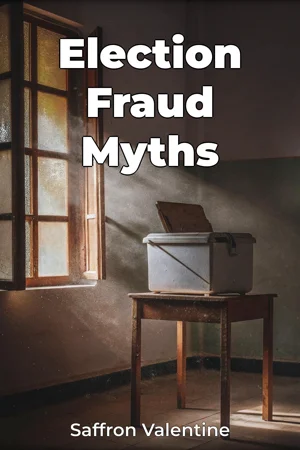
In an era defined by misinformation and heightened political tensions, how can voters and citizens discern fact from fiction regarding election integrity? "Election Fraud Myths" tackles this critical question head-on, providing a comprehensive, evidence-based examination of claims surrounding election fraud, voter suppression, and the security of voting systems in the United States. These topics are vitally important because confidence in democratic processes is the bedrock of a stable society, and unfounded allegations erode trust in institutions and can have serious consequences. The book provides context by exploring the history of voting rights in the U.S., highlighting past instances of both legitimate concerns and partisan manipulation. It does not assume prior expertise, clearly defining key terms like "voter fraud," "voter suppression," and different types of voting systems. Our central argument posits that while isolated incidents of voting irregularities can and do occur, systemic, widespread fraud capable of altering election outcomes is exceedingly rare. Furthermore, many policies framed as safeguards against fraud often disproportionately impact marginalized communities, effectively suppressing legitimate votes. This perspective is crucial because it challenges both extremes of the political spectrum, advocating for evidence-based reforms that protect both election integrity and voter access. The book begins by outlining the various types of election fraud – from individual voter impersonation to more complex schemes involving ballot manipulation – and introduces the different types of voting systems currently in use across the country. It then devotes chapters to debunking common myths surrounding voter fraud, carefully analyzing available data and scholarly research. We delve into the realities of voter suppression tactics, examining historical and contemporary examples of laws and practices that disproportionately disenfranchise minority voters, the poor, and other vulnerable populations. Subsequently, the book assesses the security of different voting technologies, exploring their vulnerabilities and potential safeguards against hacking and manipulation. The text culminates in proposing concrete, bipartisan recommendations for improving election security and access, such as modernizing voting equipment, expanding early voting options, and implementing automatic voter registration. The analysis relies heavily on data from academic studies, government reports, and nonpartisan election auditing organizations. Original data analysis of publicly available election records is also presented illustrating the very small incidence of demonstrable fraud. "Election Fraud Myths" connects to the fields of political science, sociology, and law. Political science provides the theoretical frameworks for understanding electoral behavior and political institutions. Sociology offers insights into the social and demographic factors that influence voter turnout and access. Legal scholarship informs the analysis of voting rights laws and their impact. This book differentiates itself by moving beyond partisan rhetoric to offer a dispassionate, data-driven assessment of election integrity concerns. It adopts a balanced and objective tone, avoiding inflammatory language and focusing on presenting facts and evidence in a clear and accessible manner. The target audience includes students, journalists, policymakers, and concerned citizens who seek a deeper understanding of election integrity issues. It would be valuable to anyone seeking to move beyond partisan talking points and engage in informed discussions about how to strengthen democracy. As a work of political science and current events, this book adheres to the genre's emphasis on evidence-based analysis, objectivity, and relevance to contemporary issues. The scope of the book is limited to the U.S. electoral system, with occasional references to international examples for comparative purposes. It does not delve into specific election contests beyond using them as illustrative examples, focusing instead on the broader systemic issues. The information in this book can be applied to real-world situations by informing policy debates, guiding election reform efforts, and empowering citizens to become more informed and engaged voters. This book directly confronts the ongoing debates surrounding election security and voter access, offering a reasoned and evidence-based perspective that challenges partisan narratives and promotes a more nuanced understanding of complex issues.
In an era defined by misinformation and heightened political tensions, how can voters and citizens discern fact from fiction regarding election integrity? "Election Fraud Myths" tackles this critical question head-on, providing a comprehensive, evidence-based examination of claims surrounding election fraud, voter suppression, and the security of voting systems in the United States. These topics are vitally important because confidence in democratic processes is the bedrock of a stable society, and unfounded allegations erode trust in institutions and can have serious consequences. The book provides context by exploring the history of voting rights in the U.S., highlighting past instances of both legitimate concerns and partisan manipulation. It does not assume prior expertise, clearly defining key terms like "voter fraud," "voter suppression," and different types of voting systems. Our central argument posits that while isolated incidents of voting irregularities can and do occur, systemic, widespread fraud capable of altering election outcomes is exceedingly rare. Furthermore, many policies framed as safeguards against fraud often disproportionately impact marginalized communities, effectively suppressing legitimate votes. This perspective is crucial because it challenges both extremes of the political spectrum, advocating for evidence-based reforms that protect both election integrity and voter access. The book begins by outlining the various types of election fraud – from individual voter impersonation to more complex schemes involving ballot manipulation – and introduces the different types of voting systems currently in use across the country. It then devotes chapters to debunking common myths surrounding voter fraud, carefully analyzing available data and scholarly research. We delve into the realities of voter suppression tactics, examining historical and contemporary examples of laws and practices that disproportionately disenfranchise minority voters, the poor, and other vulnerable populations. Subsequently, the book assesses the security of different voting technologies, exploring their vulnerabilities and potential safeguards against hacking and manipulation. The text culminates in proposing concrete, bipartisan recommendations for improving election security and access, such as modernizing voting equipment, expanding early voting options, and implementing automatic voter registration. The analysis relies heavily on data from academic studies, government reports, and nonpartisan election auditing organizations. Original data analysis of publicly available election records is also presented illustrating the very small incidence of demonstrable fraud. "Election Fraud Myths" connects to the fields of political science, sociology, and law. Political science provides the theoretical frameworks for understanding electoral behavior and political institutions. Sociology offers insights into the social and demographic factors that influence voter turnout and access. Legal scholarship informs the analysis of voting rights laws and their impact. This book differentiates itself by moving beyond partisan rhetoric to offer a dispassionate, data-driven assessment of election integrity concerns. It adopts a balanced and objective tone, avoiding inflammatory language and focusing on presenting facts and evidence in a clear and accessible manner. The target audience includes students, journalists, policymakers, and concerned citizens who seek a deeper understanding of election integrity issues. It would be valuable to anyone seeking to move beyond partisan talking points and engage in informed discussions about how to strengthen democracy. As a work of political science and current events, this book adheres to the genre's emphasis on evidence-based analysis, objectivity, and relevance to contemporary issues. The scope of the book is limited to the U.S. electoral system, with occasional references to international examples for comparative purposes. It does not delve into specific election contests beyond using them as illustrative examples, focusing instead on the broader systemic issues. The information in this book can be applied to real-world situations by informing policy debates, guiding election reform efforts, and empowering citizens to become more informed and engaged voters. This book directly confronts the ongoing debates surrounding election security and voter access, offering a reasoned and evidence-based perspective that challenges partisan narratives and promotes a more nuanced understanding of complex issues.
In an era rife with misinformation, "Election Fraud Myths" addresses the crucial need to distinguish between fact and fiction concerning election integrity. This book explores claims of election fraud, voter suppression, and voting system security in the United States, emphasizing that confidence in democratic processes is essential for a stable society. While isolated voting irregularities do occur, the book argues that systemic, widespread fraud capable of altering election outcomes is exceedingly rare. Furthermore, many policies framed as fraud safeguards often disproportionately impact marginalized communities, suppressing legitimate votes. The book examines the history of voting rights, defines key terms, and analyzes data from academic studies, government reports, and election auditing organizations. It debunks common myths surrounding voter fraud, delving into the realities of voter suppression tactics and assessing the security of voting technologies. The book progresses by outlining various types of election fraud, then dedicating chapters to debunking common myths, examining voter suppression, and assessing voting technology security. It culminates with concrete, bipartisan recommendations for improving election security and access, such as modernizing voting equipment and expanding early voting options.
Book Details
ISBN
9788233963873
Publisher
Publifye AS
Your Licenses
You don't own any licenses for this book
Purchase a license below to unlock this book and download the EPUB.
Purchase License
Select a tier to unlock this book
Need bulk licensing?
Contact us for enterprise agreements.