
About This Book
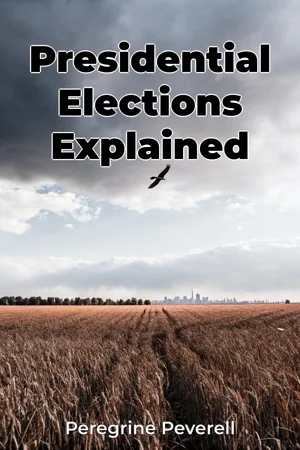
Ever wondered how a candidate goes from a relatively unknown figure to the leader of the free world? "Presidential Elections Explained" demystifies the complex process of American presidential elections, offering a comprehensive guide from the initial primaries to the final inauguration. This book bridges the gap between casual news consumption and a deeper understanding of the strategies, policies, and historical precedents that shape the highest office in the United States. We will delve into three key topics: the nomination process, campaign strategies, and the Electoral College. Understanding the nomination process, including primaries and caucuses, is crucial because it reveals the power dynamics within political parties and the influence of grassroots movements. Exploring campaign strategies – from fundraising and advertising to debates and voter mobilization – is essential for understanding how candidates craft their message and target specific demographics. Finally, a thorough examination of the Electoral College explains why the popular vote does not always determine the winner, and the ongoing debates surrounding its fairness and effectiveness. This book provides historical context by examining pivotal elections throughout American history, analyzing how campaign tactics and voter demographics have evolved. We will also provide the reader with a foundational knowledge of the U.S. Constitution's provisions regarding elections and the amendments that have expanded voting rights over time. “Presidential Elections Explained” argues that a nuanced understanding of the electoral process is vital for informed citizenship and effective participation in a democracy. By analyzing the underlying mechanisms and historical trends, readers will be equipped to critically evaluate candidates, policies, and the overall health of the American political system. The book is structured in five parts. First, we will introduce the basic framework of presidential elections. Second, we will deeply analyse the nomination process, detailing the role of primaries, caucuses, and national conventions. Third, we will explore campaign strategies, covering topics such as fundraising, media relations, polling, and debate performance. Fourth, we will discuss the Electoral College, its origins, and the various arguments for and against its continued use. Finally, we will look ahead to the future of presidential elections, considering the potential impact of changing demographics, campaign finance regulations, and technological advancements. Our analysis will draw upon a range of data sources, including voting records, campaign finance reports, public opinion surveys, and academic research. We will also incorporate case studies of past elections to illustrate key concepts and strategies. Unique data sources will include analyses of social media advertising during recent campaigns. Presidential elections are not solely confined to the realm of political science. This book identifies connections to fields such as communication studies (the art of persuasion), sociology (the study of voting behavior and demographics), and economics (the impact of economic policies on election outcomes). By looking at these interdisciplinary connections, we can offer a richer, more complete picture of the electoral landscape. This book offers a balanced and non-partisan examination of the electoral process. We avoid partisan rhetoric and instead focus on providing a clear, objective analysis of the facts. Our approach incorporates insights from political science, history, and communication studies to provide a multi-faceted perspective. Written in a clear and accessible style, "Presidential Elections Explained" is intended for anyone interested in gaining a deeper understanding of American politics. This book will be valuable to students, journalists, activists, and engaged citizens who want to move beyond sound bites and develop a more informed perspective. As a work of non-fiction, this book is committed to accuracy, objectivity, and thorough research. We will provide detailed citations and source materials to support our arguments. The scope of this book is limited to presidential elections in the United States. We do not explore elections in other countries or focus on state and local elections. Understanding the election process enables citizens to make informed decisions, participate in meaningful political discourse, and hold elected officials accountable. The principles and strategies discussed in the book can be applied to local elections and political advocacy. The book will also touch upon ongoing debates surrounding campaign finance reform, voter ID laws, and gerrymandering, offering a balanced overview of the different perspectives and arguments. The book explores controversies surrounding the Electoral College and its potential reform, including popular vote versus electoral vote discrepancies and the implications for democratic representation.
Ever wondered how a candidate goes from a relatively unknown figure to the leader of the free world? "Presidential Elections Explained" demystifies the complex process of American presidential elections, offering a comprehensive guide from the initial primaries to the final inauguration. This book bridges the gap between casual news consumption and a deeper understanding of the strategies, policies, and historical precedents that shape the highest office in the United States. We will delve into three key topics: the nomination process, campaign strategies, and the Electoral College. Understanding the nomination process, including primaries and caucuses, is crucial because it reveals the power dynamics within political parties and the influence of grassroots movements. Exploring campaign strategies – from fundraising and advertising to debates and voter mobilization – is essential for understanding how candidates craft their message and target specific demographics. Finally, a thorough examination of the Electoral College explains why the popular vote does not always determine the winner, and the ongoing debates surrounding its fairness and effectiveness. This book provides historical context by examining pivotal elections throughout American history, analyzing how campaign tactics and voter demographics have evolved. We will also provide the reader with a foundational knowledge of the U.S. Constitution's provisions regarding elections and the amendments that have expanded voting rights over time. “Presidential Elections Explained” argues that a nuanced understanding of the electoral process is vital for informed citizenship and effective participation in a democracy. By analyzing the underlying mechanisms and historical trends, readers will be equipped to critically evaluate candidates, policies, and the overall health of the American political system. The book is structured in five parts. First, we will introduce the basic framework of presidential elections. Second, we will deeply analyse the nomination process, detailing the role of primaries, caucuses, and national conventions. Third, we will explore campaign strategies, covering topics such as fundraising, media relations, polling, and debate performance. Fourth, we will discuss the Electoral College, its origins, and the various arguments for and against its continued use. Finally, we will look ahead to the future of presidential elections, considering the potential impact of changing demographics, campaign finance regulations, and technological advancements. Our analysis will draw upon a range of data sources, including voting records, campaign finance reports, public opinion surveys, and academic research. We will also incorporate case studies of past elections to illustrate key concepts and strategies. Unique data sources will include analyses of social media advertising during recent campaigns. Presidential elections are not solely confined to the realm of political science. This book identifies connections to fields such as communication studies (the art of persuasion), sociology (the study of voting behavior and demographics), and economics (the impact of economic policies on election outcomes). By looking at these interdisciplinary connections, we can offer a richer, more complete picture of the electoral landscape. This book offers a balanced and non-partisan examination of the electoral process. We avoid partisan rhetoric and instead focus on providing a clear, objective analysis of the facts. Our approach incorporates insights from political science, history, and communication studies to provide a multi-faceted perspective. Written in a clear and accessible style, "Presidential Elections Explained" is intended for anyone interested in gaining a deeper understanding of American politics. This book will be valuable to students, journalists, activists, and engaged citizens who want to move beyond sound bites and develop a more informed perspective. As a work of non-fiction, this book is committed to accuracy, objectivity, and thorough research. We will provide detailed citations and source materials to support our arguments. The scope of this book is limited to presidential elections in the United States. We do not explore elections in other countries or focus on state and local elections. Understanding the election process enables citizens to make informed decisions, participate in meaningful political discourse, and hold elected officials accountable. The principles and strategies discussed in the book can be applied to local elections and political advocacy. The book will also touch upon ongoing debates surrounding campaign finance reform, voter ID laws, and gerrymandering, offering a balanced overview of the different perspectives and arguments. The book explores controversies surrounding the Electoral College and its potential reform, including popular vote versus electoral vote discrepancies and the implications for democratic representation.
"Presidential Elections Explained" dives into the intricate world of American presidential elections, providing readers with a comprehensive understanding of the processes that lead to the selection of the U.S. president. The book unpacks key components like the nomination process, campaign strategies, and the Electoral College, revealing how each impacts the overall outcome. Readers will gain insights into the power dynamics within political parties and the influence of grassroots movements during primaries and caucuses. Also explored are the nuances of campaign strategies, including fundraising, advertising, and voter mobilization, vital for understanding how candidates craft their message and target specific demographics. The book examines the U.S. Constitution's role in elections and how amendments have expanded voting rights. It delves into pivotal elections throughout American history, analyzing how campaign tactics and voter demographics have evolved, and draws upon voting records, campaign finance reports, and public opinion surveys. Structured in five parts, the book progresses from the basic framework of presidential elections to an analysis of the nomination process, campaign strategies, and the Electoral College, before concluding with a look at the future of presidential elections. This approach offers a balanced, non-partisan examination of the electoral process suitable for students, journalists, activists, and engaged citizens.
Book Details
ISBN
9788233963835
Publisher
Publifye AS
Your Licenses
You don't own any licenses for this book
Purchase a license below to unlock this book and download the EPUB.
Purchase License
Select a tier to unlock this book
Need bulk licensing?
Contact us for enterprise agreements.