
About This Book
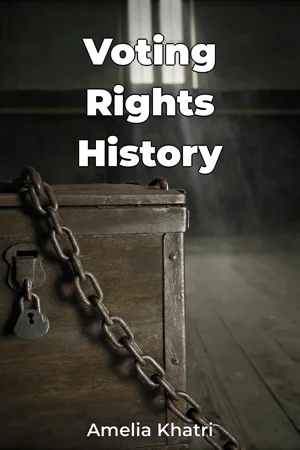
Why do some voices echo through the halls of power while others are silenced? This book, *Voting Rights History*, delves into the complex and often turbulent evolution of voting rights, from their nascent forms in ancient Greece to the ongoing struggles for fair and equal access to elections in the modern era. We will examine the fundamental principles underpinning the right to vote, the historical battles fought to expand enfranchisement, and the contemporary challenges that threaten to undermine this cornerstone of democracy. Understanding this history is vital, as the right to vote remains a contested space globally, with systemic barriers continuing to marginalize significant portions of the population. This exploration of voting rights history will focus on three key themes: the philosophical justifications for suffrage, the mechanics of disenfranchisement, and the strategies employed to overcome barriers to participation. Examining these themes across different historical periods and geographical contexts reveals how the concept of "the citizen" has been continually redefined, often excluding specific groups based on factors like race, gender, class, and religion. The central argument of this book is that the expansion of voting rights has never been a linear progression; instead, it has been a cyclical process of advancement, followed by periods of retrenchment and suppression, demanding constant vigilance and advocacy to safeguard democratic principles. The book is structured chronologically and thematically. It begins by examining the origins of voting in ancient Greece and Rome, tracing the selective enfranchisement practices and the philosophical debates surrounding citizenship and political participation. It then moves to the rise of modern democracies, analyzing the gradual expansion of voting rights in Europe and North America, focusing on landmark events such as the American and French Revolutions, the Chartist movement in Britain, and the women's suffrage movement. A significant portion of the book is dedicated to the United States, scrutinizing the history of voting rights from the Founding Fathers' limited vision to the Civil War Amendments, the Jim Crow era, and the Voting Rights Act of 1965. It concludes by examining contemporary challenges to voting rights, including voter ID laws, gerrymandering, and the rise of disinformation campaigns. This book draws upon a range of primary and secondary sources, including historical documents, legal cases, statistical data, and personal narratives. It incorporates quantitative analysis of voter turnout and demographic data, alongside qualitative analysis of political rhetoric and social movements. The research also utilizes archival materials from voting rights organizations and government agencies. *Voting Rights History* connects to several other fields of study, including political science, legal history, sociology, and gender studies. By exploring the legal frameworks surrounding voting rights, the book engages with legal history. By analyzing the social movements that have fought for enfranchisement, it connects with sociology. By examining the impact of gender and race on voting patterns, it intersects with gender studies and critical race theory. This book offers a unique perspective by emphasizing the cyclical nature of voting rights struggles, challenging the notion of inevitable progress. It highlights the importance of understanding the historical context of contemporary debates, revealing how past patterns of disenfranchisement continue to shape present-day challenges. The tone of the book is academic, yet accessible, aiming to provide a comprehensive and nuanced analysis of voting rights history for a broad audience, including students, academics, policymakers, and engaged citizens. It will appeal to anyone interested in understanding the foundations of democracy and the ongoing fight for political equality. The book's scope is broad, covering a wide range of historical periods and geographical regions, but it focuses primarily on the United States due to the detailed historical record and ongoing debates surrounding voting rights in that country. While the book acknowledges the global dimensions of voting rights, it does not offer an exhaustive account of every country's experience. The information presented can be applied to contemporary political debates, informing discussions about election reform, voter access, and the role of government in ensuring fair and equal elections. The book also addresses ongoing controversies surrounding voter fraud, election security, and the impact of campaign finance on political participation. Ultimately, *Voting Rights History* aims to provide readers with a deeper understanding of the past, present, and future of voting rights, empowering them to become informed and engaged participants in the democratic process.
Why do some voices echo through the halls of power while others are silenced? This book, *Voting Rights History*, delves into the complex and often turbulent evolution of voting rights, from their nascent forms in ancient Greece to the ongoing struggles for fair and equal access to elections in the modern era. We will examine the fundamental principles underpinning the right to vote, the historical battles fought to expand enfranchisement, and the contemporary challenges that threaten to undermine this cornerstone of democracy. Understanding this history is vital, as the right to vote remains a contested space globally, with systemic barriers continuing to marginalize significant portions of the population. This exploration of voting rights history will focus on three key themes: the philosophical justifications for suffrage, the mechanics of disenfranchisement, and the strategies employed to overcome barriers to participation. Examining these themes across different historical periods and geographical contexts reveals how the concept of "the citizen" has been continually redefined, often excluding specific groups based on factors like race, gender, class, and religion. The central argument of this book is that the expansion of voting rights has never been a linear progression; instead, it has been a cyclical process of advancement, followed by periods of retrenchment and suppression, demanding constant vigilance and advocacy to safeguard democratic principles. The book is structured chronologically and thematically. It begins by examining the origins of voting in ancient Greece and Rome, tracing the selective enfranchisement practices and the philosophical debates surrounding citizenship and political participation. It then moves to the rise of modern democracies, analyzing the gradual expansion of voting rights in Europe and North America, focusing on landmark events such as the American and French Revolutions, the Chartist movement in Britain, and the women's suffrage movement. A significant portion of the book is dedicated to the United States, scrutinizing the history of voting rights from the Founding Fathers' limited vision to the Civil War Amendments, the Jim Crow era, and the Voting Rights Act of 1965. It concludes by examining contemporary challenges to voting rights, including voter ID laws, gerrymandering, and the rise of disinformation campaigns. This book draws upon a range of primary and secondary sources, including historical documents, legal cases, statistical data, and personal narratives. It incorporates quantitative analysis of voter turnout and demographic data, alongside qualitative analysis of political rhetoric and social movements. The research also utilizes archival materials from voting rights organizations and government agencies. *Voting Rights History* connects to several other fields of study, including political science, legal history, sociology, and gender studies. By exploring the legal frameworks surrounding voting rights, the book engages with legal history. By analyzing the social movements that have fought for enfranchisement, it connects with sociology. By examining the impact of gender and race on voting patterns, it intersects with gender studies and critical race theory. This book offers a unique perspective by emphasizing the cyclical nature of voting rights struggles, challenging the notion of inevitable progress. It highlights the importance of understanding the historical context of contemporary debates, revealing how past patterns of disenfranchisement continue to shape present-day challenges. The tone of the book is academic, yet accessible, aiming to provide a comprehensive and nuanced analysis of voting rights history for a broad audience, including students, academics, policymakers, and engaged citizens. It will appeal to anyone interested in understanding the foundations of democracy and the ongoing fight for political equality. The book's scope is broad, covering a wide range of historical periods and geographical regions, but it focuses primarily on the United States due to the detailed historical record and ongoing debates surrounding voting rights in that country. While the book acknowledges the global dimensions of voting rights, it does not offer an exhaustive account of every country's experience. The information presented can be applied to contemporary political debates, informing discussions about election reform, voter access, and the role of government in ensuring fair and equal elections. The book also addresses ongoing controversies surrounding voter fraud, election security, and the impact of campaign finance on political participation. Ultimately, *Voting Rights History* aims to provide readers with a deeper understanding of the past, present, and future of voting rights, empowering them to become informed and engaged participants in the democratic process.
"Voting Rights History" explores the long, complex journey of enfranchisement, from ancient roots to modern challenges. It examines the philosophical underpinnings of suffrage, the mechanisms used to deny voting rights, and the strategies employed to overcome barriers to participation. The book argues that expanding voting rights has not been a straight path; instead, it's a recurring cycle of progress followed by setbacks, demanding constant vigilance. One intriguing aspect is how the definition of "citizen" has been continuously redefined, often excluding groups based on race, gender or class. The book progresses chronologically and thematically, beginning with ancient Greece and Rome before moving to modern democracies, including significant focus on the United States. It scrutinizes historical events from the Founding Fathers' limited vision to the Civil War Amendments, the Jim Crow era, and the Voting Rights Act of 1965. A key strength lies in its cyclical perspective on voting rights struggles, challenging the idea of inevitable progress and highlighting the historical context of current debates like voter ID laws and gerrymandering.
Book Details
ISBN
9788233963828
Publisher
Publifye AS
Your Licenses
You don't own any licenses for this book
Purchase a license below to unlock this book and download the EPUB.
Purchase License
Select a tier to unlock this book
Need bulk licensing?
Contact us for enterprise agreements.