
About This Book
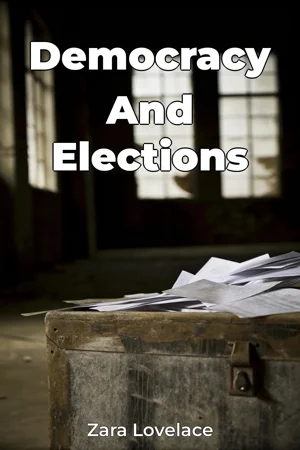
Are elections truly the cornerstone of democracy, or are they merely performative exercises masking deeper systemic flaws? “Democracy And Elections” delves into this critical question, offering a comprehensive examination of electoral processes and their intricate relationship with democratic governance. This book explores the multifaceted role of elections, the diverse voting systems employed worldwide, and the persistent challenges that undermine fair and equitable representation. The book's core focus revolves around three key areas: first, understanding the theoretical foundations of elections within democratic systems; second, analyzing the practical application of various voting mechanisms and their respective strengths and weaknesses; and third, scrutinizing the contemporary obstacles to achieving genuine representation, such as voter suppression, gerrymandering, and the influence of money in politics. These topics are vital because they directly impact the legitimacy and effectiveness of democratic institutions globally. A strong civic understanding of these issues is crucial to inform public discourse and policy formation. The book begins by establishing a historical context, tracing the evolution of electoral practices from ancient Greece to modern representative democracies. We examine pivotal moments in the history of suffrage, including the struggles for universal voting rights and the ongoing debates surrounding electoral reforms. No prior specialized knowledge is required to engage with this narrative; the foundational concepts are presented in a clear and accessible manner. "Democracy And Elections" argues that while elections are an indispensable component of democratic governance, they are not inherently sufficient to guarantee a truly representative and just society. The book contends that genuine democracy requires constant vigilance, active citizen participation, and a commitment to addressing the systemic inequalities that distort electoral outcomes. This argument is critical because it challenges simplistic assumptions about the nature of democracy and underscores the need for continuous efforts to strengthen its foundations. The book is structured in three parts. Part one introduces the core principles of democratic theory and electoral systems, including discussions of majoritarianism, proportional representation, and mixed-member electoral systems. Part two evaluates the practical implications of these different systems, examining their impact on voter turnout, party competition, and government stability, drawing upon case studies from diverse countries. Part three investigates the various challenges that impede the realization of fair representation, considering the effects of voter ID laws, campaign finance regulations, and the manipulation of electoral district boundaries. The conclusion synthesizes these arguments and proposes concrete steps for promoting more inclusive and equitable electoral processes. The arguments presented throughout the book are supported by a wide range of empirical evidence, including statistical analyses of election data, comparative studies of electoral reforms, and analyses of legal frameworks governing elections. The book also draws upon original research, including interviews with election officials, campaign strategists, and civil society activists. This book connects to several other fields of study, including political science, law, sociology, and economics. In political science, it contributes to debates about democratic theory and institutional design. In law, it informs discussions about voting rights and electoral regulation. In sociology, it sheds light on the social determinants of political participation. In economics, it explores the impact of economic inequality on electoral outcomes. "Democracy And Elections" adopts a balanced and analytical tone, presenting complex information in a clear and engaging manner. The book is intended for students of political science, policymakers, journalists, and anyone interested in gaining a deeper understanding of the challenges and opportunities facing democratic governance in the 21st century. It offers a comprehensive and up-to-date overview of the field, making it a valuable resource for both academic and general readers. The scope of the book is deliberately broad, covering a wide range of electoral systems and challenges to representation across different countries. However, it does not delve into the specific electoral laws and regulations of every individual nation. Instead, it focuses on identifying common patterns and general principles that apply across diverse contexts. The information presented in this book can be applied in various practical ways. It can inform the design of electoral reforms, guide the work of election monitoring organizations, and empower citizens to advocate for more inclusive and equitable political systems. Finally, the book engages with ongoing debates about the future of democracy, including discussions about the rise of populism, the spread of disinformation, and the potential for technological innovations to enhance or undermine electoral integrity.
Are elections truly the cornerstone of democracy, or are they merely performative exercises masking deeper systemic flaws? “Democracy And Elections” delves into this critical question, offering a comprehensive examination of electoral processes and their intricate relationship with democratic governance. This book explores the multifaceted role of elections, the diverse voting systems employed worldwide, and the persistent challenges that undermine fair and equitable representation. The book's core focus revolves around three key areas: first, understanding the theoretical foundations of elections within democratic systems; second, analyzing the practical application of various voting mechanisms and their respective strengths and weaknesses; and third, scrutinizing the contemporary obstacles to achieving genuine representation, such as voter suppression, gerrymandering, and the influence of money in politics. These topics are vital because they directly impact the legitimacy and effectiveness of democratic institutions globally. A strong civic understanding of these issues is crucial to inform public discourse and policy formation. The book begins by establishing a historical context, tracing the evolution of electoral practices from ancient Greece to modern representative democracies. We examine pivotal moments in the history of suffrage, including the struggles for universal voting rights and the ongoing debates surrounding electoral reforms. No prior specialized knowledge is required to engage with this narrative; the foundational concepts are presented in a clear and accessible manner. "Democracy And Elections" argues that while elections are an indispensable component of democratic governance, they are not inherently sufficient to guarantee a truly representative and just society. The book contends that genuine democracy requires constant vigilance, active citizen participation, and a commitment to addressing the systemic inequalities that distort electoral outcomes. This argument is critical because it challenges simplistic assumptions about the nature of democracy and underscores the need for continuous efforts to strengthen its foundations. The book is structured in three parts. Part one introduces the core principles of democratic theory and electoral systems, including discussions of majoritarianism, proportional representation, and mixed-member electoral systems. Part two evaluates the practical implications of these different systems, examining their impact on voter turnout, party competition, and government stability, drawing upon case studies from diverse countries. Part three investigates the various challenges that impede the realization of fair representation, considering the effects of voter ID laws, campaign finance regulations, and the manipulation of electoral district boundaries. The conclusion synthesizes these arguments and proposes concrete steps for promoting more inclusive and equitable electoral processes. The arguments presented throughout the book are supported by a wide range of empirical evidence, including statistical analyses of election data, comparative studies of electoral reforms, and analyses of legal frameworks governing elections. The book also draws upon original research, including interviews with election officials, campaign strategists, and civil society activists. This book connects to several other fields of study, including political science, law, sociology, and economics. In political science, it contributes to debates about democratic theory and institutional design. In law, it informs discussions about voting rights and electoral regulation. In sociology, it sheds light on the social determinants of political participation. In economics, it explores the impact of economic inequality on electoral outcomes. "Democracy And Elections" adopts a balanced and analytical tone, presenting complex information in a clear and engaging manner. The book is intended for students of political science, policymakers, journalists, and anyone interested in gaining a deeper understanding of the challenges and opportunities facing democratic governance in the 21st century. It offers a comprehensive and up-to-date overview of the field, making it a valuable resource for both academic and general readers. The scope of the book is deliberately broad, covering a wide range of electoral systems and challenges to representation across different countries. However, it does not delve into the specific electoral laws and regulations of every individual nation. Instead, it focuses on identifying common patterns and general principles that apply across diverse contexts. The information presented in this book can be applied in various practical ways. It can inform the design of electoral reforms, guide the work of election monitoring organizations, and empower citizens to advocate for more inclusive and equitable political systems. Finally, the book engages with ongoing debates about the future of democracy, including discussions about the rise of populism, the spread of disinformation, and the potential for technological innovations to enhance or undermine electoral integrity.
"Democracy And Elections" examines the critical link between elections and effective democratic governance, questioning whether elections truly represent the cornerstone of democracy or merely mask deeper systemic issues. The book explores various voting systems globally, highlighting both their strengths and weaknesses, while also scrutinizing modern challenges like voter suppression and the influence of money in politics. One intriguing fact is the historical evolution of suffrage, revealing the long struggles for universal voting rights and ongoing debates surrounding electoral reforms. The book argues that elections alone are insufficient for a truly representative society, emphasizing the need for constant vigilance, active citizen participation, and addressing systemic inequalities that distort electoral outcomes. It begins by establishing a historical context and then moves to core principles of democratic theory and electoral systems. Later chapters evaluate the practical implications of different systems and investigate challenges that impede fair representation, such as voter ID laws and gerrymandering. This approach provides readers with a comprehensive understanding of the complexities inherent in achieving genuine political representation.
Book Details
ISBN
9788233963811
Publisher
Publifye AS
Your Licenses
You don't own any licenses for this book
Purchase a license below to unlock this book and download the EPUB.
Purchase License
Select a tier to unlock this book
Need bulk licensing?
Contact us for enterprise agreements.