
About This Book
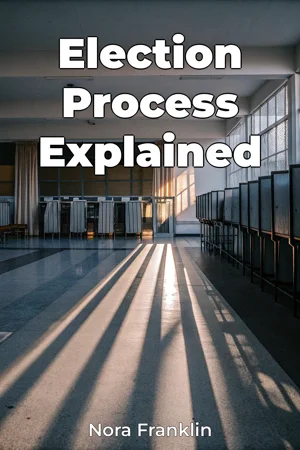
Have you ever wondered how a single vote translates into national policy? "Election Process Explained" demystifies the complex machinery of democratic elections, from the initial act of registering to vote to the final, often scrutinized counting of ballots. This book is crucial because understanding the electoral process is fundamental to informed citizenship and effective participation in a democracy. With trust in electoral outcomes increasingly challenged, a clear and comprehensive guide to the mechanisms that underpin these processes has never been more vital. This book delves into three core aspects of elections: voter access and registration, the mechanics of voting and vote tabulation, and the diverse electoral systems employed worldwide. Each of these topics is important. Voter access determines who can participate, the mechanics ensure integrity and accuracy, and the choice of electoral system profoundly shapes political representation and governance. The book provides essential context by tracing the historical evolution of voting rights, legal frameworks, and technological advancements that have shaped modern elections. Understanding key concepts such as gerrymandering, voter suppression, and campaign finance regulations is a prerequisite for truly grasping the nuances of contemporary elections. The central argument of "Election Process Explained" is that a well-functioning electoral system, characterized by accessibility, transparency, and fairness, is a cornerstone of democratic legitimacy. This book aims to empower readers with the knowledge to critically evaluate and advocate for electoral reforms that strengthen democratic institutions. The book begins by introducing fundamental concepts like electoral districts, polling places, and the role of election officials. It then delves into major areas: a) Voter Registration: Examining different registration models, their impact on voter turnout, and efforts to modernize registration processes. b) Voting Technologies and Security: Analyzing the strengths and weaknesses of various voting machines, cybersecurity risks, and measures to protect against manipulation. c) Electoral System Design: Comparing and contrasting different systems like proportional representation, first-past-the-post, and ranked-choice voting, with case studies from various countries. The analysis is supported by a range of evidence, including statistical data on voter turnout, election audits, legal cases involving voting rights, and expert interviews with election administrators and political scientists. The book utilizes comparative analysis of electoral systems across diverse political contexts. This book draws connections to several fields: Political Science (electoral behavior, democratic theory), Law (voting rights, election law), and Computer Science (election security, data analysis). By integrating these perspectives, "Election Process Explained" offers a holistic understanding of the challenges and opportunities facing electoral systems today. This book stands out by offering a comparative, global perspective on election processes, going beyond the typical focus on a single country. It synthesizes technical details with broader discussions of democratic principles and civic engagement. The book employs a clear, accessible writing style, avoiding jargon and technical terms whenever possible. Complex topics are explained through real-world examples and case studies. The target audience includes students of political science, journalism, and public policy, as well as engaged citizens, election administrators, and anyone interested in the workings of democracy. The book provides valuable insights for understanding current political debates and participating in electoral reform efforts. As a non-fiction book in the fields of Politics and Current Events, "Election Process Explained" adheres to the conventions of factual accuracy, objectivity, and source citation. The book's scope extends to a broad overview of electoral processes worldwide, but it does not delve into hyper-specific details of election laws in individual jurisdictions. Readers can apply this book’s insights to critically analyze election news, participate in voter registration drives, advocate for electoral reforms, and otherwise contribute to strengthening democratic institutions. The book addresses ongoing debates about voter ID laws, electronic voting, and campaign finance regulations, presenting different perspectives and analyzing the evidence on each side.
Have you ever wondered how a single vote translates into national policy? "Election Process Explained" demystifies the complex machinery of democratic elections, from the initial act of registering to vote to the final, often scrutinized counting of ballots. This book is crucial because understanding the electoral process is fundamental to informed citizenship and effective participation in a democracy. With trust in electoral outcomes increasingly challenged, a clear and comprehensive guide to the mechanisms that underpin these processes has never been more vital. This book delves into three core aspects of elections: voter access and registration, the mechanics of voting and vote tabulation, and the diverse electoral systems employed worldwide. Each of these topics is important. Voter access determines who can participate, the mechanics ensure integrity and accuracy, and the choice of electoral system profoundly shapes political representation and governance. The book provides essential context by tracing the historical evolution of voting rights, legal frameworks, and technological advancements that have shaped modern elections. Understanding key concepts such as gerrymandering, voter suppression, and campaign finance regulations is a prerequisite for truly grasping the nuances of contemporary elections. The central argument of "Election Process Explained" is that a well-functioning electoral system, characterized by accessibility, transparency, and fairness, is a cornerstone of democratic legitimacy. This book aims to empower readers with the knowledge to critically evaluate and advocate for electoral reforms that strengthen democratic institutions. The book begins by introducing fundamental concepts like electoral districts, polling places, and the role of election officials. It then delves into major areas: a) Voter Registration: Examining different registration models, their impact on voter turnout, and efforts to modernize registration processes. b) Voting Technologies and Security: Analyzing the strengths and weaknesses of various voting machines, cybersecurity risks, and measures to protect against manipulation. c) Electoral System Design: Comparing and contrasting different systems like proportional representation, first-past-the-post, and ranked-choice voting, with case studies from various countries. The analysis is supported by a range of evidence, including statistical data on voter turnout, election audits, legal cases involving voting rights, and expert interviews with election administrators and political scientists. The book utilizes comparative analysis of electoral systems across diverse political contexts. This book draws connections to several fields: Political Science (electoral behavior, democratic theory), Law (voting rights, election law), and Computer Science (election security, data analysis). By integrating these perspectives, "Election Process Explained" offers a holistic understanding of the challenges and opportunities facing electoral systems today. This book stands out by offering a comparative, global perspective on election processes, going beyond the typical focus on a single country. It synthesizes technical details with broader discussions of democratic principles and civic engagement. The book employs a clear, accessible writing style, avoiding jargon and technical terms whenever possible. Complex topics are explained through real-world examples and case studies. The target audience includes students of political science, journalism, and public policy, as well as engaged citizens, election administrators, and anyone interested in the workings of democracy. The book provides valuable insights for understanding current political debates and participating in electoral reform efforts. As a non-fiction book in the fields of Politics and Current Events, "Election Process Explained" adheres to the conventions of factual accuracy, objectivity, and source citation. The book's scope extends to a broad overview of electoral processes worldwide, but it does not delve into hyper-specific details of election laws in individual jurisdictions. Readers can apply this book’s insights to critically analyze election news, participate in voter registration drives, advocate for electoral reforms, and otherwise contribute to strengthening democratic institutions. The book addresses ongoing debates about voter ID laws, electronic voting, and campaign finance regulations, presenting different perspectives and analyzing the evidence on each side.
"Election Process Explained" offers a crucial guide to the often-complex mechanisms underpinning democratic elections, emphasizing the importance of informed citizenship in an era where electoral outcomes face increasing scrutiny. The book delves into voter access and registration, the mechanics of voting and vote tabulation, and the diverse electoral systems used globally. It provides essential context by tracing the historical evolution of voting rights, legal frameworks, and technological advancements that have shaped modern elections. Understanding concepts like gerrymandering and voter suppression is key to grasping the nuances of today's elections. The book argues that accessibility, transparency, and fairness are cornerstones of democratic legitimacy. It begins by introducing fundamental concepts, then moves into major areas such as voter registration models, voting technologies and security (addressing cybersecurity risks), and electoral system design, comparing systems like proportional representation and ranked-choice voting. A unique aspect of this book is its comparative, global perspective on election processes, going beyond a single-country focus. Employing a clear, accessible writing style, "Election Process Explained" avoids jargon and uses real-world examples to explain complex topics. This approach makes it valuable for students, journalists, engaged citizens, and anyone interested in understanding and participating in electoral reform efforts. By integrating perspectives from political science, law, and computer science, the book provides a holistic understanding of the challenges and opportunities facing electoral systems today.
Book Details
ISBN
9788233963804
Publisher
Publifye AS
Your Licenses
You don't own any licenses for this book
Purchase a license below to unlock this book and download the EPUB.
Purchase License
Select a tier to unlock this book
Need bulk licensing?
Contact us for enterprise agreements.