
About This Book
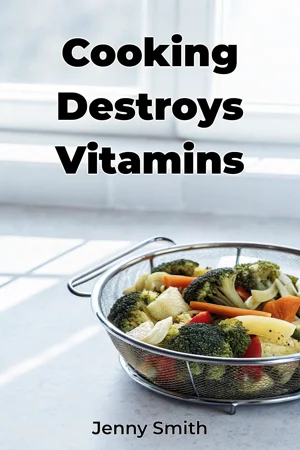
Did you know that the way you cook your food can significantly impact the nutrients you absorb? “Cooking Destroys Vitamins” delves into the often-overlooked aspect of food preparation: how different cooking methods affect the vitamin content of our meals. This book is essential for anyone seeking to maximize the nutritional benefits of their diet and understand the science behind nutrient retention. The core concepts explored in this book center around understanding the inherent instability of vitamins, the diverse effects of various cooking techniques on vitamin content, and practical strategies for preserving these vital micronutrients during meal preparation. These topics are of paramount importance because, while we often focus on what we eat, we frequently neglect how we prepare it, potentially negating the benefits of a healthy, balanced diet. Understanding these concepts allows individuals to take proactive steps towards improved health and well-being. Throughout history, cooking has been essential for food safety and palatability. However, only recently has scientific research illuminated the specific ways in which heat, light, and water interact with vitamins, leading to their degradation. A basic understanding of chemistry and nutrition will be helpful for readers, though the book explains necessary concepts in accessible language. The central argument of “Cooking Destroys Vitamins” is that informed cooking techniques are crucial for retaining the highest possible vitamin content in food, and that by understanding the science behind nutrient loss, individuals can make educated choices to optimize their dietary intake. This is more than just a cookbook; it is a guide to making the most of the nutrients available in the foods we consume. The book begins by introducing the essential vitamins and their roles in maintaining human health. It then systematically examines various cooking methods, including boiling, steaming, frying, grilling, microwaving, and pressure cooking, detailing the specific impact of each on different vitamins. Each cooking method is backed up with data, for instance, Vitamin C degradation with high heat and water submersion. Following this analysis, the book culminates in providing practical guidelines and actionable strategies for minimizing nutrient loss during cooking and meal preparation, such as choosing optimal cooking methods, reducing cooking times, and employing specific pre- and post-cooking techniques. The final section explores meal planning and recipes designed with nutrient retention in mind. The evidence presented within this book is drawn from a wide range of scientific studies, nutritional analyses, and experimental data. The book references data from peer-reviewed journals, government health organizations, and reputable nutritional databases. Unique data sources include comparative analyses of vitamin content in foods cooked using different methods, and practical test results conducted under controlled culinary conditions. “Cooking Destroys Vitamins” also connects to other fields such as food science, dietetics, and public health. By linking cooking practices to broader health outcomes, the book underscores the importance of informed food preparation in preventing nutrient deficiencies and promoting overall wellbeing. Furthermore, it draws on principles of chemistry to explain the molecular mechanisms behind vitamin degradation, providing a comprehensive understanding of the topic. Finally, it has connections with economics and food access, and how to maximize nutrition when on a constrained budget. What sets this book apart is its comprehensive focus on the intersection of cooking methods and vitamin retention, combined with practical, evidence-based recommendations that readers can immediately implement. The book adopts a conversational yet informative tone, making complex scientific information accessible and engaging for a broad audience. The intended audience for “Cooking Destroys Vitamins” is health-conscious individuals, home cooks, culinary professionals, and anyone interested in maximizing the nutritional value of their food. This book offers a valuable resource for those seeking to make informed dietary choices and optimize their health through mindful cooking practices. As a health and fitness book with a cooking component, it adheres to genre conventions by providing scientific information, practical advice, and actionable steps for readers to improve their cooking methods and reap the nutritional benefits. The scope of this book is limited to the impact of common cooking methods on vitamin content. While it touches on mineral retention, its primary focus remains on vitamins. It does not delve into the intricacies of specific dietary needs related to medical conditions, but it provides a solid foundation for understanding how cooking affects general vitamin intake. The information contained within “Cooking Destroys Vitamins” can be applied in everyday meal preparation. By following the book's guidelines, readers can reduce nutrient loss, improve the nutritional value of their meals, and ultimately enhance their overall health and well-being. While the importance of vitamin retention during cooking is widely recognized, debates exist regarding the optimal cooking methods for different types of food. This book addresses these controversies by providing a balanced perspective, presenting evidence from various sources, and offering practical recommendations based on the best available scientific data.
Did you know that the way you cook your food can significantly impact the nutrients you absorb? “Cooking Destroys Vitamins” delves into the often-overlooked aspect of food preparation: how different cooking methods affect the vitamin content of our meals. This book is essential for anyone seeking to maximize the nutritional benefits of their diet and understand the science behind nutrient retention. The core concepts explored in this book center around understanding the inherent instability of vitamins, the diverse effects of various cooking techniques on vitamin content, and practical strategies for preserving these vital micronutrients during meal preparation. These topics are of paramount importance because, while we often focus on what we eat, we frequently neglect how we prepare it, potentially negating the benefits of a healthy, balanced diet. Understanding these concepts allows individuals to take proactive steps towards improved health and well-being. Throughout history, cooking has been essential for food safety and palatability. However, only recently has scientific research illuminated the specific ways in which heat, light, and water interact with vitamins, leading to their degradation. A basic understanding of chemistry and nutrition will be helpful for readers, though the book explains necessary concepts in accessible language. The central argument of “Cooking Destroys Vitamins” is that informed cooking techniques are crucial for retaining the highest possible vitamin content in food, and that by understanding the science behind nutrient loss, individuals can make educated choices to optimize their dietary intake. This is more than just a cookbook; it is a guide to making the most of the nutrients available in the foods we consume. The book begins by introducing the essential vitamins and their roles in maintaining human health. It then systematically examines various cooking methods, including boiling, steaming, frying, grilling, microwaving, and pressure cooking, detailing the specific impact of each on different vitamins. Each cooking method is backed up with data, for instance, Vitamin C degradation with high heat and water submersion. Following this analysis, the book culminates in providing practical guidelines and actionable strategies for minimizing nutrient loss during cooking and meal preparation, such as choosing optimal cooking methods, reducing cooking times, and employing specific pre- and post-cooking techniques. The final section explores meal planning and recipes designed with nutrient retention in mind. The evidence presented within this book is drawn from a wide range of scientific studies, nutritional analyses, and experimental data. The book references data from peer-reviewed journals, government health organizations, and reputable nutritional databases. Unique data sources include comparative analyses of vitamin content in foods cooked using different methods, and practical test results conducted under controlled culinary conditions. “Cooking Destroys Vitamins” also connects to other fields such as food science, dietetics, and public health. By linking cooking practices to broader health outcomes, the book underscores the importance of informed food preparation in preventing nutrient deficiencies and promoting overall wellbeing. Furthermore, it draws on principles of chemistry to explain the molecular mechanisms behind vitamin degradation, providing a comprehensive understanding of the topic. Finally, it has connections with economics and food access, and how to maximize nutrition when on a constrained budget. What sets this book apart is its comprehensive focus on the intersection of cooking methods and vitamin retention, combined with practical, evidence-based recommendations that readers can immediately implement. The book adopts a conversational yet informative tone, making complex scientific information accessible and engaging for a broad audience. The intended audience for “Cooking Destroys Vitamins” is health-conscious individuals, home cooks, culinary professionals, and anyone interested in maximizing the nutritional value of their food. This book offers a valuable resource for those seeking to make informed dietary choices and optimize their health through mindful cooking practices. As a health and fitness book with a cooking component, it adheres to genre conventions by providing scientific information, practical advice, and actionable steps for readers to improve their cooking methods and reap the nutritional benefits. The scope of this book is limited to the impact of common cooking methods on vitamin content. While it touches on mineral retention, its primary focus remains on vitamins. It does not delve into the intricacies of specific dietary needs related to medical conditions, but it provides a solid foundation for understanding how cooking affects general vitamin intake. The information contained within “Cooking Destroys Vitamins” can be applied in everyday meal preparation. By following the book's guidelines, readers can reduce nutrient loss, improve the nutritional value of their meals, and ultimately enhance their overall health and well-being. While the importance of vitamin retention during cooking is widely recognized, debates exist regarding the optimal cooking methods for different types of food. This book addresses these controversies by providing a balanced perspective, presenting evidence from various sources, and offering practical recommendations based on the best available scientific data.
"Cooking Destroys Vitamins" explores the crucial link between cooking methods and vitamin retention, highlighting how different techniques impact the nutritional value of our food. The book reveals that heat, light, and water can significantly degrade vitamins, underscoring the importance of informed cooking practices. Readers will discover that steaming vegetables preserves more nutrients compared to boiling, and minimizing cooking times can prevent substantial vitamin loss. This guide empowers individuals to make educated choices in the kitchen to optimize their dietary intake. The book systematically examines various cooking methods like boiling, frying, and microwaving, detailing their specific effects on different vitamins. It offers practical guidelines, such as choosing optimal cooking methods and employing pre- and post-cooking techniques. The approach is conversational yet informative, making complex science accessible. The book progresses from introducing essential vitamins to analyzing cooking methods and providing actionable strategies for minimizing nutrient loss, culminating in meal planning and recipes focused on nutrient retention.
Book Details
ISBN
9788233963675
Publisher
Publifye AS
Your Licenses
You don't own any licenses for this book
Purchase a license below to unlock this book and download the EPUB.
Purchase License
Select a tier to unlock this book
Need bulk licensing?
Contact us for enterprise agreements.