
About This Book
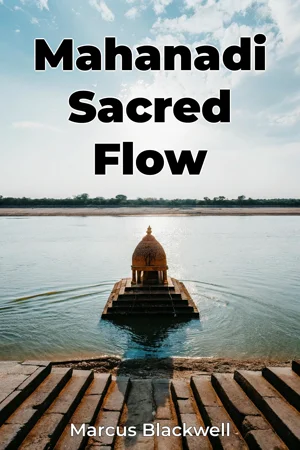
Have you ever considered the spiritual and cultural currents flowing beneath the surface of one of India's most significant rivers? "Mahanadi Sacred Flow" delves into the profound spiritual importance of the Mahanadi River, exploring its central role in Hindu traditions and its enduring association with numerous temples along its course. This book is vital because it reveals how a geographical feature becomes a living deity, shaping religious practices, cultural identities, and historical narratives across centuries. The book focuses on three key aspects: first, the river's mythological origins and its personification as a goddess; second, the intricate network of temples dedicated to Shiva, Vishnu, and local deities that thrive along its banks, each contributing to the river's sacred character; and third, the ongoing traditions and rituals performed by communities that consider the Mahanadi their lifeline and spiritual touchstone. Understanding these elements provides insight into the complex interplay between nature, religion, and culture in the Indian subcontinent. To fully appreciate the Mahanadi's significance, "Mahanadi Sacred Flow" provides the historical backdrop of the region, tracing the rise and fall of empires that prospered due to the river's bounty. It also examines the social structures that evolved around the river, from agricultural practices to pilgrimage routes. No prior knowledge is required; the book introduces relevant Hindu concepts and temple architecture. The central thesis of this book asserts that the Mahanadi River, far from simply being a geographical entity, is a powerful symbol of spiritual continuity and cultural identity in India. This argument challenges purely secular or environmental perspectives by demonstrating how deeply intertwined the physical river is with the spiritual lives of millions. This link emphasizes the importance of preserving this river's heritage. "Mahanadi Sacred Flow" begins by introducing the geographical and mythological context of the Mahanadi. It then develops its argument through three major sections. The first explores the river's divine attributes as a goddess, examining the stories and legends associated with her. The second analyzes the major temples along the river, detailing their histories, architectural styles, and the deities they house. The third investigates the contemporary rituals, festivals, and social practices that sustain the river's sacred status. The book culminates by considering modern challenges to the river's ecosystem and their implications for the spiritual and cultural traditions it supports. The evidence presented includes textual analysis of Hindu scriptures, detailed architectural surveys of temples, ethnographic studies of local communities, and historical records from various periods. The book incorporates unique data gathered from field visits to remote temple sites and interviews with priests, pilgrims, and local residents. This book connects to several disciplines, including religious studies, archaeology, cultural anthropology, and environmental studies. By integrating these perspectives, "Mahanadi Sacred Flow" provides a complete and nuanced understanding of the river's significance. It stands out by combining rigorous academic research with compelling storytelling, bringing the river's spiritual dimensions to life for the reader. The writing style is accessible and engaging, aiming to appeal to both academic scholars and general readers interested in Indian religion, history, and culture. The intended audience includes students of religious studies, history, and South Asian cultures, as well as anyone interested in the spiritual dimensions of nature. This book fulfills the genre conventions of academic non-fiction by providing well-researched, thoroughly documented, and clearly articulated arguments. The book's scope is limited to the spiritual and cultural significance of the Mahanadi River, with less emphasis on its purely economic or environmental aspects, which are discussed only insofar as they relate to its religious importance. The information in this book can be applied to inform conservation efforts, promote cultural tourism, and deepen understanding of the interconnectedness of nature and culture. "Mahanadi Sacred Flow" addresses debates surrounding the impact of modernization and environmental degradation on sacred rivers in India, advocating for a balanced approach that respects both developmental needs and spiritual values.
Have you ever considered the spiritual and cultural currents flowing beneath the surface of one of India's most significant rivers? "Mahanadi Sacred Flow" delves into the profound spiritual importance of the Mahanadi River, exploring its central role in Hindu traditions and its enduring association with numerous temples along its course. This book is vital because it reveals how a geographical feature becomes a living deity, shaping religious practices, cultural identities, and historical narratives across centuries. The book focuses on three key aspects: first, the river's mythological origins and its personification as a goddess; second, the intricate network of temples dedicated to Shiva, Vishnu, and local deities that thrive along its banks, each contributing to the river's sacred character; and third, the ongoing traditions and rituals performed by communities that consider the Mahanadi their lifeline and spiritual touchstone. Understanding these elements provides insight into the complex interplay between nature, religion, and culture in the Indian subcontinent. To fully appreciate the Mahanadi's significance, "Mahanadi Sacred Flow" provides the historical backdrop of the region, tracing the rise and fall of empires that prospered due to the river's bounty. It also examines the social structures that evolved around the river, from agricultural practices to pilgrimage routes. No prior knowledge is required; the book introduces relevant Hindu concepts and temple architecture. The central thesis of this book asserts that the Mahanadi River, far from simply being a geographical entity, is a powerful symbol of spiritual continuity and cultural identity in India. This argument challenges purely secular or environmental perspectives by demonstrating how deeply intertwined the physical river is with the spiritual lives of millions. This link emphasizes the importance of preserving this river's heritage. "Mahanadi Sacred Flow" begins by introducing the geographical and mythological context of the Mahanadi. It then develops its argument through three major sections. The first explores the river's divine attributes as a goddess, examining the stories and legends associated with her. The second analyzes the major temples along the river, detailing their histories, architectural styles, and the deities they house. The third investigates the contemporary rituals, festivals, and social practices that sustain the river's sacred status. The book culminates by considering modern challenges to the river's ecosystem and their implications for the spiritual and cultural traditions it supports. The evidence presented includes textual analysis of Hindu scriptures, detailed architectural surveys of temples, ethnographic studies of local communities, and historical records from various periods. The book incorporates unique data gathered from field visits to remote temple sites and interviews with priests, pilgrims, and local residents. This book connects to several disciplines, including religious studies, archaeology, cultural anthropology, and environmental studies. By integrating these perspectives, "Mahanadi Sacred Flow" provides a complete and nuanced understanding of the river's significance. It stands out by combining rigorous academic research with compelling storytelling, bringing the river's spiritual dimensions to life for the reader. The writing style is accessible and engaging, aiming to appeal to both academic scholars and general readers interested in Indian religion, history, and culture. The intended audience includes students of religious studies, history, and South Asian cultures, as well as anyone interested in the spiritual dimensions of nature. This book fulfills the genre conventions of academic non-fiction by providing well-researched, thoroughly documented, and clearly articulated arguments. The book's scope is limited to the spiritual and cultural significance of the Mahanadi River, with less emphasis on its purely economic or environmental aspects, which are discussed only insofar as they relate to its religious importance. The information in this book can be applied to inform conservation efforts, promote cultural tourism, and deepen understanding of the interconnectedness of nature and culture. "Mahanadi Sacred Flow" addresses debates surrounding the impact of modernization and environmental degradation on sacred rivers in India, advocating for a balanced approach that respects both developmental needs and spiritual values.
"Mahanadi Sacred Flow" explores the spiritual significance of the Mahanadi River in India, revealing its pivotal role in Hindu traditions and its cultural impact. The book illuminates how the river is not merely a geographical feature but a living deity, shaping religious practices and cultural identities across centuries. One intriguing aspect is the river's personification as a goddess, deeply woven into local mythology and traditions. The book examines the network of temples dedicated to Shiva, Vishnu, and local deities along the Mahanadi, each contributing to the river's sacred character. It progresses by first introducing the river's mythological context, then analyzing the major temples along its course, and finally investigating contemporary rituals that sustain its sacred status. This approach provides a nuanced understanding of the interplay between nature, religion, and culture.
Book Details
ISBN
9788233962449
Publisher
Publifye AS
Your Licenses
You don't own any licenses for this book
Purchase a license below to unlock this book and download the EPUB.
Purchase License
Select a tier to unlock this book
Need bulk licensing?
Contact us for enterprise agreements.