
About This Book
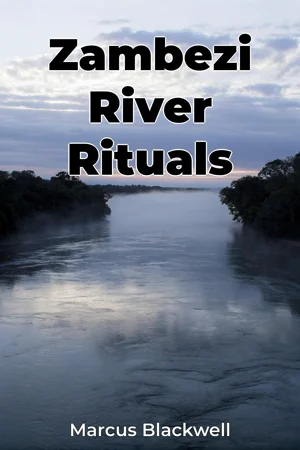
Can a river be a deity? 'Zambezi River Rituals' explores this question by delving into the intricate relationship between the Zambezi River and the spiritual lives of the people who reside along its banks. This book illuminates the river's profound importance in African religious traditions, local mythologies, and sacred ceremonies. Exploring this topic is vital because the Zambezi is not merely a geographical feature but a living entity interwoven with the cultural and spiritual identities of numerous communities. This work examines three principal areas. Firstly, the book explores the Zambezi's role as a sacred space where ancestral spirits reside and where contact between the earthly and spiritual realms is facilitated. Secondly, it analyzes the diverse mythologies associated with the river, focusing on how these stories shape local perceptions and practices. Thirdly, it dissects the various rituals and ceremonies performed along the Zambezi, examining their purposes and symbolic meanings. Understanding these elements provides insight into the spiritual ecology of the region and how communities interact with their environment. The Zambezi River basin is an area rich in history, with human settlements dating back millennia. Social structures are often closely tied to access to water and the river's resources. Traditional African religions, which often involve ancestor veneration and a deep connection to nature, have flourished alongside the river, shaping cultural practices and worldviews. A basic understanding of African cosmology and religious systems is beneficial for appreciating the nuances of the Zambezi's spiritual significance. The central argument of 'Zambezi River Rituals' is that the Zambezi River functions as a vital cultural keystone, fundamentally shaping religious beliefs, social structures, and environmental interactions within the communities along its course. This argument is important because it challenges Western-centric views of religion and highlights the intrinsic value of indigenous knowledge systems. The book begins by introducing the Zambezi River as a physical and spiritual entity. Following this, the chapters delve into specific themes: (1) The Zambezi as a dwelling place for spirits, examining beliefs about ancestral presence and the role of spirit mediums. (2) A detailed analysis of prominent myths and legends associated with the river, showcasing the storytelling traditions that transmit cultural values. (3) An exploration of various rituals, including rainmaking ceremonies, healing practices, and rites of passage conducted along the riverbanks. The book culminates by considering the impact of modernization and environmental changes on these traditional practices. The book draws on a range of evidence, including ethnographic studies, oral histories collected from local communities, and analyses of religious texts and practices. Unique data sources include interviews with traditional healers, spirit mediums, and community elders, providing firsthand accounts of the Zambezi's spiritual significance. 'Zambezi River Rituals' connects to several other fields. Firstly, environmental studies, exploring the ethical implications of river management from ecological and spiritual perspectives. Secondly, anthropology, examining the cultural adaptations and belief systems of riverside communities. Thirdly, religious studies, offering insights into the diverse expressions of African spirituality. These interdisciplinary connections enrich the book's analysis by providing a holistic understanding of the river's significance. This book adopts a respectful and inquisitive approach, aiming to present a comprehensive understanding of the Zambezi's spiritual importance. The writing style balances academic rigor with accessibility, making the subject matter engaging for a broad readership. The target audience includes students and scholars of religion, history, African studies, environmental studies, and cultural anthropology, as well as general readers interested in learning about diverse spiritual traditions and indigenous cultures. As a work of non-fiction in the areas of Religion, History World, World History, the book adheres to principles of factual accuracy, objectivity, and thorough research. It avoids sensationalism, sensationalism and presents balanced perspectives on the Zambezi's spiritual and cultural significance. The book focuses specifically on the spiritual and ritualistic aspects of the Zambezi River. It does not delve into detailed analyses of political or economic factors unless they directly influence religious practices. The information conveyed in 'Zambezi River Rituals' can be applied practically by policymakers and development organizations seeking to implement culturally sensitive and sustainable initiatives in the Zambezi River basin. By understanding the spiritual values associated with the river, these groups can better engage with local communities and promote responsible environmental stewardship. The book may address existing debates surrounding the impact of dam construction and other development projects on the river's ecosystem and the traditional practices of riverside communities. It aims to provide a platform for different perspectives and promote respectful dialogue on these issues.
Can a river be a deity? 'Zambezi River Rituals' explores this question by delving into the intricate relationship between the Zambezi River and the spiritual lives of the people who reside along its banks. This book illuminates the river's profound importance in African religious traditions, local mythologies, and sacred ceremonies. Exploring this topic is vital because the Zambezi is not merely a geographical feature but a living entity interwoven with the cultural and spiritual identities of numerous communities. This work examines three principal areas. Firstly, the book explores the Zambezi's role as a sacred space where ancestral spirits reside and where contact between the earthly and spiritual realms is facilitated. Secondly, it analyzes the diverse mythologies associated with the river, focusing on how these stories shape local perceptions and practices. Thirdly, it dissects the various rituals and ceremonies performed along the Zambezi, examining their purposes and symbolic meanings. Understanding these elements provides insight into the spiritual ecology of the region and how communities interact with their environment. The Zambezi River basin is an area rich in history, with human settlements dating back millennia. Social structures are often closely tied to access to water and the river's resources. Traditional African religions, which often involve ancestor veneration and a deep connection to nature, have flourished alongside the river, shaping cultural practices and worldviews. A basic understanding of African cosmology and religious systems is beneficial for appreciating the nuances of the Zambezi's spiritual significance. The central argument of 'Zambezi River Rituals' is that the Zambezi River functions as a vital cultural keystone, fundamentally shaping religious beliefs, social structures, and environmental interactions within the communities along its course. This argument is important because it challenges Western-centric views of religion and highlights the intrinsic value of indigenous knowledge systems. The book begins by introducing the Zambezi River as a physical and spiritual entity. Following this, the chapters delve into specific themes: (1) The Zambezi as a dwelling place for spirits, examining beliefs about ancestral presence and the role of spirit mediums. (2) A detailed analysis of prominent myths and legends associated with the river, showcasing the storytelling traditions that transmit cultural values. (3) An exploration of various rituals, including rainmaking ceremonies, healing practices, and rites of passage conducted along the riverbanks. The book culminates by considering the impact of modernization and environmental changes on these traditional practices. The book draws on a range of evidence, including ethnographic studies, oral histories collected from local communities, and analyses of religious texts and practices. Unique data sources include interviews with traditional healers, spirit mediums, and community elders, providing firsthand accounts of the Zambezi's spiritual significance. 'Zambezi River Rituals' connects to several other fields. Firstly, environmental studies, exploring the ethical implications of river management from ecological and spiritual perspectives. Secondly, anthropology, examining the cultural adaptations and belief systems of riverside communities. Thirdly, religious studies, offering insights into the diverse expressions of African spirituality. These interdisciplinary connections enrich the book's analysis by providing a holistic understanding of the river's significance. This book adopts a respectful and inquisitive approach, aiming to present a comprehensive understanding of the Zambezi's spiritual importance. The writing style balances academic rigor with accessibility, making the subject matter engaging for a broad readership. The target audience includes students and scholars of religion, history, African studies, environmental studies, and cultural anthropology, as well as general readers interested in learning about diverse spiritual traditions and indigenous cultures. As a work of non-fiction in the areas of Religion, History World, World History, the book adheres to principles of factual accuracy, objectivity, and thorough research. It avoids sensationalism, sensationalism and presents balanced perspectives on the Zambezi's spiritual and cultural significance. The book focuses specifically on the spiritual and ritualistic aspects of the Zambezi River. It does not delve into detailed analyses of political or economic factors unless they directly influence religious practices. The information conveyed in 'Zambezi River Rituals' can be applied practically by policymakers and development organizations seeking to implement culturally sensitive and sustainable initiatives in the Zambezi River basin. By understanding the spiritual values associated with the river, these groups can better engage with local communities and promote responsible environmental stewardship. The book may address existing debates surrounding the impact of dam construction and other development projects on the river's ecosystem and the traditional practices of riverside communities. It aims to provide a platform for different perspectives and promote respectful dialogue on these issues.
"Zambezi River Rituals" explores the profound spiritual connection between the Zambezi River and the communities along its banks. It examines how the river isn't just a geographical feature but a vibrant entity deeply embedded in African religious traditions, shaping local mythologies and sacred ceremonies. The book unveils the Zambezi's role as a sacred locale where ancestral spirits reside, facilitating interaction between the earthly and spiritual realms. One intriguing insight is how these spiritual beliefs influence environmental interactions and the daily lives of the people. The book progresses by first introducing the Zambezi as both a physical and spiritual entity, then delving into its significance as a dwelling place for spirits, analyzing associated myths and legends, and exploring various rituals performed along its banks. Through ethnographic studies and oral histories, the author presents a holistic view of the river's spiritual ecology. The study of the Zambezi River as a cultural keystone provides a unique lens for understanding the intersection of religious beliefs, social structures, and environmental stewardship in this History World region.
Book Details
ISBN
9788233962388
Publisher
Publifye AS
Your Licenses
You don't own any licenses for this book
Purchase a license below to unlock this book and download the EPUB.
Purchase License
Select a tier to unlock this book
Need bulk licensing?
Contact us for enterprise agreements.