
About This Book
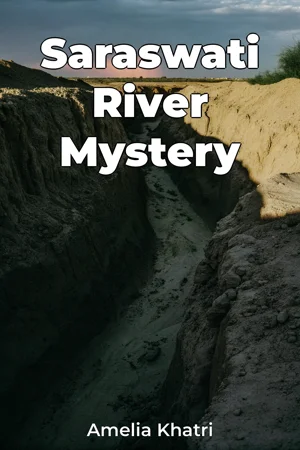
Was there once a mighty river that shaped the civilization of ancient India, a river so revered it was deified in the sacred Vedic texts, only to vanish without a trace? "Saraswati River Mystery" delves into the compelling enigma of the Saraswati River, exploring its profound significance within the historical, religious, and cosmological landscape of Hinduism. This book bridges the gap between mythology and tangible evidence, offering a comprehensive investigation into the river's existence, its disappearance, and its enduring legacy. This book is important because understanding the Saraswati River is essential for a complete understanding of ancient Indian history, the Vedic period, and the formation of Hindu beliefs. It’s relevant to anyone interested in the history of civilizations, comparative religion, or the intersection of mythology and science. We will explore three key areas: the textual evidence within the Vedas and other ancient scriptures; geological and archaeological findings that support or refute the river's existence; and the impact of the Saraswati River mythos on Hindu culture and identity. The narrative unfolds against the backdrop of the Indus Valley Civilization, a period of remarkable urban development and societal complexity. A basic understanding of the Vedic period and the Indus Valley Civilization will be helpful, though all necessary background information will be provided. Our central argument is that the Saraswati River, while possibly not existing exactly as described in the Vedas, represents a real river system that played a vital role in the development of early Indian civilization and continues to hold immense cultural and religious meaning. Understanding its true nature and the reasons for its decline is helpful to understanding the evolution of Indian society, religion and culture. The book follows a structured approach. Initially, we introduce the Saraswati River as depicted in the Rigveda and other Vedic texts, analyzing the hymns and stories that extol its virtues. Next, geological and hydrological evidence, including satellite imagery and studies of ancient riverbeds, will be presented to assess the plausibility of a large river flowing through the region. Then, archaeological discoveries from sites along the hypothesized river course are examined, correlating settlements and artifacts with the Vedic descriptions. The argument will build upon the existing data from literary, geological, and archaeological sources to present a holistic picture of the river's past and its cultural impact. Finally, the book analyzes the river's symbolic significance in Hindu cosmology, exploring its representation in art, literature, and religious practices. We will draw upon research from various fields, including Indology, geology, archaeology, and hydrology. Unique data sources include interpretations of ancient Vedic texts, analyses of satellite imagery indicating paleochannels, and reports from archaeological excavations in the Ghaggar-Hakra River basin, believed by many to be the remnants of the Saraswati. The book makes connections, showing how the story of the Saraswati connects with climate science (understanding river system changes), comparative mythology (analyzing river deities and myths), and political science (examining the use of the Saraswati in contemporary Indian identity politics). This book offers a fresh perspective by integrating textual analysis with scientific findings, moving beyond purely speculative accounts to provide a balanced and evidence-based assessment. The tone is academic yet accessible. The narrative aims to engage a broad audience while maintaining scholarly rigor. "Saraswati River Mystery" is written for anyone with an interest in ancient history, religion, archaeology, or the mysteries of lost civilizations. It will appeal to students, researchers, and general readers eager to explore this intriguing chapter of human history. As a work of non-fiction history and religion, the book adheres to the principles of accuracy, objectivity, and thorough research. Our scope is limited to examining the evidence for and against the Saraswati River's existence and its impact on ancient India. We do not delve into tangential debates about the origins of the Indo-Aryans or other related controversies beyond what is necessary to understand the Saraswati context. The knowledge gained from this book can be applied to understanding the interplay between environmental changes and societal development, offering insights into how civilizations adapt to shifting landscapes. The book engages with ongoing debates about the identification and dating of the Saraswati River, acknowledging different interpretations of the available evidence and offering a balanced perspective on the various viewpoints.
Was there once a mighty river that shaped the civilization of ancient India, a river so revered it was deified in the sacred Vedic texts, only to vanish without a trace? "Saraswati River Mystery" delves into the compelling enigma of the Saraswati River, exploring its profound significance within the historical, religious, and cosmological landscape of Hinduism. This book bridges the gap between mythology and tangible evidence, offering a comprehensive investigation into the river's existence, its disappearance, and its enduring legacy. This book is important because understanding the Saraswati River is essential for a complete understanding of ancient Indian history, the Vedic period, and the formation of Hindu beliefs. It’s relevant to anyone interested in the history of civilizations, comparative religion, or the intersection of mythology and science. We will explore three key areas: the textual evidence within the Vedas and other ancient scriptures; geological and archaeological findings that support or refute the river's existence; and the impact of the Saraswati River mythos on Hindu culture and identity. The narrative unfolds against the backdrop of the Indus Valley Civilization, a period of remarkable urban development and societal complexity. A basic understanding of the Vedic period and the Indus Valley Civilization will be helpful, though all necessary background information will be provided. Our central argument is that the Saraswati River, while possibly not existing exactly as described in the Vedas, represents a real river system that played a vital role in the development of early Indian civilization and continues to hold immense cultural and religious meaning. Understanding its true nature and the reasons for its decline is helpful to understanding the evolution of Indian society, religion and culture. The book follows a structured approach. Initially, we introduce the Saraswati River as depicted in the Rigveda and other Vedic texts, analyzing the hymns and stories that extol its virtues. Next, geological and hydrological evidence, including satellite imagery and studies of ancient riverbeds, will be presented to assess the plausibility of a large river flowing through the region. Then, archaeological discoveries from sites along the hypothesized river course are examined, correlating settlements and artifacts with the Vedic descriptions. The argument will build upon the existing data from literary, geological, and archaeological sources to present a holistic picture of the river's past and its cultural impact. Finally, the book analyzes the river's symbolic significance in Hindu cosmology, exploring its representation in art, literature, and religious practices. We will draw upon research from various fields, including Indology, geology, archaeology, and hydrology. Unique data sources include interpretations of ancient Vedic texts, analyses of satellite imagery indicating paleochannels, and reports from archaeological excavations in the Ghaggar-Hakra River basin, believed by many to be the remnants of the Saraswati. The book makes connections, showing how the story of the Saraswati connects with climate science (understanding river system changes), comparative mythology (analyzing river deities and myths), and political science (examining the use of the Saraswati in contemporary Indian identity politics). This book offers a fresh perspective by integrating textual analysis with scientific findings, moving beyond purely speculative accounts to provide a balanced and evidence-based assessment. The tone is academic yet accessible. The narrative aims to engage a broad audience while maintaining scholarly rigor. "Saraswati River Mystery" is written for anyone with an interest in ancient history, religion, archaeology, or the mysteries of lost civilizations. It will appeal to students, researchers, and general readers eager to explore this intriguing chapter of human history. As a work of non-fiction history and religion, the book adheres to the principles of accuracy, objectivity, and thorough research. Our scope is limited to examining the evidence for and against the Saraswati River's existence and its impact on ancient India. We do not delve into tangential debates about the origins of the Indo-Aryans or other related controversies beyond what is necessary to understand the Saraswati context. The knowledge gained from this book can be applied to understanding the interplay between environmental changes and societal development, offering insights into how civilizations adapt to shifting landscapes. The book engages with ongoing debates about the identification and dating of the Saraswati River, acknowledging different interpretations of the available evidence and offering a balanced perspective on the various viewpoints.
"Saraswati River Mystery" explores the captivating enigma of the Saraswati River, a revered watercourse deified in Vedic texts and believed to have shaped ancient India's civilization. The book investigates this river's profound significance within Hinduism’s historical, religious, and cosmological contexts. It uniquely bridges mythology and tangible evidence, examining the river's existence, disappearance, and enduring legacy. The book demonstrates how understanding the Saraswati River is essential for a complete grasp of ancient Indian history, the Vedic period, and the formation of Hindu beliefs. The book analyzes textual evidence from the Vedas, geological and archaeological findings, and the impact of the Saraswati River mythos on Hindu culture. For example, satellite imagery and studies of ancient riverbeds are presented to assess the plausibility of a large river flowing through the region. The narrative unfolds against the backdrop of the Indus Valley Civilization. The book progresses by initially introducing the Saraswati River as depicted in the Rigveda and other Vedic texts, and then builds upon existing data from literary, geological, and archaeological sources to present a holistic picture of the river's past and its cultural impact.
Book Details
ISBN
9788233962296
Publisher
Publifye AS
Your Licenses
You don't own any licenses for this book
Purchase a license below to unlock this book and download the EPUB.
Purchase License
Select a tier to unlock this book
Need bulk licensing?
Contact us for enterprise agreements.