
About This Book
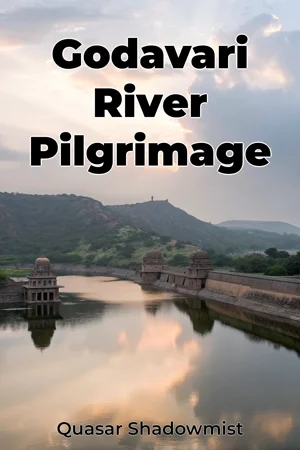
Have you ever wondered how a single river can shape the spiritual landscape of a nation for millennia? "Godavari River Pilgrimage" invites you to embark on a journey along the sacred Godavari, exploring its profound religious significance, its central role in Hindu festivals, and the numerous holy sites that grace its banks. This book delves into not only the geographical importance of the river but its cultural and spiritual essence. The book addresses two key topics: the religious and mythological narratives surrounding the Godavari, and the practical aspects of pilgrimage to the sacred sites along its course. Understanding these topics is vital for anyone seeking to understand the depths of Hindu faith and practice, and for those planning a meaningful pilgrimage along the Godavari. This exploration unveils the enduring connection between the river, its devotees, and the very fabric of Hindu tradition. To fully appreciate the Godavari's significance, we examine the historical context of Vedic and Puranic literature, where the river is first mentioned, and trace its evolution as a major pilgrimage destination through the centuries. Knowledge of basic Hindu cosmology and the concept of *tirthas* (sacred fords) will enhance the reader's understanding, although explanations are provided. The central argument of "Godavari River Pilgrimage" is that the river acts as a tangible manifestation of the divine, offering devotees opportunities for spiritual purification and transformation through pilgrimage and ritual. This argument is important because it highlights the living, breathing nature of religious belief as embodied in natural landscapes. The book is structured to guide the reader through a comprehensive exploration of the Godavari. It begins with an introduction to the river's geographical course and mythological origins. The narrative then develops along two major lines. First, detailed accounts of major festivals like the Kumbh Mela (Godavari Pushkaram) which occurs every 12 years, and their associated rituals are explored. Second, descriptions of important pilgrimage sites along the river's banks, such as Nashik-Tryambakeshwar, Paithan, and Bhadrachalam, including their unique histories and spiritual significance, are given. The book culminates in a consideration of contemporary challenges facing the river, such as pollution and environmental degradation, and the implications for its continued sanctity. Finally, practical advice for those considering a pilgrimage, including transportation, accommodation, and appropriate conduct, is offered. The book relies on a combination of textual analysis of Hindu scriptures, historical accounts, and ethnographic research. The author has visited many of the sites, documenting their importance through first-hand observation and interviews with priests and local communities. The Puranas, Vedas, and local folklore constitute the primary data sources. "Godavari River Pilgrimage" connects to several interdisciplinary fields, including religious studies, cultural geography, and environmental studies. Its exploration of pilgrimage sites relates to tourism studies, while its discussion of water management and pollution connects to environmental science. These connections enrich the core argument by demonstrating the multifaceted significance of the Godavari. The book offers a unique perspective, bridging the gap between academic scholarship and practical guidance for pilgrims. Rather than simply recounting mythology, it explores how these narratives are actively lived and experienced by devotees today, offering a fresh understanding of the interaction between place, faith, and personal transformation. The tone of the book is informative and respectful, aiming to present complex religious concepts in an accessible yet academically sound manner. While drawing on scholarly research, the writing style remains engaging and avoids unnecessary jargon, making it suitable for a general audience. The target audience includes Hindu devotees planning a pilgrimage, students of religion and Indian culture, and anyone interested in the intersection of spirituality and place. The book's value lies in its comprehensive and accessible presentation of information about a relatively understudied yet crucially important river in the Hindu faith. As a work of travel and religious non-fiction, the book balances factual accuracy with narrative storytelling, creating an immersive experience for the reader. It adheres to genre conventions by providing detailed descriptions of sites, rituals, and personal experiences, while also maintaining a scholarly rigor in its analysis. The scope of the book is limited to the religious significance of the Godavari River and its associated pilgrimage sites, focusing primarily on the Hindu tradition. It does not delve into the political or economic aspects of the region in extensive detail, although environmental concerns are addressed. Readers can apply the information in the book to plan their own pilgrimage, deepen their understanding of Hindu beliefs, or simply gain a greater appreciation for the cultural and spiritual significance of the Godavari River. While the sanctity of the Godavari is widely accepted within Hinduism, debates exist regarding the level of pollution and the effectiveness of current conservation efforts. The book addresses these debates by presenting different perspectives and suggesting potential solutions for preserving the river's ecological and spiritual integrity.
Have you ever wondered how a single river can shape the spiritual landscape of a nation for millennia? "Godavari River Pilgrimage" invites you to embark on a journey along the sacred Godavari, exploring its profound religious significance, its central role in Hindu festivals, and the numerous holy sites that grace its banks. This book delves into not only the geographical importance of the river but its cultural and spiritual essence. The book addresses two key topics: the religious and mythological narratives surrounding the Godavari, and the practical aspects of pilgrimage to the sacred sites along its course. Understanding these topics is vital for anyone seeking to understand the depths of Hindu faith and practice, and for those planning a meaningful pilgrimage along the Godavari. This exploration unveils the enduring connection between the river, its devotees, and the very fabric of Hindu tradition. To fully appreciate the Godavari's significance, we examine the historical context of Vedic and Puranic literature, where the river is first mentioned, and trace its evolution as a major pilgrimage destination through the centuries. Knowledge of basic Hindu cosmology and the concept of *tirthas* (sacred fords) will enhance the reader's understanding, although explanations are provided. The central argument of "Godavari River Pilgrimage" is that the river acts as a tangible manifestation of the divine, offering devotees opportunities for spiritual purification and transformation through pilgrimage and ritual. This argument is important because it highlights the living, breathing nature of religious belief as embodied in natural landscapes. The book is structured to guide the reader through a comprehensive exploration of the Godavari. It begins with an introduction to the river's geographical course and mythological origins. The narrative then develops along two major lines. First, detailed accounts of major festivals like the Kumbh Mela (Godavari Pushkaram) which occurs every 12 years, and their associated rituals are explored. Second, descriptions of important pilgrimage sites along the river's banks, such as Nashik-Tryambakeshwar, Paithan, and Bhadrachalam, including their unique histories and spiritual significance, are given. The book culminates in a consideration of contemporary challenges facing the river, such as pollution and environmental degradation, and the implications for its continued sanctity. Finally, practical advice for those considering a pilgrimage, including transportation, accommodation, and appropriate conduct, is offered. The book relies on a combination of textual analysis of Hindu scriptures, historical accounts, and ethnographic research. The author has visited many of the sites, documenting their importance through first-hand observation and interviews with priests and local communities. The Puranas, Vedas, and local folklore constitute the primary data sources. "Godavari River Pilgrimage" connects to several interdisciplinary fields, including religious studies, cultural geography, and environmental studies. Its exploration of pilgrimage sites relates to tourism studies, while its discussion of water management and pollution connects to environmental science. These connections enrich the core argument by demonstrating the multifaceted significance of the Godavari. The book offers a unique perspective, bridging the gap between academic scholarship and practical guidance for pilgrims. Rather than simply recounting mythology, it explores how these narratives are actively lived and experienced by devotees today, offering a fresh understanding of the interaction between place, faith, and personal transformation. The tone of the book is informative and respectful, aiming to present complex religious concepts in an accessible yet academically sound manner. While drawing on scholarly research, the writing style remains engaging and avoids unnecessary jargon, making it suitable for a general audience. The target audience includes Hindu devotees planning a pilgrimage, students of religion and Indian culture, and anyone interested in the intersection of spirituality and place. The book's value lies in its comprehensive and accessible presentation of information about a relatively understudied yet crucially important river in the Hindu faith. As a work of travel and religious non-fiction, the book balances factual accuracy with narrative storytelling, creating an immersive experience for the reader. It adheres to genre conventions by providing detailed descriptions of sites, rituals, and personal experiences, while also maintaining a scholarly rigor in its analysis. The scope of the book is limited to the religious significance of the Godavari River and its associated pilgrimage sites, focusing primarily on the Hindu tradition. It does not delve into the political or economic aspects of the region in extensive detail, although environmental concerns are addressed. Readers can apply the information in the book to plan their own pilgrimage, deepen their understanding of Hindu beliefs, or simply gain a greater appreciation for the cultural and spiritual significance of the Godavari River. While the sanctity of the Godavari is widely accepted within Hinduism, debates exist regarding the level of pollution and the effectiveness of current conservation efforts. The book addresses these debates by presenting different perspectives and suggesting potential solutions for preserving the river's ecological and spiritual integrity.
"Godavari River Pilgrimage" explores the religious and cultural importance of the Godavari River in Hinduism, highlighting its role as a tangible manifestation of the divine. The book unveils the river's profound spiritual influence on Indian culture through the ages. The Godavari isn't merely a geographical feature; it's a sacred entity where devotees seek purification and transformation through pilgrimage. For example, the Godavari Pushkaram, a Kumbh Mela event occurring every 12 years, draws millions seeking spiritual merit. The book progresses from the river's mythological origins to detailed accounts of major festivals and descriptions of significant pilgrimage sites like Nashik-Tryambakeshwar, Paithan, and Bhadrachalam. Each site is examined for its unique history and spiritual significance, enriching the reader's understanding of Hindu pilgrimage and sacred sites. The book also addresses contemporary challenges like pollution, emphasizing the need to preserve the river's sanctity. The approach combines textual analysis of Hindu scriptures with firsthand observations, connecting academic scholarship with practical guidance for those interested in religious travel and Hindu festivals.
Book Details
ISBN
9788233962272
Publisher
Publifye AS
Your Licenses
You don't own any licenses for this book
Purchase a license below to unlock this book and download the EPUB.
Purchase License
Select a tier to unlock this book
Need bulk licensing?
Contact us for enterprise agreements.