
About This Book
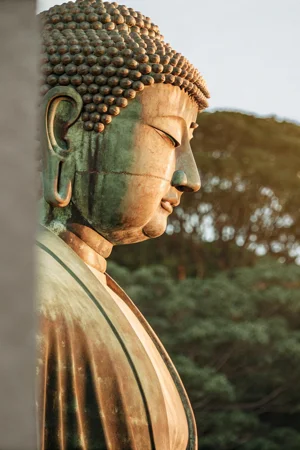
How did a colossal bronze Buddha, seated serenely amidst the landscape of Kamakura, Japan, become such an enduring symbol of peace and enlightenment? This book, "Kamakura Great Buddha," delves into the multifaceted story of this iconic statue, exploring its artistic significance, religious symbolism within Japanese Buddhism, and its historical context. It emphasizes the critical role the Great Buddha plays as a cultural artifact reflecting the evolution of Buddhist practices and artistic expression in Japan. The primary focus will be on understanding the Daibutsu's artistic construction, dissecting the details of its design and the sophisticated casting techniques used in the 13th century. The exploration will include the religious ideologies that influenced its creation, primarily those of the Jodo-shu (Pure Land Buddhism) and Zen sects, which were gaining prominence during the Kamakura period. These topics are important for understanding how religious beliefs shaped artistic representation and how the statue became a focal point for spiritual contemplation. To fully appreciate the significance of the Kamakura Daibutsu, the book provides essential historical background on the Kamakura period (1185-1333), a time of significant political and social change in Japan. This context includes the rise of the samurai class, the establishment of the Kamakura shogunate, and the growing influence of Buddhism in Japanese society. The book presumes a basic understanding of Japanese history and Buddhist philosophy, but provides clear explanations of key terms and concepts. The central argument posits that the Kamakura Great Buddha is not merely a statue but a synthesis of artistic ingenuity, religious devotion, and historical circumstance. It reveals how the statue embodies the spiritual aspirations of a nation undergoing profound transformation. The essence of the Great Buddha lies in its representation of Amida Buddha, the Buddha of Infinite Light and Life, central to Pure Land Buddhism, which promises salvation and rebirth in a Western Paradise. The book unfolds in three sections. First, it introduces the history of the statue's construction, its initial wooden predecessor, which was damaged by a storm, and the subsequent casting of the bronze statue. Second, it explores the artistry of the Daibutsu, analyzing its proportions, facial expression, and posture (mudra) in relation to Buddhist iconography and aesthetic principles. Third, it discusses the statue's evolving role in Japanese Buddhism, from its initial association with Pure Land practices to its later integration into Zen meditation. The concluding chapter assesses the statue's cultural legacy and its continued relevance as a symbol of peace, contemplation, and the enduring power of art and faith. The analysis is supported by historical records, including temple documents, artistic analyses from period texts, and comparative studies of Buddhist art from across Asia. The book draws on a range of sources, including archaeological reports, art historical studies, and religious texts. The book builds connections between art history, religious studies, and Japanese cultural history. Considering these interdisciplinary perspectives illuminates the multifaceted nature of the Great Buddha and its significance within Japanese culture. This book takes a historical and analytical approach, presenting information in a clear and accessible style while maintaining scholarly rigor. It aims to inform and engage readers interested in Japanese art, Buddhist studies, and cultural history, while also offering new insights for specialists. The target audience includes students of art history, religious studies, and Japanese culture, as well as travelers and general readers interested in learning more about this magnificent statue and its cultural significance. Given the genre expectations, the book presents detailed factual information, supported by evidence and analysis, avoiding speculation and unsubstantiated claims. The book focuses primarily on the Kamakura Great Buddha, offering a complete overview of its construction, religious symbolism, and cultural significance within Japanese Buddhism. While the book touches on broader themes in Japanese art and religion, it does not attempt to provide a all-encompassing history of either. The teachings associated with the Great Buddha offer tangible ways for readers to apply Buddhist principles of mindfulness and compassion in their daily lives. Contemplating the statue serves as a reminder of the potential for inner peace and enlightenment. The book addresses scholarly debates surrounding the Daibutsu's original patronage and its specific connection to various Buddhist sects, offering a nuanced perspective on these complex issues.
How did a colossal bronze Buddha, seated serenely amidst the landscape of Kamakura, Japan, become such an enduring symbol of peace and enlightenment? This book, "Kamakura Great Buddha," delves into the multifaceted story of this iconic statue, exploring its artistic significance, religious symbolism within Japanese Buddhism, and its historical context. It emphasizes the critical role the Great Buddha plays as a cultural artifact reflecting the evolution of Buddhist practices and artistic expression in Japan. The primary focus will be on understanding the Daibutsu's artistic construction, dissecting the details of its design and the sophisticated casting techniques used in the 13th century. The exploration will include the religious ideologies that influenced its creation, primarily those of the Jodo-shu (Pure Land Buddhism) and Zen sects, which were gaining prominence during the Kamakura period. These topics are important for understanding how religious beliefs shaped artistic representation and how the statue became a focal point for spiritual contemplation. To fully appreciate the significance of the Kamakura Daibutsu, the book provides essential historical background on the Kamakura period (1185-1333), a time of significant political and social change in Japan. This context includes the rise of the samurai class, the establishment of the Kamakura shogunate, and the growing influence of Buddhism in Japanese society. The book presumes a basic understanding of Japanese history and Buddhist philosophy, but provides clear explanations of key terms and concepts. The central argument posits that the Kamakura Great Buddha is not merely a statue but a synthesis of artistic ingenuity, religious devotion, and historical circumstance. It reveals how the statue embodies the spiritual aspirations of a nation undergoing profound transformation. The essence of the Great Buddha lies in its representation of Amida Buddha, the Buddha of Infinite Light and Life, central to Pure Land Buddhism, which promises salvation and rebirth in a Western Paradise. The book unfolds in three sections. First, it introduces the history of the statue's construction, its initial wooden predecessor, which was damaged by a storm, and the subsequent casting of the bronze statue. Second, it explores the artistry of the Daibutsu, analyzing its proportions, facial expression, and posture (mudra) in relation to Buddhist iconography and aesthetic principles. Third, it discusses the statue's evolving role in Japanese Buddhism, from its initial association with Pure Land practices to its later integration into Zen meditation. The concluding chapter assesses the statue's cultural legacy and its continued relevance as a symbol of peace, contemplation, and the enduring power of art and faith. The analysis is supported by historical records, including temple documents, artistic analyses from period texts, and comparative studies of Buddhist art from across Asia. The book draws on a range of sources, including archaeological reports, art historical studies, and religious texts. The book builds connections between art history, religious studies, and Japanese cultural history. Considering these interdisciplinary perspectives illuminates the multifaceted nature of the Great Buddha and its significance within Japanese culture. This book takes a historical and analytical approach, presenting information in a clear and accessible style while maintaining scholarly rigor. It aims to inform and engage readers interested in Japanese art, Buddhist studies, and cultural history, while also offering new insights for specialists. The target audience includes students of art history, religious studies, and Japanese culture, as well as travelers and general readers interested in learning more about this magnificent statue and its cultural significance. Given the genre expectations, the book presents detailed factual information, supported by evidence and analysis, avoiding speculation and unsubstantiated claims. The book focuses primarily on the Kamakura Great Buddha, offering a complete overview of its construction, religious symbolism, and cultural significance within Japanese Buddhism. While the book touches on broader themes in Japanese art and religion, it does not attempt to provide a all-encompassing history of either. The teachings associated with the Great Buddha offer tangible ways for readers to apply Buddhist principles of mindfulness and compassion in their daily lives. Contemplating the statue serves as a reminder of the potential for inner peace and enlightenment. The book addresses scholarly debates surrounding the Daibutsu's original patronage and its specific connection to various Buddhist sects, offering a nuanced perspective on these complex issues.
The "Kamakura Great Buddha" explores the rich history and significance of this iconic bronze statue in Japan. It delves into its artistic construction, religious symbolism within Japanese Buddhism, and its historical context during the Kamakura period. The book highlights how the Daibutsu embodies both artistic ingenuity and the spiritual aspirations of a nation undergoing transformation. The statue's representation of Amida Buddha, central to Pure Land Buddhism, promising salvation, adds to its profound importance. The book examines the Daibutsu's artistic features, like its proportions and posture, in relation to Buddhist iconography. It also investigates the statue's evolving role, from its initial connection with Pure Land practices to its integration into Zen meditation. Unfolding in three sections, the book first introduces the statue's construction history, then explores its artistry, and finally discusses its role in Japanese Buddhism. This comprehensive approach makes it valuable for anyone interested in Japanese art, Buddhist studies, or cultural history.
Book Details
ISBN
9788233962128
Publisher
Publifye AS
Your Licenses
You don't own any licenses for this book
Purchase a license below to unlock this book and download the EPUB.
Purchase License
Select a tier to unlock this book
Need bulk licensing?
Contact us for enterprise agreements.