
About This Book
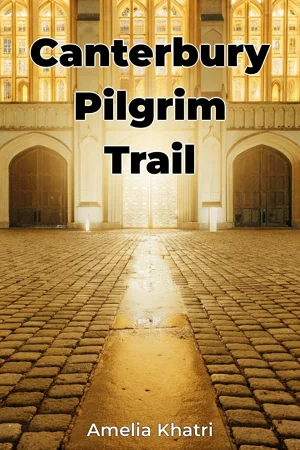
What drove countless individuals across centuries to traverse arduous paths towards Canterbury Cathedral? "Canterbury Pilgrim Trail" delves into the profound historical and religious significance of this pilgrimage site, exploring its integral role in Christian devotion, most notably linked to the martyrdom of Saint Thomas Becket, and its enduring impact on religious practice and cultural identity. This book navigates the rich tapestry of Canterbury's history, focusing on three central themes: the evolution of pilgrimage as a Christian practice, the life and death of Thomas Becket and its immediate and long-term consequences, and the Cathedral's ongoing influence as a spiritual hub and architectural marvel. These themes are crucial for understanding not only Canterbury's past but also the broader context of religious devotion and the interplay between faith, power, and societal change in medieval and modern Europe. The narrative unfolds against the backdrop of medieval England, a society deeply shaped by religious belief and the power of the Church. Prior knowledge of basic Christian theology and the historical context of the Anglo-Norman period will enhance the reader's appreciation, though the book provides ample background information. The central argument of "Canterbury Pilgrim Trail" is that Canterbury Cathedral's significance extends far beyond its physical presence; it serves as a tangible representation of the enduring power of faith, the complexities of historical memory, and the ongoing human quest for spiritual meaning. This argument is vital because it challenges simplistic views of religious history and highlights the dynamic, evolving nature of belief and practice. The book is structured to guide the reader through a comprehensive exploration of Canterbury's pilgrimage history. It begins by introducing the concept of pilgrimage in early Christianity, tracing its development and its significance as an act of devotion and penance. Subsequently, it investigates the life, death, and canonization of Thomas Becket. This section examines the political and religious tensions that led to his assassination, the immediate aftermath, and the rise of the cult of Saint Thomas. Finally, the book culminates by analyzing Canterbury Cathedral's lasting religious and cultural influence. This section discusses the architectural development of the Cathedral, its role as a center of learning and religious authority, and its continued importance as a site of pilgrimage and worship in the present day. Real-world applications might include enhancing experiences while visiting Canterbury, better understanding medieval history, or sparking contemplation of one's own faith and motivations. The book's arguments are supported by a range of historical evidence, including primary sources such as chronicles, letters, and religious texts, as well as archaeological findings. These sources are critically examined to provide a nuanced and balanced account of Canterbury's history. The methodology incorporates historical analysis, art history, and religious studies to offer a multi-faceted perspective. "Canterbury Pilgrim Trail" connects to several related areas of study. Firstly, it intersects with art and architecture through an examination of the Cathedral's design and its evolution over time, offering insight into the artistic and cultural values of different periods. Secondly, it connects with social history by exploring the social, economic, and political impact of pilgrimage on the local community and the wider region. Finally, it relates to the field of cultural studies by examining how the story of Thomas Becket has been interpreted and reinterpreted in literature, art, and popular culture. A unique aspect of this book is its focus on Canterbury as a living pilgrimage site, exploring not only its historical significance but also its contemporary relevance. It examines how modern pilgrims and visitors experience the Cathedral and how its history continues to shape their understanding of faith, spirituality, and the human condition. The tone is scholarly yet accessible, aiming to engage both academic readers and general audiences with an interest in history, religion, and culture. The writing style is clear, concise, and engaging, employing narrative elements to bring the story of Canterbury to life. The target audience includes students of history and religion, travelers interested in pilgrimage sites, and anyone seeking a deeper understanding of Christianity and its cultural impact. The book will be valuable to them because it offers a comprehensive and insightful account of Canterbury's pilgrimage history, drawing on the conventions of historical non-fiction to provide a well-researched and informative exploration of this important site. The scope of the book is limited to the history of Canterbury Cathedral as a pilgrimage site and its associated themes. It does not attempt to provide a comprehensive history of England or the Christian Church, but rather uses these broader contexts to illuminate the specific story of Canterbury. While the martyrdom of Thomas Becket is widely accepted, some scholars debate the extent of King Henry II's direct involvement. The book will address these controversies by presenting different perspectives and critically evaluating the available evidence.
What drove countless individuals across centuries to traverse arduous paths towards Canterbury Cathedral? "Canterbury Pilgrim Trail" delves into the profound historical and religious significance of this pilgrimage site, exploring its integral role in Christian devotion, most notably linked to the martyrdom of Saint Thomas Becket, and its enduring impact on religious practice and cultural identity. This book navigates the rich tapestry of Canterbury's history, focusing on three central themes: the evolution of pilgrimage as a Christian practice, the life and death of Thomas Becket and its immediate and long-term consequences, and the Cathedral's ongoing influence as a spiritual hub and architectural marvel. These themes are crucial for understanding not only Canterbury's past but also the broader context of religious devotion and the interplay between faith, power, and societal change in medieval and modern Europe. The narrative unfolds against the backdrop of medieval England, a society deeply shaped by religious belief and the power of the Church. Prior knowledge of basic Christian theology and the historical context of the Anglo-Norman period will enhance the reader's appreciation, though the book provides ample background information. The central argument of "Canterbury Pilgrim Trail" is that Canterbury Cathedral's significance extends far beyond its physical presence; it serves as a tangible representation of the enduring power of faith, the complexities of historical memory, and the ongoing human quest for spiritual meaning. This argument is vital because it challenges simplistic views of religious history and highlights the dynamic, evolving nature of belief and practice. The book is structured to guide the reader through a comprehensive exploration of Canterbury's pilgrimage history. It begins by introducing the concept of pilgrimage in early Christianity, tracing its development and its significance as an act of devotion and penance. Subsequently, it investigates the life, death, and canonization of Thomas Becket. This section examines the political and religious tensions that led to his assassination, the immediate aftermath, and the rise of the cult of Saint Thomas. Finally, the book culminates by analyzing Canterbury Cathedral's lasting religious and cultural influence. This section discusses the architectural development of the Cathedral, its role as a center of learning and religious authority, and its continued importance as a site of pilgrimage and worship in the present day. Real-world applications might include enhancing experiences while visiting Canterbury, better understanding medieval history, or sparking contemplation of one's own faith and motivations. The book's arguments are supported by a range of historical evidence, including primary sources such as chronicles, letters, and religious texts, as well as archaeological findings. These sources are critically examined to provide a nuanced and balanced account of Canterbury's history. The methodology incorporates historical analysis, art history, and religious studies to offer a multi-faceted perspective. "Canterbury Pilgrim Trail" connects to several related areas of study. Firstly, it intersects with art and architecture through an examination of the Cathedral's design and its evolution over time, offering insight into the artistic and cultural values of different periods. Secondly, it connects with social history by exploring the social, economic, and political impact of pilgrimage on the local community and the wider region. Finally, it relates to the field of cultural studies by examining how the story of Thomas Becket has been interpreted and reinterpreted in literature, art, and popular culture. A unique aspect of this book is its focus on Canterbury as a living pilgrimage site, exploring not only its historical significance but also its contemporary relevance. It examines how modern pilgrims and visitors experience the Cathedral and how its history continues to shape their understanding of faith, spirituality, and the human condition. The tone is scholarly yet accessible, aiming to engage both academic readers and general audiences with an interest in history, religion, and culture. The writing style is clear, concise, and engaging, employing narrative elements to bring the story of Canterbury to life. The target audience includes students of history and religion, travelers interested in pilgrimage sites, and anyone seeking a deeper understanding of Christianity and its cultural impact. The book will be valuable to them because it offers a comprehensive and insightful account of Canterbury's pilgrimage history, drawing on the conventions of historical non-fiction to provide a well-researched and informative exploration of this important site. The scope of the book is limited to the history of Canterbury Cathedral as a pilgrimage site and its associated themes. It does not attempt to provide a comprehensive history of England or the Christian Church, but rather uses these broader contexts to illuminate the specific story of Canterbury. While the martyrdom of Thomas Becket is widely accepted, some scholars debate the extent of King Henry II's direct involvement. The book will address these controversies by presenting different perspectives and critically evaluating the available evidence.
"Canterbury Pilgrim Trail" explores the enduring religious and historical significance of Canterbury Cathedral, focusing on its role as a prominent pilgrimage site. The book highlights the evolution of pilgrimage as a Christian practice, particularly the draw to Canterbury following the martyrdom of Saint Thomas Becket. It examines how the Cathedral became a spiritual hub and architectural marvel, deeply impacting religious practice and cultural identity in Medieval England and beyond. The narrative unfolds across chapters that detail the history of Christian pilgrimage, the life and death of Thomas Becket, and the ongoing influence of Canterbury Cathedral. Intriguingly, the book reveals how the quest for spiritual meaning transformed Canterbury into a tangible representation of faith's power. The approach involves historical analysis, art history, and religious studies, offering a multi-faceted perspective. What makes this book unique is its focus on Canterbury as a living pilgrimage site, connecting its historical importance with its contemporary relevance. The book examines how modern pilgrims experience the Cathedral and how its history shapes their understanding of faith, spirituality, and the human condition. Ultimately, "Canterbury Pilgrim Trail" offers a comprehensive understanding of Canterbury's pilgrimage history.
Book Details
ISBN
9788233962098
Publisher
Publifye AS
Your Licenses
You don't own any licenses for this book
Purchase a license below to unlock this book and download the EPUB.
Purchase License
Select a tier to unlock this book
Need bulk licensing?
Contact us for enterprise agreements.