
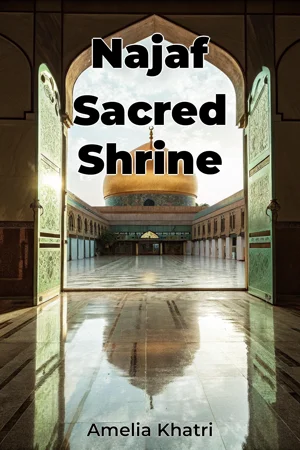
About This Book
Have you ever wondered about the spiritual heart of Shia Islam, a city revered for its history, scholarship, and the profound presence of one of its most esteemed figures? "Najaf Sacred Shrine" explores the multifaceted significance of Najaf, Iraq, focusing primarily on its role as the final resting place of Imam Ali, the fourth Caliph and the foundational figure within Shia theology. This book delves into the historical evolution, religious importance, and cultural impact of Najaf, providing a comprehensive understanding of its centrality to Shia Islam and its broader influence on Islamic thought and practice. The two key topics this book addresses are the historical development of Najaf as a city and the religious significance of the Imam Ali Shrine. Understanding Najaf's historical trajectory – from its early beginnings as a burial site to its emergence as a major center of learning – is crucial to grasping its current status. Similarly, exploring the theological and spiritual dimensions of the Imam Ali Shrine reveals why it attracts millions of pilgrims annually and serves as a focal point for Shia identity. These topics are important because they illuminate the interplay between history, faith, and culture in shaping a city of immense religious importance. This study necessitates an understanding of early Islamic history, particularly the events surrounding the succession of the Prophet Muhammad and the subsequent schism that led to the formation of Shia Islam. Readers will benefit from familiarity with the basic tenets of Shia theology and the role of Imams in Shia religious thought. The central argument of "Najaf Sacred Shrine" is that Najaf's significance extends beyond its physical presence as a city or the Imam Ali Shrine as a building; it functions as a living embodiment of Shia identity, history, and religious ideals. This argument is important because it challenges simplistic understandings of religious sites as mere geographical locations, emphasizing their dynamic role in shaping communal identity and worldview. The book unfolds in a structured manner. First, it introduces the historical context, tracing Najaf’s origins and its development through various periods of Islamic history. Second, it examines the architectural and artistic aspects of the Imam Ali Shrine, exploring its symbolic significance. Third, the book analyzes the religious practices and rituals associated with the shrine, including pilgrimage, prayer, and mourning ceremonies. Finally, it discusses the role of Najaf as a center of Shia scholarship, examining the influence of its religious schools and scholars on Shia thought. The research presented relies on a diverse range of sources, including historical chronicles, theological treatises, architectural surveys, travelogues, and ethnographic studies of pilgrimage practices. Unique data sources include previously untranslated primary texts from the shrine’s library and oral histories from local residents and religious scholars. This work connects to other fields such as Islamic art and architecture through its analysis of the shrine's design, sociology through its examination of pilgrimage and communal identity, and political science through its exploration of Najaf's role in contemporary Iraqi politics. "Najaf Sacred Shrine" offers a nuanced and balanced perspective, avoiding hagiography and instead focusing on a fact-based exploration of the city and shrine. The target audience includes students and scholars of Islamic history, religious studies, and Middle Eastern studies, as well as general readers interested in learning more about Shia Islam and its cultural heritage. This book would be valuable to them because it provides a comprehensive and accessible overview of a complex and often misunderstood topic. As a work of religious history, the book adheres to the conventions of academic scholarship, including rigorous citation, objective analysis, and a balanced presentation of different perspectives. The book's scope is limited to Najaf and the Imam Ali Shrine, with only passing references to other Shia holy sites. This focus allows for a more in-depth examination of the specific historical, religious, and cultural dynamics at play in Najaf. The information presented can be applied practically by readers seeking to understand the complexities of Shia Islam, engage in informed interfaith dialogue, or appreciate the rich cultural heritage of Iraq. The book addresses the controversies surrounding the interpretation of early Islamic history and the role of Imam Ali, providing different perspectives and encouraging critical engagement with the sources.
Have you ever wondered about the spiritual heart of Shia Islam, a city revered for its history, scholarship, and the profound presence of one of its most esteemed figures? "Najaf Sacred Shrine" explores the multifaceted significance of Najaf, Iraq, focusing primarily on its role as the final resting place of Imam Ali, the fourth Caliph and the foundational figure within Shia theology. This book delves into the historical evolution, religious importance, and cultural impact of Najaf, providing a comprehensive understanding of its centrality to Shia Islam and its broader influence on Islamic thought and practice. The two key topics this book addresses are the historical development of Najaf as a city and the religious significance of the Imam Ali Shrine. Understanding Najaf's historical trajectory – from its early beginnings as a burial site to its emergence as a major center of learning – is crucial to grasping its current status. Similarly, exploring the theological and spiritual dimensions of the Imam Ali Shrine reveals why it attracts millions of pilgrims annually and serves as a focal point for Shia identity. These topics are important because they illuminate the interplay between history, faith, and culture in shaping a city of immense religious importance. This study necessitates an understanding of early Islamic history, particularly the events surrounding the succession of the Prophet Muhammad and the subsequent schism that led to the formation of Shia Islam. Readers will benefit from familiarity with the basic tenets of Shia theology and the role of Imams in Shia religious thought. The central argument of "Najaf Sacred Shrine" is that Najaf's significance extends beyond its physical presence as a city or the Imam Ali Shrine as a building; it functions as a living embodiment of Shia identity, history, and religious ideals. This argument is important because it challenges simplistic understandings of religious sites as mere geographical locations, emphasizing their dynamic role in shaping communal identity and worldview. The book unfolds in a structured manner. First, it introduces the historical context, tracing Najaf’s origins and its development through various periods of Islamic history. Second, it examines the architectural and artistic aspects of the Imam Ali Shrine, exploring its symbolic significance. Third, the book analyzes the religious practices and rituals associated with the shrine, including pilgrimage, prayer, and mourning ceremonies. Finally, it discusses the role of Najaf as a center of Shia scholarship, examining the influence of its religious schools and scholars on Shia thought. The research presented relies on a diverse range of sources, including historical chronicles, theological treatises, architectural surveys, travelogues, and ethnographic studies of pilgrimage practices. Unique data sources include previously untranslated primary texts from the shrine’s library and oral histories from local residents and religious scholars. This work connects to other fields such as Islamic art and architecture through its analysis of the shrine's design, sociology through its examination of pilgrimage and communal identity, and political science through its exploration of Najaf's role in contemporary Iraqi politics. "Najaf Sacred Shrine" offers a nuanced and balanced perspective, avoiding hagiography and instead focusing on a fact-based exploration of the city and shrine. The target audience includes students and scholars of Islamic history, religious studies, and Middle Eastern studies, as well as general readers interested in learning more about Shia Islam and its cultural heritage. This book would be valuable to them because it provides a comprehensive and accessible overview of a complex and often misunderstood topic. As a work of religious history, the book adheres to the conventions of academic scholarship, including rigorous citation, objective analysis, and a balanced presentation of different perspectives. The book's scope is limited to Najaf and the Imam Ali Shrine, with only passing references to other Shia holy sites. This focus allows for a more in-depth examination of the specific historical, religious, and cultural dynamics at play in Najaf. The information presented can be applied practically by readers seeking to understand the complexities of Shia Islam, engage in informed interfaith dialogue, or appreciate the rich cultural heritage of Iraq. The book addresses the controversies surrounding the interpretation of early Islamic history and the role of Imam Ali, providing different perspectives and encouraging critical engagement with the sources.
"Najaf Sacred Shrine" explores the historical and religious significance of Najaf, Iraq, a city central to Shia Islam, focusing on the Imam Ali Shrine. The book traces Najaf's evolution from an ancient burial site to a prominent center of Shia scholarship and pilgrimage. It emphasizes the shrine's dual role as a physical structure and a symbol of Shia identity, challenging simplistic views of religious sites. The book details the architectural and artistic elements of the Imam Ali Shrine, exploring their symbolic meanings within Shia theology. It also examines religious practices, such as pilgrimage and mourning rituals, associated with the shrine, highlighting Najaf's enduring impact on Shia thought. The study uses diverse sources, including historical chronicles and architectural surveys, to provide a comprehensive understanding of Najaf's place in Islamic History. The book progresses chronologically, from Najaf's origins through its development and its current role as a vital center for Shia Muslims, offering a nuanced perspective on Najaf's importance.
Book Details
ISBN
9788233962036
Publisher
Publifye AS
Your Licenses
You don't own any licenses for this book
Purchase a license below to unlock this book and download the EPUB.
Purchase License
Select a tier to unlock this book
Need bulk licensing?
Contact us for enterprise agreements.