
About This Book
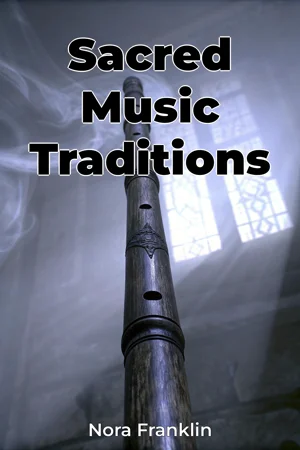
Have you ever considered the profound connection between the yearning of the soul and the melodies that resonate within sacred spaces? "Sacred Music Traditions" explores the diverse and powerful role of music in religious ceremonies across various cultures and faiths, revealing how sound elevates the human spirit and fosters a connection to the divine. This book delves into the history, practice, and significance of music within religious contexts, examining its ability to create communal bonds, express deeply held beliefs, and facilitate transformative experiences. We will explore two main key areas: First, the historical development of sacred music, tracing its evolution from ancient rituals to modern-day practices. Second, the function of music as a vehicle for spiritual elevation, examining how specific musical elements contribute to states of devotion, contemplation, and transcendence. These topics are important because they provide insight into the enduring human need for spiritual expression and the unique power of music to fulfill that need. To understand the significance of sacred music, it is essential to have a grasp of the historical and social contexts in which these traditions emerged. Therefore, we will explore the historical development of diverse religions. We will also touch upon the social structures that influenced the creation and performance of sacred music. No prerequisite musical knowledge is required, as we will focus on the cultural and spiritual aspects rather than technical music theory. The central argument of "Sacred Music Traditions" is that music serves as a universal language of spirituality, capable of transcending cultural and linguistic barriers to unite people, regardless of belief systems. This argument is important because it challenges the notion that religious expression is solely confined to textual or doctrinal forms, revealing the unifying power of music in a world often divided by differences. The book begins with an exploration of the origins of sacred music in ancient civilizations. We will then examine specific traditions, beginning with a chapter dedicated to the Gregorian chant, its historical development within the Catholic Church, its unique melodic structures, and its impact on Western music. Following that, we will journey to the Sufi traditions of Islam, exploring the ecstatic devotional music known as Qawwali. Here, we will investigate its rhythmic complexities, the role of the lead singer (the Qawwal), and its ability to induce states of spiritual ecstasy. We will then explore other traditions illustrating diverse applications of music in ceremonies such as gospel, temple music, and others. The book culminates by considering the future of sacred music in a rapidly changing world and its potential to foster interfaith dialogue and understanding. The arguments presented are supported by a variety of sources, including ethnomusicological research, historical texts, theological studies, and first-hand accounts of religious ceremonies. We draw upon field recordings, scholarly analyses of musical scores, and interviews with religious leaders and practitioners to provide a comprehensive and nuanced understanding of each tradition. "Sacred Music Traditions" connects to several other fields, including anthropology (the study of human cultures and societies), sociology (the study of social behavior and institutions), and psychology (the study of the human mind and behavior). By examining sacred music through these lenses, we gain a deeper appreciation for its social, cultural, and psychological impact. The book takes a respectful and objective approach to the subject matter, avoiding any proselytizing or promotion of specific religious beliefs. The tone is academic yet accessible, aiming to engage both scholars and general readers with an interest in music, religion, and cultural studies. This book is targeted toward students, scholars, religious practitioners, music lovers, and anyone interested in the intersection of music and spirituality. It provides valuable insights into the role of music in shaping religious experience and fostering a sense of community. As a work of non-fiction, "Sacred Music Traditions" adheres to the principles of accuracy, objectivity, and evidence-based analysis. It seeks to present a balanced and comprehensive overview of the subject, avoiding any bias or prejudice. The book’s scope is broad, encompassing a variety of religious traditions from around the world. However, it is limited to those traditions in which music plays a central and significant role, acknowledging that the subject matter is far too vast to cover exhaustively. The information in this book can be applied practically by religious leaders seeking to enhance their services, musicians interested in exploring new genres and traditions, and individuals seeking to deepen their own spiritual practices. It can also serve as a valuable resource for educators and students in courses on music, religion, and cultural studies. While the role of music in religion is largely viewed positively, there remain debates around issues such as the appropriateness of certain musical styles in sacred settings, or the use of music to manipulate emotions. We will address these controversies, encouraging critical thinking and dialogue.
Have you ever considered the profound connection between the yearning of the soul and the melodies that resonate within sacred spaces? "Sacred Music Traditions" explores the diverse and powerful role of music in religious ceremonies across various cultures and faiths, revealing how sound elevates the human spirit and fosters a connection to the divine. This book delves into the history, practice, and significance of music within religious contexts, examining its ability to create communal bonds, express deeply held beliefs, and facilitate transformative experiences. We will explore two main key areas: First, the historical development of sacred music, tracing its evolution from ancient rituals to modern-day practices. Second, the function of music as a vehicle for spiritual elevation, examining how specific musical elements contribute to states of devotion, contemplation, and transcendence. These topics are important because they provide insight into the enduring human need for spiritual expression and the unique power of music to fulfill that need. To understand the significance of sacred music, it is essential to have a grasp of the historical and social contexts in which these traditions emerged. Therefore, we will explore the historical development of diverse religions. We will also touch upon the social structures that influenced the creation and performance of sacred music. No prerequisite musical knowledge is required, as we will focus on the cultural and spiritual aspects rather than technical music theory. The central argument of "Sacred Music Traditions" is that music serves as a universal language of spirituality, capable of transcending cultural and linguistic barriers to unite people, regardless of belief systems. This argument is important because it challenges the notion that religious expression is solely confined to textual or doctrinal forms, revealing the unifying power of music in a world often divided by differences. The book begins with an exploration of the origins of sacred music in ancient civilizations. We will then examine specific traditions, beginning with a chapter dedicated to the Gregorian chant, its historical development within the Catholic Church, its unique melodic structures, and its impact on Western music. Following that, we will journey to the Sufi traditions of Islam, exploring the ecstatic devotional music known as Qawwali. Here, we will investigate its rhythmic complexities, the role of the lead singer (the Qawwal), and its ability to induce states of spiritual ecstasy. We will then explore other traditions illustrating diverse applications of music in ceremonies such as gospel, temple music, and others. The book culminates by considering the future of sacred music in a rapidly changing world and its potential to foster interfaith dialogue and understanding. The arguments presented are supported by a variety of sources, including ethnomusicological research, historical texts, theological studies, and first-hand accounts of religious ceremonies. We draw upon field recordings, scholarly analyses of musical scores, and interviews with religious leaders and practitioners to provide a comprehensive and nuanced understanding of each tradition. "Sacred Music Traditions" connects to several other fields, including anthropology (the study of human cultures and societies), sociology (the study of social behavior and institutions), and psychology (the study of the human mind and behavior). By examining sacred music through these lenses, we gain a deeper appreciation for its social, cultural, and psychological impact. The book takes a respectful and objective approach to the subject matter, avoiding any proselytizing or promotion of specific religious beliefs. The tone is academic yet accessible, aiming to engage both scholars and general readers with an interest in music, religion, and cultural studies. This book is targeted toward students, scholars, religious practitioners, music lovers, and anyone interested in the intersection of music and spirituality. It provides valuable insights into the role of music in shaping religious experience and fostering a sense of community. As a work of non-fiction, "Sacred Music Traditions" adheres to the principles of accuracy, objectivity, and evidence-based analysis. It seeks to present a balanced and comprehensive overview of the subject, avoiding any bias or prejudice. The book’s scope is broad, encompassing a variety of religious traditions from around the world. However, it is limited to those traditions in which music plays a central and significant role, acknowledging that the subject matter is far too vast to cover exhaustively. The information in this book can be applied practically by religious leaders seeking to enhance their services, musicians interested in exploring new genres and traditions, and individuals seeking to deepen their own spiritual practices. It can also serve as a valuable resource for educators and students in courses on music, religion, and cultural studies. While the role of music in religion is largely viewed positively, there remain debates around issues such as the appropriateness of certain musical styles in sacred settings, or the use of music to manipulate emotions. We will address these controversies, encouraging critical thinking and dialogue.
"Sacred Music Traditions" explores the profound role of music in religious ceremonies across cultures, highlighting its ability to elevate the human spirit and foster connections to the divine. Sacred music serves as a universal language of spirituality, uniting people beyond cultural and linguistic barriers. The book examines the history, practice, and significance of music within various religious contexts, revealing how sound creates communal bonds and expresses beliefs. The book journeys from the origins of sacred music in ancient civilizations to modern-day practices. Beginning with Gregorian chant and its impact on Western music, it then explores Sufi traditions and the ecstatic devotional music of Qawwali. It investigates the rhythmic complexities and the role of the lead singer in inducing spiritual ecstasy, then moves to other traditions like gospel and temple music. The book provides valuable insights into how music shapes religious experience and fosters community while maintaining a respectful and objective approach. The book is structured to first explore the historical development of sacred music, tracing its evolution from ancient rituals to modern practices. It then examines the function of music as a vehicle for spiritual elevation, considering how specific musical elements contribute to states of devotion, contemplation, and transcendence. It culminates by considering the future of sacred music in a rapidly changing world and its potential to foster interfaith dialogue and understanding.
Book Details
ISBN
9788233961947
Publisher
Publifye AS
Your Licenses
You don't own any licenses for this book
Purchase a license below to unlock this book and download the EPUB.
Purchase License
Select a tier to unlock this book
Need bulk licensing?
Contact us for enterprise agreements.