
About This Book
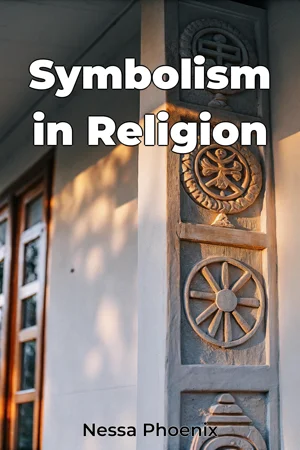
Have you ever paused to consider the profound stories embedded within the symbols that surround us, particularly within the diverse landscape of religious traditions? "Symbolism in Religion" delves into the multifaceted world of religious symbols, exploring their origins, meanings, and enduring significance across cultures and throughout history. This book argues that understanding these symbols is crucial for interpreting religious beliefs, practices, and the overall human experience. We will journey through the intricate web of iconic representations, from the familiar cross and crescent to lesser-known emblems of faith and the complex language of sacred geometry. This exploration is vital because religious symbols are not mere decorations; they are powerful conduits of meaning that encapsulate complex theological concepts, historical narratives, and moral codes. They serve as visual languages that communicate shared values, reinforce community bonds, and provide frameworks for understanding the universe and our place within it. "Symbolism in Religion" provides historical and anthropological context necessary for understanding the evolution and adaptation of religious symbols. It traces the origins of various symbols to ancient cultures, examining how they have been reinterpreted and repurposed over time. This book requires no prior knowledge of theology or religious studies; it is designed to be accessible to anyone with an interest in understanding the deeper meanings behind the symbols that shape our world. The central argument is that religious symbols are dynamic entities, constantly evolving and adapting to new cultural contexts while retaining core elements of their original meaning. This dynamism allows them to remain relevant and powerful across generations, serving as bridges between the past and the present. The book is structured to provide a comprehensive understanding of this topic. Initially, it introduces core theoretical concepts related to symbolism, including semiotics, archetype theory, and the role of symbols in shaping religious identity. It then dedicates individual chapters to explore several major categories of religious symbols. These include symbols associated with deities across different religions, symbols related to creation and cosmology, and those connected with rituals and sacred spaces. For example, one chapter will address the symbolic significance of water in religions ranging from Christianity to Hinduism, discussing rituals such as baptism and its equivalents. Another will unravel the meanings of sacred geometry found in religious art and architecture. The book concludes by considering the future of religious symbols in an increasingly globalized and secular world, examining how they are being reinterpreted and adapted in contemporary contexts. The analysis presented in "Symbolism in Religion" is supported by a wide range of textual sources, including religious scriptures, theological treatises, anthropological studies, and historical accounts. Visual analysis of religious art and architecture provides further evidence to support the book's arguments. The study of religious symbolism naturally intersects with fields such as art history, anthropology, and psychology. Art history provides context for the visual representation of symbols, anthropology offers insights into their cultural and social significance, and psychology offers a framework for understanding how symbols affect our perception of the world. These interdisciplinary connections enrich the book's arguments and offer a more holistic appreciation of the topic. This book offers a unique perspective by emphasizing the fluidity and adaptability of religious symbols. Unlike approaches that focus solely on fixed or universal meanings, this book highlights the ways in which symbols are constantly being reinterpreted and repurposed to meet the needs of changing communities. The tone of "Symbolism in Religion" is academic yet accessible, aiming to engage both scholars and general readers. The writing style is clear, concise, and informative, avoiding jargon while maintaining intellectual rigor. The target audience includes students of religion, theology, and cultural studies, as well as anyone with a general interest in understanding the deeper meanings behind religious symbols. The book’s comprehensive coverage and accessible style make it a valuable resource for both academic and personal exploration. "Symbolism in Religion" seeks to meet the expectations of non-fiction readers by presenting well-researched information in a clear, organized manner, providing extensive notes and references. The scope of the book is broad, covering a wide range of religious traditions and symbolic systems. However, it is intentionally limited to the study of visual and textual symbols, excluding other forms of religious expression such as music or dance. The knowledge gained from this book can be applied in various practical ways. By understanding the symbols that shape religious beliefs and practices, readers can develop greater empathy and understanding towards individuals from different cultural backgrounds. While "Symbolism in Religion" aims to offer a comprehensive overview, the interpretation of religious symbols is often subject to debate. The book acknowledges these debates, presenting different perspectives where appropriate, and encouraging readers to critically evaluate the evidence and arguments presented.
Have you ever paused to consider the profound stories embedded within the symbols that surround us, particularly within the diverse landscape of religious traditions? "Symbolism in Religion" delves into the multifaceted world of religious symbols, exploring their origins, meanings, and enduring significance across cultures and throughout history. This book argues that understanding these symbols is crucial for interpreting religious beliefs, practices, and the overall human experience. We will journey through the intricate web of iconic representations, from the familiar cross and crescent to lesser-known emblems of faith and the complex language of sacred geometry. This exploration is vital because religious symbols are not mere decorations; they are powerful conduits of meaning that encapsulate complex theological concepts, historical narratives, and moral codes. They serve as visual languages that communicate shared values, reinforce community bonds, and provide frameworks for understanding the universe and our place within it. "Symbolism in Religion" provides historical and anthropological context necessary for understanding the evolution and adaptation of religious symbols. It traces the origins of various symbols to ancient cultures, examining how they have been reinterpreted and repurposed over time. This book requires no prior knowledge of theology or religious studies; it is designed to be accessible to anyone with an interest in understanding the deeper meanings behind the symbols that shape our world. The central argument is that religious symbols are dynamic entities, constantly evolving and adapting to new cultural contexts while retaining core elements of their original meaning. This dynamism allows them to remain relevant and powerful across generations, serving as bridges between the past and the present. The book is structured to provide a comprehensive understanding of this topic. Initially, it introduces core theoretical concepts related to symbolism, including semiotics, archetype theory, and the role of symbols in shaping religious identity. It then dedicates individual chapters to explore several major categories of religious symbols. These include symbols associated with deities across different religions, symbols related to creation and cosmology, and those connected with rituals and sacred spaces. For example, one chapter will address the symbolic significance of water in religions ranging from Christianity to Hinduism, discussing rituals such as baptism and its equivalents. Another will unravel the meanings of sacred geometry found in religious art and architecture. The book concludes by considering the future of religious symbols in an increasingly globalized and secular world, examining how they are being reinterpreted and adapted in contemporary contexts. The analysis presented in "Symbolism in Religion" is supported by a wide range of textual sources, including religious scriptures, theological treatises, anthropological studies, and historical accounts. Visual analysis of religious art and architecture provides further evidence to support the book's arguments. The study of religious symbolism naturally intersects with fields such as art history, anthropology, and psychology. Art history provides context for the visual representation of symbols, anthropology offers insights into their cultural and social significance, and psychology offers a framework for understanding how symbols affect our perception of the world. These interdisciplinary connections enrich the book's arguments and offer a more holistic appreciation of the topic. This book offers a unique perspective by emphasizing the fluidity and adaptability of religious symbols. Unlike approaches that focus solely on fixed or universal meanings, this book highlights the ways in which symbols are constantly being reinterpreted and repurposed to meet the needs of changing communities. The tone of "Symbolism in Religion" is academic yet accessible, aiming to engage both scholars and general readers. The writing style is clear, concise, and informative, avoiding jargon while maintaining intellectual rigor. The target audience includes students of religion, theology, and cultural studies, as well as anyone with a general interest in understanding the deeper meanings behind religious symbols. The book’s comprehensive coverage and accessible style make it a valuable resource for both academic and personal exploration. "Symbolism in Religion" seeks to meet the expectations of non-fiction readers by presenting well-researched information in a clear, organized manner, providing extensive notes and references. The scope of the book is broad, covering a wide range of religious traditions and symbolic systems. However, it is intentionally limited to the study of visual and textual symbols, excluding other forms of religious expression such as music or dance. The knowledge gained from this book can be applied in various practical ways. By understanding the symbols that shape religious beliefs and practices, readers can develop greater empathy and understanding towards individuals from different cultural backgrounds. While "Symbolism in Religion" aims to offer a comprehensive overview, the interpretation of religious symbols is often subject to debate. The book acknowledges these debates, presenting different perspectives where appropriate, and encouraging readers to critically evaluate the evidence and arguments presented.
"Symbolism in Religion" explores the profound meanings embedded within religious symbols across diverse cultures and throughout history. The book emphasizes that understanding these symbols is crucial for interpreting religious beliefs, practices, and the human experience. Religious symbols serve as powerful conduits of meaning, encapsulating complex theological concepts, historical narratives, and moral codes. They are not mere decorations but visual languages that communicate shared values and reinforce community bonds. The book journeys through iconic representations, from the cross and crescent to sacred geometry, providing historical and anthropological context. Religious symbols are dynamic entities, constantly evolving while retaining core elements of their original meaning. Initially, the book introduces core theoretical concepts related to symbolism. Later chapters explore symbols associated with deities, creation, cosmology, rituals, and sacred spaces, such as the symbolic significance of water in Christianity and Hinduism. Finally, the book considers the future of religious symbols in a globalized world.
Book Details
ISBN
9788233961862
Publisher
Publifye AS
Your Licenses
You don't own any licenses for this book
Purchase a license below to unlock this book and download the EPUB.
Purchase License
Select a tier to unlock this book
Need bulk licensing?
Contact us for enterprise agreements.