
About This Book
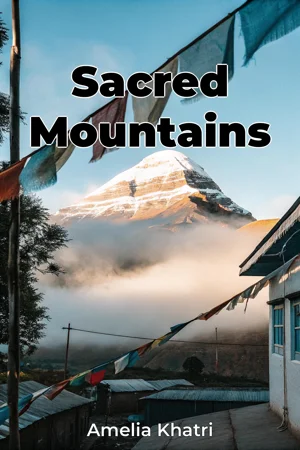
Why have mountains, throughout human history and across diverse cultures, consistently served as focal points of religious and spiritual significance? Sacred Mountains explores this enduring phenomenon, examining how these geological titans have shaped belief systems, rituals, and the very human experience of the divine. This book delves into the multifaceted role of mountains, focusing on their symbolic power as links between the earthly and celestial realms, their function as sites of pilgrimage and revelation, and their embodiment of natural forces. These topics are crucial to understanding the historical development of religions and the continuing influence of landscape on spiritual practice. By examining specific mountains and their associated traditions, we gain insight into the fundamental human need to connect with something larger than ourselves. Historically, mountains have been perceived as places of both danger and sanctuary, inspiring awe and trepidation. Socially, they often represent boundaries, both physical and metaphorical, separating the mundane world from the sacred. Scientifically, their unique geological formations and ecosystems contribute to their mystique. Understanding these contexts provides a foundation for appreciating the complex relationship between mountains and spirituality. The central argument of Sacred Mountains is that the enduring spiritual significance of mountains stems from their inherent qualities – their immensity, permanence, and inaccessibility – which resonate with core human desires for transcendence and connection to the divine. This argument is important because it challenges purely anthropocentric views of religion, highlighting the role of the natural world in shaping spiritual beliefs and practices. Sacred Mountains begins by introducing the concept of sacred space and its connection to natural landscapes. It then develops this idea through detailed case studies: first, from the Abrahamic traditions, examining Mount Sinai and its role in the revelation of the Ten Commandments, exploring its influence on Jewish, Christian, and Islamic understandings of law and divine authority; second, from Eastern traditions, focusing on Mount Kailash, revered by Hindus, Buddhists, Jains, and Bon practitioners, analyzing its importance as a cosmic axis and a destination for arduous pilgrimage; and third, investigating mountains in indigenous cultures, specifically exploring mountains in Native American traditions and their role in maintaining ecological balance and cultural identity. The book culminates by synthesizing these diverse perspectives, offering a comparative analysis of the universal themes that underlie the spiritual significance of mountains across cultures. The book draws upon a wide range of evidence, including religious texts, archaeological findings, ethnographic studies, and geological surveys. It incorporates unique data sources such as personal accounts of pilgrimage experiences and analyses of mountain iconography in religious art. The book also connects to other fields such as environmental studies, examining the ecological impact of pilgrimage and the role of sacred mountains in conservation efforts. It links to anthropology, exploring the cultural construction of sacred landscapes. It connects to art history, analyzing the representation of mountains in religious imagery. These connections enrich the book's argument by demonstrating the complex and interconnected nature of human beliefs and practices. Sacred Mountains offers a unique perspective by combining a comparative religious studies approach with insights from environmental history and landscape archaeology. It avoids essentializing the concept of the "sacred," instead focusing on the specific ways in which different cultures have imbued mountains with meaning. The tone of the book is academic yet accessible, aiming to engage both scholars and general readers interested in religion, history, and cultural geography. The target audience includes students and scholars of religion, history, and anthropology, as well as general readers interested in travel, nature, and spirituality. The book would be valuable to them because it provides a comprehensive and nuanced understanding of the enduring spiritual significance of mountains around the world. As a work of non-fiction within the genres of Religion, World History, and History World, the book adheres to the conventions of scholarly rigor, including thorough documentation, critical analysis, and balanced presentation of diverse perspectives. The scope of the book is global, encompassing a wide range of mountain cultures and religious traditions. However, it acknowledges the limitations of any single study, focusing on a selection of representative examples rather than attempting to be exhaustive. The information presented has several real-world applications. It can inform sustainable tourism practices in mountain regions, promote cross-cultural understanding, and encourage a deeper appreciation for the role of the natural world in shaping human spirituality. While the spiritual value of mountains is broadly accepted, debates exist around issues like the ethics of mountain tourism and the balance between conservation and access. This book engages with these debates, offering a nuanced perspective that acknowledges the complexities of these issues.
Why have mountains, throughout human history and across diverse cultures, consistently served as focal points of religious and spiritual significance? Sacred Mountains explores this enduring phenomenon, examining how these geological titans have shaped belief systems, rituals, and the very human experience of the divine. This book delves into the multifaceted role of mountains, focusing on their symbolic power as links between the earthly and celestial realms, their function as sites of pilgrimage and revelation, and their embodiment of natural forces. These topics are crucial to understanding the historical development of religions and the continuing influence of landscape on spiritual practice. By examining specific mountains and their associated traditions, we gain insight into the fundamental human need to connect with something larger than ourselves. Historically, mountains have been perceived as places of both danger and sanctuary, inspiring awe and trepidation. Socially, they often represent boundaries, both physical and metaphorical, separating the mundane world from the sacred. Scientifically, their unique geological formations and ecosystems contribute to their mystique. Understanding these contexts provides a foundation for appreciating the complex relationship between mountains and spirituality. The central argument of Sacred Mountains is that the enduring spiritual significance of mountains stems from their inherent qualities – their immensity, permanence, and inaccessibility – which resonate with core human desires for transcendence and connection to the divine. This argument is important because it challenges purely anthropocentric views of religion, highlighting the role of the natural world in shaping spiritual beliefs and practices. Sacred Mountains begins by introducing the concept of sacred space and its connection to natural landscapes. It then develops this idea through detailed case studies: first, from the Abrahamic traditions, examining Mount Sinai and its role in the revelation of the Ten Commandments, exploring its influence on Jewish, Christian, and Islamic understandings of law and divine authority; second, from Eastern traditions, focusing on Mount Kailash, revered by Hindus, Buddhists, Jains, and Bon practitioners, analyzing its importance as a cosmic axis and a destination for arduous pilgrimage; and third, investigating mountains in indigenous cultures, specifically exploring mountains in Native American traditions and their role in maintaining ecological balance and cultural identity. The book culminates by synthesizing these diverse perspectives, offering a comparative analysis of the universal themes that underlie the spiritual significance of mountains across cultures. The book draws upon a wide range of evidence, including religious texts, archaeological findings, ethnographic studies, and geological surveys. It incorporates unique data sources such as personal accounts of pilgrimage experiences and analyses of mountain iconography in religious art. The book also connects to other fields such as environmental studies, examining the ecological impact of pilgrimage and the role of sacred mountains in conservation efforts. It links to anthropology, exploring the cultural construction of sacred landscapes. It connects to art history, analyzing the representation of mountains in religious imagery. These connections enrich the book's argument by demonstrating the complex and interconnected nature of human beliefs and practices. Sacred Mountains offers a unique perspective by combining a comparative religious studies approach with insights from environmental history and landscape archaeology. It avoids essentializing the concept of the "sacred," instead focusing on the specific ways in which different cultures have imbued mountains with meaning. The tone of the book is academic yet accessible, aiming to engage both scholars and general readers interested in religion, history, and cultural geography. The target audience includes students and scholars of religion, history, and anthropology, as well as general readers interested in travel, nature, and spirituality. The book would be valuable to them because it provides a comprehensive and nuanced understanding of the enduring spiritual significance of mountains around the world. As a work of non-fiction within the genres of Religion, World History, and History World, the book adheres to the conventions of scholarly rigor, including thorough documentation, critical analysis, and balanced presentation of diverse perspectives. The scope of the book is global, encompassing a wide range of mountain cultures and religious traditions. However, it acknowledges the limitations of any single study, focusing on a selection of representative examples rather than attempting to be exhaustive. The information presented has several real-world applications. It can inform sustainable tourism practices in mountain regions, promote cross-cultural understanding, and encourage a deeper appreciation for the role of the natural world in shaping human spirituality. While the spiritual value of mountains is broadly accepted, debates exist around issues like the ethics of mountain tourism and the balance between conservation and access. This book engages with these debates, offering a nuanced perspective that acknowledges the complexities of these issues.
"Sacred Mountains" explores the profound spiritual significance of mountains across various cultures and throughout world history. It examines how these natural formations have shaped religious traditions, pilgrimage practices, and cultural identity. Mountains often serve as symbolic links between the earthly and celestial realms, inspiring both awe and reverence. The book delves into the historical development of religions, highlighting the influence of landscape on spiritual practice. The book uniquely focuses on specific mountains, such as Mount Sinai in the Abrahamic traditions, examining its role in divine law and authority. It also explores Mount Kailash, revered in Eastern traditions, as a cosmic axis. Additionally, it investigates mountains in indigenous cultures, such as those in Native American traditions, emphasizing their role in ecological balance. By analyzing these diverse perspectives, "Sacred Mountains" offers a comparative analysis of the universal themes underlying the spiritual significance of mountains. The book begins by establishing the connection between sacred space and natural landscapes, then uses case studies to develop this concept across different traditions. It draws upon religious texts, archaeological findings, ethnographic studies, and geological surveys to support its arguments. This approach provides a comprehensive and nuanced understanding of the enduring relationship between humanity and these majestic landmarks.
Book Details
ISBN
9788233961664
Publisher
Publifye AS
Your Licenses
You don't own any licenses for this book
Purchase a license below to unlock this book and download the EPUB.
Purchase License
Select a tier to unlock this book
Need bulk licensing?
Contact us for enterprise agreements.