
About This Book
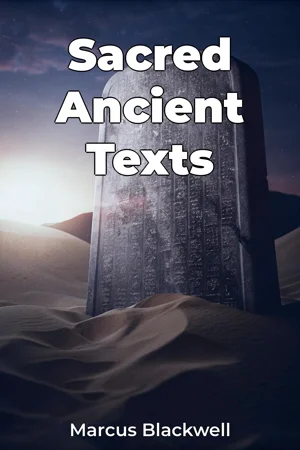
How have ancient scriptures shaped the world we live in today, and what can they tell us about the enduring human quest for meaning? "Sacred Ancient Texts" embarks on a journey through the oldest documented religious writings, exploring their origins, historical contexts, and the profound impact they've had on the development of modern faiths and civilizations. This book is not merely a historical survey; it is an investigation into the core beliefs that have guided humanity for millennia, offering insights relevant to understanding contemporary religious landscapes. Two key topics drive our exploration: the genesis and evolution of foundational religious ideas, and the cross-cultural transmission of these concepts across vast stretches of time and geography. Understanding how these ancient texts emerged from specific cultural and historical milieus is crucial to interpreting their meaning accurately. Furthermore, tracing the pathways through which these ideas spread, adapted, and influenced other belief systems provides an invaluable perspective on the interconnectedness of human spiritual history. To fully appreciate the significance of these texts, we will delve into the historical and social contexts in which they were created. This includes examining the political structures, economic systems, and philosophical currents that shaped the worldview of the societies that produced them. While a background in world history or comparative religion will be beneficial, the book is designed to be accessible to readers with a general interest in the subject, providing necessary context and explanations along the way. The central argument of "Sacred Ancient Texts" is that these ancient texts, despite their diverse origins and specific cultural contexts, reveal common threads in human spiritual aspirations and ethical frameworks. By identifying these shared elements, this book demonstrates the enduring power of religious ideas to shape individual lives and collective identities. This argument is important because it challenges simplistic notions of religious difference and promotes a deeper understanding of the shared human experience. The structure of this book will proceed as follows: - Introduction: Overview of the concept of "sacred texts" and their significance in various cultures. - Part 1: Origins and Development: This section will examine the earliest known religious texts, analyzing their authorship, dating, and initial reception. Specific chapters will focus on texts such as the Vedas, the Zend Avesta, and early Mesopotamian religious writings. - Part 2: Transmission and Influence: This section will trace the spread of religious ideas and practices through trade, conquest, and cultural exchange. Chapters will explore the influence of Zoroastrianism on Judaism, the impact of Buddhism in Asia, and the role of Hellenistic philosophy in shaping early Christianity. - Part 3: Legacy and Relevance: This section will examine how these ancient texts continue to influence modern faiths, ethical systems, and social structures. Chapters will analyze the ongoing debates surrounding scriptural interpretation, the role of ancient texts in contemporary religious movements, and the ethical challenges posed by ancient religious practices. - Conclusion: Summarizing the book's findings and reflecting on the enduring relevance of ancient sacred texts in the modern world. The evidence presented will draw upon a wide range of sources, including translations of the sacred texts themselves, archaeological findings, historical documents, and scholarly analyses. Unique approaches will be used to compare and contrast different religious traditions, identifying common themes and patterns. This book connects to other fields such as archaeology, anthropology, and comparative literature. Archaeological discoveries provide physical evidence of the cultures that produced these texts, while anthropological studies illuminate the social and cultural contexts in which they were used. Connecting sacred texts to comparative literature reveals the enduring themes and archetypes that resonate across cultures and time periods. The approach in "Sacred Ancient Texts" is scholarly yet accessible, aiming to bridge the gap between academic research and general readership. The tone will be informative and engaging, using clear language and avoiding unnecessary jargon. The target audience includes students of religion, history, and cultural studies, as well as general readers interested in exploring the origins and evolution of religious beliefs. This book offers valuable insights into the historical roots of contemporary faiths and provides a framework for understanding the complex relationship between religion and society. As a work of non-fiction within the genres of Religion, World History, and History World, "Sacred Ancient Texts" adheres to the conventions of scholarly research and accurate representation of historical facts. The arguments will be presented with objectivity and supported by credible evidence. The scope of the book will be broad, covering a wide range of ancient religious traditions. However, it will not attempt to provide an exhaustive account of every ancient sacred text. Instead, it will focus on those texts that have had the most significant impact on the development of subsequent religious traditions. The information presented in this book can be applied practically by readers to better understand the diversity of religious beliefs in the world today, to engage in informed dialogue with people of different faiths, and to appreciate the enduring power of religious ideas to shape human history. While striving for objectivity, the book acknowledges that there are ongoing debates surrounding the interpretation of sacred texts and the historical accuracy of religious narratives. These debates will be addressed fairly and respectfully, providing readers with a balanced perspective on the issues at stake.
How have ancient scriptures shaped the world we live in today, and what can they tell us about the enduring human quest for meaning? "Sacred Ancient Texts" embarks on a journey through the oldest documented religious writings, exploring their origins, historical contexts, and the profound impact they've had on the development of modern faiths and civilizations. This book is not merely a historical survey; it is an investigation into the core beliefs that have guided humanity for millennia, offering insights relevant to understanding contemporary religious landscapes. Two key topics drive our exploration: the genesis and evolution of foundational religious ideas, and the cross-cultural transmission of these concepts across vast stretches of time and geography. Understanding how these ancient texts emerged from specific cultural and historical milieus is crucial to interpreting their meaning accurately. Furthermore, tracing the pathways through which these ideas spread, adapted, and influenced other belief systems provides an invaluable perspective on the interconnectedness of human spiritual history. To fully appreciate the significance of these texts, we will delve into the historical and social contexts in which they were created. This includes examining the political structures, economic systems, and philosophical currents that shaped the worldview of the societies that produced them. While a background in world history or comparative religion will be beneficial, the book is designed to be accessible to readers with a general interest in the subject, providing necessary context and explanations along the way. The central argument of "Sacred Ancient Texts" is that these ancient texts, despite their diverse origins and specific cultural contexts, reveal common threads in human spiritual aspirations and ethical frameworks. By identifying these shared elements, this book demonstrates the enduring power of religious ideas to shape individual lives and collective identities. This argument is important because it challenges simplistic notions of religious difference and promotes a deeper understanding of the shared human experience. The structure of this book will proceed as follows: - Introduction: Overview of the concept of "sacred texts" and their significance in various cultures. - Part 1: Origins and Development: This section will examine the earliest known religious texts, analyzing their authorship, dating, and initial reception. Specific chapters will focus on texts such as the Vedas, the Zend Avesta, and early Mesopotamian religious writings. - Part 2: Transmission and Influence: This section will trace the spread of religious ideas and practices through trade, conquest, and cultural exchange. Chapters will explore the influence of Zoroastrianism on Judaism, the impact of Buddhism in Asia, and the role of Hellenistic philosophy in shaping early Christianity. - Part 3: Legacy and Relevance: This section will examine how these ancient texts continue to influence modern faiths, ethical systems, and social structures. Chapters will analyze the ongoing debates surrounding scriptural interpretation, the role of ancient texts in contemporary religious movements, and the ethical challenges posed by ancient religious practices. - Conclusion: Summarizing the book's findings and reflecting on the enduring relevance of ancient sacred texts in the modern world. The evidence presented will draw upon a wide range of sources, including translations of the sacred texts themselves, archaeological findings, historical documents, and scholarly analyses. Unique approaches will be used to compare and contrast different religious traditions, identifying common themes and patterns. This book connects to other fields such as archaeology, anthropology, and comparative literature. Archaeological discoveries provide physical evidence of the cultures that produced these texts, while anthropological studies illuminate the social and cultural contexts in which they were used. Connecting sacred texts to comparative literature reveals the enduring themes and archetypes that resonate across cultures and time periods. The approach in "Sacred Ancient Texts" is scholarly yet accessible, aiming to bridge the gap between academic research and general readership. The tone will be informative and engaging, using clear language and avoiding unnecessary jargon. The target audience includes students of religion, history, and cultural studies, as well as general readers interested in exploring the origins and evolution of religious beliefs. This book offers valuable insights into the historical roots of contemporary faiths and provides a framework for understanding the complex relationship between religion and society. As a work of non-fiction within the genres of Religion, World History, and History World, "Sacred Ancient Texts" adheres to the conventions of scholarly research and accurate representation of historical facts. The arguments will be presented with objectivity and supported by credible evidence. The scope of the book will be broad, covering a wide range of ancient religious traditions. However, it will not attempt to provide an exhaustive account of every ancient sacred text. Instead, it will focus on those texts that have had the most significant impact on the development of subsequent religious traditions. The information presented in this book can be applied practically by readers to better understand the diversity of religious beliefs in the world today, to engage in informed dialogue with people of different faiths, and to appreciate the enduring power of religious ideas to shape human history. While striving for objectivity, the book acknowledges that there are ongoing debates surrounding the interpretation of sacred texts and the historical accuracy of religious narratives. These debates will be addressed fairly and respectfully, providing readers with a balanced perspective on the issues at stake.
"Sacred Ancient Texts" explores the origins and impact of ancient scriptures on modern faiths and civilizations, emphasizing their role in humanity's enduring search for meaning. This historical survey investigates core beliefs that have guided humanity for millennia, offering insights into contemporary religious landscapes. The book argues that despite diverse origins, these texts reveal shared human spiritual aspirations. The book examines the genesis and evolution of foundational religious ideas, as well as their cross-cultural transmission across time and geography. Understanding the historical and social contexts in which these texts were created is crucial for interpretation. For example, the influence of Zoroastrianism on Judaism illustrates how religious ideas spread and adapted. The book progresses through an examination of the origins and development of texts, such as the Vedas and Zend Avesta, then traces the transmission of religious ideas through trade and conquest. Finally, it looks at the legacy and relevance of these texts in modern faiths. This approach allows readers to appreciate the diversity of religious beliefs and engage in informed dialogue, understanding the enduring power of religious ideas to shape history.
Book Details
ISBN
9788233961435
Publisher
Publifye AS
Your Licenses
You don't own any licenses for this book
Purchase a license below to unlock this book and download the EPUB.
Purchase License
Select a tier to unlock this book
Need bulk licensing?
Contact us for enterprise agreements.