
About This Book
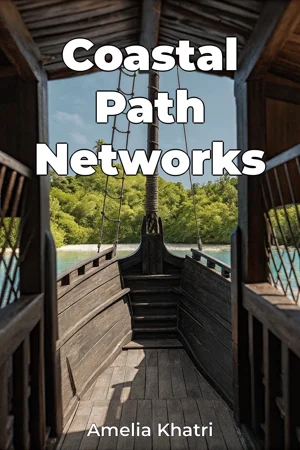
How did the seemingly simple act of coastal trading shape the course of civilizations, leaving its indelible mark on our landscapes and cultures? "Coastal Path Networks" explores the intricate web of maritime routes that have connected communities for millennia, offering a comprehensive examination of both ancient and modern coastal trade. This book delves into the significance of these networks, highlighting how they facilitated not only the exchange of goods, but also the diffusion of ideas, technologies, and cultural practices. The core of this exploration rests on understanding how coastal trade acted as a catalyst for societal development and intercultural exchange. This book provides a historical journey along coastlines around the world, examining the social, economic, and technological factors that influenced the development and transformation of these trade routes. Starting with the earliest evidence of maritime activity, it traces the evolution of coastal navigation, shipbuilding, and trade practices across different eras. The book provides necessary historical context regarding the rise and fall of dominant maritime powers and the impact of these shifts on regional trade dynamics. The central argument presented is that coastal trading routes are not simply conduits for commerce, but are vital arteries that have shaped cultural identities and economic systems throughout history. The book is structured to provide a holistic understanding of coastal path networks. It begins with an introduction to core concepts, mapping key historical routes and outlining the significance of geographical factors, such as prevailing winds and currents, in determining trade patterns. It then develops these ideas, first, by examining the archaeological evidence, including shipwrecks and coastal settlements, to reconstruct past trading activities and understand the types of goods exchanged. Second, it analyzes maritime records, such as logbooks, shipping manifests, and port records, to quantify trade volumes, identify key trading partners, and understand the economic impact of coastal trade on local communities. Third, it looks at the modern coastal trade, including the impacts of globalization, technology, and sustainability. The arguments culminate in a discussion of the lasting legacy of coastal trade networks and their contemporary relevance. The evidence presented in "Coastal Path Networks" draws from a diverse range of sources including archaeological findings, maritime archives from various nations, and modern logistical data. The book also employs interdisciplinary connections, linking maritime history with economic theory, environmental studies, and cultural anthropology. These connections enhance the argument by illustrating how coastal trade has affected not only economic growth, but also environmental sustainability and the preservation of cultural heritage. "Coastal Path Networks" stands out by integrating historical data with modern logistical insights, offering a fresh perspective on the enduring significance of coastal trade. The tone is informative and accessible, designed for readers interested in history, geography, and maritime studies. The target audience includes students, researchers, and anyone with a passion for understanding the historical forces that have shaped coastal communities. This book will appeal to those seeking a comprehensive and engaging exploration of the world's coastal trading routes. As a travel and history book, "Coastal Path Networks" strives to meet the genre's conventions by combining factual information with engaging narratives and visual aids, such as maps and illustrations. The scope of the book is global, covering diverse coastal regions and time periods. It acknowledges limitations, such as the uneven availability of historical records for certain regions, and focuses on providing a representative overview rather than an exhaustive account. The information presented has real-world applications for policymakers involved in coastal development and for businesses engaged in maritime trade. The lessons from history can inform sustainable practices and strategies for preserving coastal heritage. The book addresses ongoing debates in the field, such as the impact of modern shipping on marine ecosystems and the challenges of balancing economic growth with environmental conservation.
How did the seemingly simple act of coastal trading shape the course of civilizations, leaving its indelible mark on our landscapes and cultures? "Coastal Path Networks" explores the intricate web of maritime routes that have connected communities for millennia, offering a comprehensive examination of both ancient and modern coastal trade. This book delves into the significance of these networks, highlighting how they facilitated not only the exchange of goods, but also the diffusion of ideas, technologies, and cultural practices. The core of this exploration rests on understanding how coastal trade acted as a catalyst for societal development and intercultural exchange. This book provides a historical journey along coastlines around the world, examining the social, economic, and technological factors that influenced the development and transformation of these trade routes. Starting with the earliest evidence of maritime activity, it traces the evolution of coastal navigation, shipbuilding, and trade practices across different eras. The book provides necessary historical context regarding the rise and fall of dominant maritime powers and the impact of these shifts on regional trade dynamics. The central argument presented is that coastal trading routes are not simply conduits for commerce, but are vital arteries that have shaped cultural identities and economic systems throughout history. The book is structured to provide a holistic understanding of coastal path networks. It begins with an introduction to core concepts, mapping key historical routes and outlining the significance of geographical factors, such as prevailing winds and currents, in determining trade patterns. It then develops these ideas, first, by examining the archaeological evidence, including shipwrecks and coastal settlements, to reconstruct past trading activities and understand the types of goods exchanged. Second, it analyzes maritime records, such as logbooks, shipping manifests, and port records, to quantify trade volumes, identify key trading partners, and understand the economic impact of coastal trade on local communities. Third, it looks at the modern coastal trade, including the impacts of globalization, technology, and sustainability. The arguments culminate in a discussion of the lasting legacy of coastal trade networks and their contemporary relevance. The evidence presented in "Coastal Path Networks" draws from a diverse range of sources including archaeological findings, maritime archives from various nations, and modern logistical data. The book also employs interdisciplinary connections, linking maritime history with economic theory, environmental studies, and cultural anthropology. These connections enhance the argument by illustrating how coastal trade has affected not only economic growth, but also environmental sustainability and the preservation of cultural heritage. "Coastal Path Networks" stands out by integrating historical data with modern logistical insights, offering a fresh perspective on the enduring significance of coastal trade. The tone is informative and accessible, designed for readers interested in history, geography, and maritime studies. The target audience includes students, researchers, and anyone with a passion for understanding the historical forces that have shaped coastal communities. This book will appeal to those seeking a comprehensive and engaging exploration of the world's coastal trading routes. As a travel and history book, "Coastal Path Networks" strives to meet the genre's conventions by combining factual information with engaging narratives and visual aids, such as maps and illustrations. The scope of the book is global, covering diverse coastal regions and time periods. It acknowledges limitations, such as the uneven availability of historical records for certain regions, and focuses on providing a representative overview rather than an exhaustive account. The information presented has real-world applications for policymakers involved in coastal development and for businesses engaged in maritime trade. The lessons from history can inform sustainable practices and strategies for preserving coastal heritage. The book addresses ongoing debates in the field, such as the impact of modern shipping on marine ecosystems and the challenges of balancing economic growth with environmental conservation.
"Coastal Path Networks" explores the historical significance of maritime routes, revealing how coastal trading shaped civilizations by facilitating the exchange of goods, ideas, and cultural practices. It examines how these networks acted as catalysts for societal development and intercultural exchange, impacting economic systems and cultural identities. The book provides a historical journey along coastlines, examining the social, economic, and technological factors influencing trade route development. Beginning with early maritime activity, the book traces the evolution of coastal navigation and shipbuilding. It then analyzes archaeological evidence, such as shipwrecks, and maritime records like shipping manifests, to reconstruct past trading activities. The book concludes by discussing the lasting legacy of coastal trade networks, including modern globalization and sustainability impacts. This approach provides a holistic understanding of coastal path networks and their enduring relevance.
Book Details
ISBN
9788233961398
Publisher
Publifye AS
Your Licenses
You don't own any licenses for this book
Purchase a license below to unlock this book and download the EPUB.
Purchase License
Select a tier to unlock this book
Need bulk licensing?
Contact us for enterprise agreements.