
About This Book
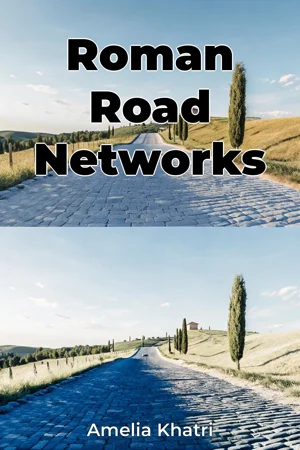
How did a civilization, centuries before modern machinery, construct a network of roads so enduring that remnants still exist today? This book, *Roman Road Networks*, delves into the sophisticated engineering and complex organizational systems behind one of the ancient world's most impressive achievements. It addresses not only the "how" of Roman road construction, but also the "why"—the strategic, economic, and social imperatives that drove this massive undertaking. The book is more than just an architectural study; it's an examination of the ways in which infrastructure shaped an empire. The core of this study centers on three key areas. First, detailed analyses of Roman surveying and construction techniques will be presented, revealing the ingenious methods used to build for durability across diverse terrains. Second, the book explores the organizational and logistical structures required to manage such a vast public works program, shedding light on Roman bureaucracy and resource management. Finally, it examines the role of these road networks in facilitating trade, military movement, and the spread of Roman culture, illustrating the profound influence of infrastructure on imperial expansion and control. This exploration is grounded in the broader context of Roman history, touching upon the political climate, economic pressures, and military ambitions that fueled the road-building enterprise. While a general understanding of Roman history will enhance the reading experience, the book provides sufficient background information. The central argument of *Roman Road Networks* is that Roman roads were not merely conduits for transportation, but strategically vital infrastructure that enabled and maintained Roman dominance. Understanding these interwoven connections is vital for grasping the dynamics of the Roman Empire. The book's structure begins by introducing the foundational concepts of Roman engineering and governance. It progresses through three major sections. The first examines construction methods, detailing everything from surveying instruments and roadbed preparation to paving techniques and bridge construction, all supported by archaeological findings. The second analyzes the administrative structures that enabled road building, focusing on the roles of various officials, the allocation of resources, and the management of labor. The third segment examines the impact of the network on military campaigns, trade routes, and the dissemination of ideas and culture throughout the Roman world. The argument culminates with showing how the decline of road maintenance contributed to the weakening of the Empire. Evidence presented includes archaeological surveys and excavations of Roman roads throughout Europe, North Africa, and the Middle East. Contemporary Roman documents, such as contracts for road construction, military reports detailing road usage, and legal texts outlining road maintenance responsibilities, provide insight into the Roman perspective. The book connects to fields such as civil engineering, economic history, and military strategy, demonstrating the multi-faceted impact of Roman roads. What sets this book apart is its integrated approach, combining detailed archaeological analysis with insights gleaned from ancient texts to create a comprehensive picture of Roman road networks. The approach is descriptive and analytical, aiming to present a balanced and well-supported interpretation of the evidence. The intended audience includes students of Roman history, archaeology enthusiasts, and anyone interested in the history of engineering and infrastructure. The book offers valuable insights into the interplay between technology, society, and power in the ancient world. The scope of the book is limited to the major paved road networks of the Roman Empire, focusing primarily on roads built during the Republic and early Empire (roughly 300 BCE to 200 CE). While unpaved roads and local tracks are acknowledged, they’re not the primary focus. This focus allows for a more in-depth analysis of the standardized construction techniques and centralized management systems that characterized major Roman roads. The historical information and concepts discussed can provide insights for modern infrastructure projects, especially regarding the importance of planning, resource management, and long-term maintenance. While debates continue regarding the precise routes of some Roman roads and the exact methods used in their construction, this book offers a synthesis of current research and a coherent framework for understanding this vital aspect of Roman civilization.
How did a civilization, centuries before modern machinery, construct a network of roads so enduring that remnants still exist today? This book, *Roman Road Networks*, delves into the sophisticated engineering and complex organizational systems behind one of the ancient world's most impressive achievements. It addresses not only the "how" of Roman road construction, but also the "why"—the strategic, economic, and social imperatives that drove this massive undertaking. The book is more than just an architectural study; it's an examination of the ways in which infrastructure shaped an empire. The core of this study centers on three key areas. First, detailed analyses of Roman surveying and construction techniques will be presented, revealing the ingenious methods used to build for durability across diverse terrains. Second, the book explores the organizational and logistical structures required to manage such a vast public works program, shedding light on Roman bureaucracy and resource management. Finally, it examines the role of these road networks in facilitating trade, military movement, and the spread of Roman culture, illustrating the profound influence of infrastructure on imperial expansion and control. This exploration is grounded in the broader context of Roman history, touching upon the political climate, economic pressures, and military ambitions that fueled the road-building enterprise. While a general understanding of Roman history will enhance the reading experience, the book provides sufficient background information. The central argument of *Roman Road Networks* is that Roman roads were not merely conduits for transportation, but strategically vital infrastructure that enabled and maintained Roman dominance. Understanding these interwoven connections is vital for grasping the dynamics of the Roman Empire. The book's structure begins by introducing the foundational concepts of Roman engineering and governance. It progresses through three major sections. The first examines construction methods, detailing everything from surveying instruments and roadbed preparation to paving techniques and bridge construction, all supported by archaeological findings. The second analyzes the administrative structures that enabled road building, focusing on the roles of various officials, the allocation of resources, and the management of labor. The third segment examines the impact of the network on military campaigns, trade routes, and the dissemination of ideas and culture throughout the Roman world. The argument culminates with showing how the decline of road maintenance contributed to the weakening of the Empire. Evidence presented includes archaeological surveys and excavations of Roman roads throughout Europe, North Africa, and the Middle East. Contemporary Roman documents, such as contracts for road construction, military reports detailing road usage, and legal texts outlining road maintenance responsibilities, provide insight into the Roman perspective. The book connects to fields such as civil engineering, economic history, and military strategy, demonstrating the multi-faceted impact of Roman roads. What sets this book apart is its integrated approach, combining detailed archaeological analysis with insights gleaned from ancient texts to create a comprehensive picture of Roman road networks. The approach is descriptive and analytical, aiming to present a balanced and well-supported interpretation of the evidence. The intended audience includes students of Roman history, archaeology enthusiasts, and anyone interested in the history of engineering and infrastructure. The book offers valuable insights into the interplay between technology, society, and power in the ancient world. The scope of the book is limited to the major paved road networks of the Roman Empire, focusing primarily on roads built during the Republic and early Empire (roughly 300 BCE to 200 CE). While unpaved roads and local tracks are acknowledged, they’re not the primary focus. This focus allows for a more in-depth analysis of the standardized construction techniques and centralized management systems that characterized major Roman roads. The historical information and concepts discussed can provide insights for modern infrastructure projects, especially regarding the importance of planning, resource management, and long-term maintenance. While debates continue regarding the precise routes of some Roman roads and the exact methods used in their construction, this book offers a synthesis of current research and a coherent framework for understanding this vital aspect of Roman civilization.
*Roman Road Networks* explores the remarkable engineering and organizational prowess behind the construction of Roman roads. These ancient highways were not merely paths, but vital infrastructure that facilitated military campaigns, trade, and the spread of Roman culture. The book investigates how the Romans, without modern machinery, built roads so durable that remnants still exist today. One intriguing aspect examined is the sophisticated surveying techniques employed, demonstrating their advanced understanding of geometry and topography. The book also highlights the complex logistical structures needed to manage such a vast public works program, revealing insights into Roman bureaucracy and resource allocation. The book begins by establishing the foundations of Roman engineering and governance, then progresses through sections detailing construction methods, administrative structures, and the network's profound impact. Archaeological findings and contemporary Roman documents support the analysis. Ultimately, the book argues that these road networks were strategically crucial for enabling and maintaining Roman dominance, and the decline of road maintenance contributed to the weakening of the Empire. This integrated approach, combining archaeological evidence with ancient texts, provides a comprehensive understanding of these vital arteries of the Roman world.
Book Details
ISBN
9788233961343
Publisher
Publifye AS
Your Licenses
You don't own any licenses for this book
Purchase a license below to unlock this book and download the EPUB.
Purchase License
Select a tier to unlock this book
Need bulk licensing?
Contact us for enterprise agreements.