
About This Book
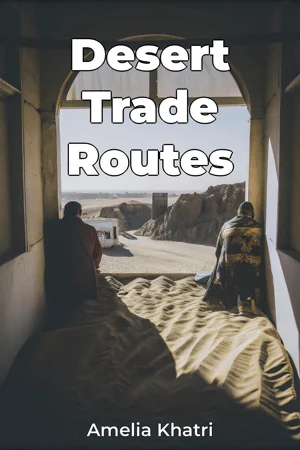
How did the arid expanses of our planet become conduits of cultural exchange and economic power? "Desert Trade Routes" explores the intricate network of pathways that crisscrossed the deserts of Africa and Asia, serving as vital arteries of commerce, cultural diffusion, and political interaction for millennia. This book will examine how these seemingly inhospitable environments fostered some of the most significant trade networks in history. We delve into three primary subjects: the formative role of technology in enabling desert travel, the complex interplay of cultural exchange along these routes, and the political and economic structures that governed and were shaped by desert trade. These themes are crucial to understanding not only the history of Africa and Asia but also the broader story of globalization and intercultural relations. To properly understand the dynamics of these trade routes, we must consider the arid climates, the scarcity of resources, and the diverse populations involved. Knowledge of basic geographical concepts, such as oasis systems and major desert regions (Sahara, Arabian, Gobi, etc.) will also be beneficial. The central argument of "Desert Trade Routes" is that desert trade was not merely a commercial activity but a transformative force shaping the social, political, and cultural landscapes of both continents. The economic benefits spurred the growth of empires and the development of innovative technologies and systems of governance as well as resulted in significant cultural exchange. The book unfolds in a structured manner. First, the introduction establishes the environmental and historical context, presenting the major desert regions and the people who inhabited them and it then introduces the technologies that made long-distance travel possible, such as camel domestication, navigation techniques and water management. Next, the book explores the routes themselves, including the trans-Saharan trade, the Silk Road's desert segments, and the Arabian incense routes. We examine the goods exchanged—gold, salt, textiles, spices, and slaves—and the impact of this trade on local economies and societies. Specifically, attention is given to the rise of key trading cities and empires along these routes, such as Timbuktu, Palmyra, and the Nabataean kingdom. The book then analyzes the cultural exchange that occurred along these routes which includes the spread of religions like Islam and Buddhism, the transmission of scientific knowledge, and the fusion of artistic styles. Finally, the book examines the decline of these routes with the advent of maritime trade and colonialism, and assesses their lasting legacy on the regions they traversed. The analysis is grounded in diverse forms of evidence: archaeological findings from desert settlements and trade outposts, which including material artefacts and architectural remains; historical records from Arab, Chinese, and European travelers and merchants; and the study of ancient maps and trade documents. "Desert Trade Routes" connects to several other fields of study. Economic history is essential for understanding the economic impact of trade. Anthropology sheds light on the cultural interactions among diverse groups. Political science is relevant for analyzing the power dynamics and governance structures that emerged along these routes. This book provides a comprehensive, interdisciplinary examination of desert trade, highlighting its complex historical, cultural, and economic significance. The writing style is academic yet accessible. The book avoids jargon and aims to engage both scholars and general readers interested in history and world cultures. The primary audience includes students of history, geography, and cultural studies, as well as anyone interested in learning about the global impact of desert trade. As a work of history, "Desert Trade Routes" adheres to the standards of historical accuracy, objectivity, and evidence-based analysis. While the book covers major trade routes across Africa and Asia, it does not delve into every minor route or regional variation, as the focus is on the broader patterns and trends. The lessons learned from these historical trade routes are applicable to contemporary issues such as globalization, intercultural communication, and economic development. By understanding the successes and failures of past trade networks, we can gain insights into how to foster sustainable and equitable trade relationships in the modern world. The role of slavery in desert trade has generated considerable debate. This book addresses these controversies head-on, presenting a balanced and nuanced analysis of the ethical and social implications of this aspect of desert commerce.
How did the arid expanses of our planet become conduits of cultural exchange and economic power? "Desert Trade Routes" explores the intricate network of pathways that crisscrossed the deserts of Africa and Asia, serving as vital arteries of commerce, cultural diffusion, and political interaction for millennia. This book will examine how these seemingly inhospitable environments fostered some of the most significant trade networks in history. We delve into three primary subjects: the formative role of technology in enabling desert travel, the complex interplay of cultural exchange along these routes, and the political and economic structures that governed and were shaped by desert trade. These themes are crucial to understanding not only the history of Africa and Asia but also the broader story of globalization and intercultural relations. To properly understand the dynamics of these trade routes, we must consider the arid climates, the scarcity of resources, and the diverse populations involved. Knowledge of basic geographical concepts, such as oasis systems and major desert regions (Sahara, Arabian, Gobi, etc.) will also be beneficial. The central argument of "Desert Trade Routes" is that desert trade was not merely a commercial activity but a transformative force shaping the social, political, and cultural landscapes of both continents. The economic benefits spurred the growth of empires and the development of innovative technologies and systems of governance as well as resulted in significant cultural exchange. The book unfolds in a structured manner. First, the introduction establishes the environmental and historical context, presenting the major desert regions and the people who inhabited them and it then introduces the technologies that made long-distance travel possible, such as camel domestication, navigation techniques and water management. Next, the book explores the routes themselves, including the trans-Saharan trade, the Silk Road's desert segments, and the Arabian incense routes. We examine the goods exchanged—gold, salt, textiles, spices, and slaves—and the impact of this trade on local economies and societies. Specifically, attention is given to the rise of key trading cities and empires along these routes, such as Timbuktu, Palmyra, and the Nabataean kingdom. The book then analyzes the cultural exchange that occurred along these routes which includes the spread of religions like Islam and Buddhism, the transmission of scientific knowledge, and the fusion of artistic styles. Finally, the book examines the decline of these routes with the advent of maritime trade and colonialism, and assesses their lasting legacy on the regions they traversed. The analysis is grounded in diverse forms of evidence: archaeological findings from desert settlements and trade outposts, which including material artefacts and architectural remains; historical records from Arab, Chinese, and European travelers and merchants; and the study of ancient maps and trade documents. "Desert Trade Routes" connects to several other fields of study. Economic history is essential for understanding the economic impact of trade. Anthropology sheds light on the cultural interactions among diverse groups. Political science is relevant for analyzing the power dynamics and governance structures that emerged along these routes. This book provides a comprehensive, interdisciplinary examination of desert trade, highlighting its complex historical, cultural, and economic significance. The writing style is academic yet accessible. The book avoids jargon and aims to engage both scholars and general readers interested in history and world cultures. The primary audience includes students of history, geography, and cultural studies, as well as anyone interested in learning about the global impact of desert trade. As a work of history, "Desert Trade Routes" adheres to the standards of historical accuracy, objectivity, and evidence-based analysis. While the book covers major trade routes across Africa and Asia, it does not delve into every minor route or regional variation, as the focus is on the broader patterns and trends. The lessons learned from these historical trade routes are applicable to contemporary issues such as globalization, intercultural communication, and economic development. By understanding the successes and failures of past trade networks, we can gain insights into how to foster sustainable and equitable trade relationships in the modern world. The role of slavery in desert trade has generated considerable debate. This book addresses these controversies head-on, presenting a balanced and nuanced analysis of the ethical and social implications of this aspect of desert commerce.
"Desert Trade Routes" explores the pivotal role of desert pathways in shaping history and intercultural relations. It examines how these routes, particularly in Africa and Asia, facilitated not merely trade but significant cultural and economic transformations. The book highlights the interplay of technological advancements like camel domestication and navigation techniques, enabling extensive travel across arid lands. Further, it investigates the evolution of political and economic structures spurred by desert trade, emphasizing its transformative impact on societies. The book approaches the subject by first setting the environmental and historical context, then delving into specific routes like the Silk Road and Trans-Saharan trade, examining the exchanged goods, and analyzing the resultant cultural exchanges, including the spread of religions and knowledge. For example, the rise of cities like Timbuktu demonstrates the profound influence of these trade networks. The narrative progresses to cover the decline of these routes due to maritime trade and colonialism, assessing their lasting legacy. Ultimately, "Desert Trade Routes" provides a comprehensive view of how desert trade acted as a catalyst for globalization and intercultural relations, shaping the social, political, and cultural landscapes of entire continents. The book aims to engage both scholars and general readers, offering insights into the complex dynamics of historical trade and its relevance to contemporary issues.
Book Details
ISBN
9788233961268
Publisher
Publifye AS
Your Licenses
You don't own any licenses for this book
Purchase a license below to unlock this book and download the EPUB.
Purchase License
Select a tier to unlock this book
Need bulk licensing?
Contact us for enterprise agreements.