
About This Book
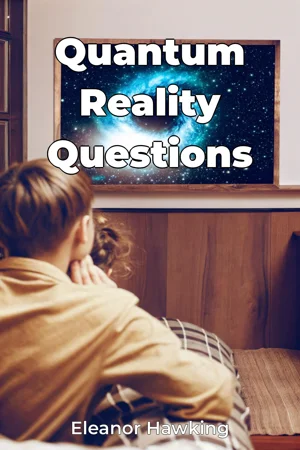
Does the act of observation fundamentally alter reality? This question lies at the heart of "Quantum Reality Questions," a journey into the profound mysteries and enduring measurement problems within quantum mechanics. This book navigates the complex landscape of quantum theory, examining its foundational concepts and exploring interpretations that challenge our classical understanding of the universe. It is crucial because quantum mechanics governs the behavior of matter at the atomic and subatomic levels, influencing technologies from semiconductors to medical imaging, yet its implications remain deeply puzzling and philosophically challenging. This book delves into the core tenets of quantum mechanics, including superposition, entanglement, and quantum measurement. It begins by providing essential historical context, tracing the development of quantum theory from its inception in the early 20th century with Planck's quantum hypothesis to the formulation of matrix mechanics and wave mechanics by Heisenberg, Schrödinger and Dirac. This includes the rise of the Copenhagen Interpretation championed by Niels Bohr as well as subsequent challenges to its dominance. A basic understanding of algebra and introductory physics is helpful but not strictly necessary, as key concepts are explained in detail. The central argument of "Quantum Reality Questions" is that the measurement problem—how definite outcomes arise from the probabilistic nature of quantum mechanics—remains unresolved, and that exploring different interpretations offers valuable insights into the nature of reality itself. This argument is important because it questions the completeness of our current understanding and motivates further research and philosophical inquiry. The book is structured to guide the reader through this challenging terrain. First, it introduces the core concepts of quantum mechanics, clarifying the mathematical formalism and its physical implications. Second, it presents the Copenhagen interpretation, detailing its postulates about the role of the observer and the collapse of the wave function including its strengths and criticisms. Third, it examines alternatives, focusing on the Many-Worlds Interpretation along with Bohmian Mechanics and Objective Collapse Theories, analyzing their strengths, weaknesses, and philosophical implications. The final section explores the ongoing research and debates surrounding quantum interpretations, and speculates on future directions in the quest to understand quantum reality. The arguments presented are supported by a synthesis of established research in quantum physics, experimental results, and philosophical analyses. It draws upon seminal papers, textbooks, and contemporary research articles to provide a comprehensive overview of the field. It also discusses key experiments to see how they are explained in different interpretations. "Quantum Reality Questions" connects to several other fields, including philosophy of science (examining the nature of scientific theories and their interpretation), information theory (exploring the relationship between quantum mechanics and information processing), and cosmology (considering the role of quantum mechanics in the early universe). A unique aspect of this book is its balanced and critical approach to evaluating different interpretations of quantum mechanics. Rather than advocating for a single interpretation, it aims to provide a clear and accessible overview of the major viewpoints. This approach encourages the reader to think critically and form their own informed opinions. The tone is professional and accessible, aiming to bridge the gap between technical physics and broader philosophical inquiry. While rigorous in its treatment of the science, it avoids unnecessary jargon and strives for clarity in its explanations. The target audience includes students of physics and philosophy, researchers in related fields, and anyone with a keen interest in understanding the fundamental nature of reality. It is valuable to readers interested in science, philosophy, or theoretical physics. This book operates within the conventions of science writing by presenting information in a logical and organized manner, providing evidence-based arguments, and citing sources appropriately. The scope of the book is limited to the interpretation of quantum mechanics and its foundational problems. It is a deep dive into the interpretation of quantum mechanic, but does not venture into applied areas such as quantum computing. The information presented in the book can be applied to gain a deeper appreciation of the conceptual foundations of quantum physics, to inform discussions about the nature of reality, and to stimulate further research and exploration in this fascinating field. The book addresses ongoing debates surrounding the interpretation of quantum mechanics, such as the role of the observer, the nature of quantum measurement, and the possibility of hidden variables. It acknowledges the lack of consensus within the scientific community and encourages further investigation.
Does the act of observation fundamentally alter reality? This question lies at the heart of "Quantum Reality Questions," a journey into the profound mysteries and enduring measurement problems within quantum mechanics. This book navigates the complex landscape of quantum theory, examining its foundational concepts and exploring interpretations that challenge our classical understanding of the universe. It is crucial because quantum mechanics governs the behavior of matter at the atomic and subatomic levels, influencing technologies from semiconductors to medical imaging, yet its implications remain deeply puzzling and philosophically challenging. This book delves into the core tenets of quantum mechanics, including superposition, entanglement, and quantum measurement. It begins by providing essential historical context, tracing the development of quantum theory from its inception in the early 20th century with Planck's quantum hypothesis to the formulation of matrix mechanics and wave mechanics by Heisenberg, Schrödinger and Dirac. This includes the rise of the Copenhagen Interpretation championed by Niels Bohr as well as subsequent challenges to its dominance. A basic understanding of algebra and introductory physics is helpful but not strictly necessary, as key concepts are explained in detail. The central argument of "Quantum Reality Questions" is that the measurement problem—how definite outcomes arise from the probabilistic nature of quantum mechanics—remains unresolved, and that exploring different interpretations offers valuable insights into the nature of reality itself. This argument is important because it questions the completeness of our current understanding and motivates further research and philosophical inquiry. The book is structured to guide the reader through this challenging terrain. First, it introduces the core concepts of quantum mechanics, clarifying the mathematical formalism and its physical implications. Second, it presents the Copenhagen interpretation, detailing its postulates about the role of the observer and the collapse of the wave function including its strengths and criticisms. Third, it examines alternatives, focusing on the Many-Worlds Interpretation along with Bohmian Mechanics and Objective Collapse Theories, analyzing their strengths, weaknesses, and philosophical implications. The final section explores the ongoing research and debates surrounding quantum interpretations, and speculates on future directions in the quest to understand quantum reality. The arguments presented are supported by a synthesis of established research in quantum physics, experimental results, and philosophical analyses. It draws upon seminal papers, textbooks, and contemporary research articles to provide a comprehensive overview of the field. It also discusses key experiments to see how they are explained in different interpretations. "Quantum Reality Questions" connects to several other fields, including philosophy of science (examining the nature of scientific theories and their interpretation), information theory (exploring the relationship between quantum mechanics and information processing), and cosmology (considering the role of quantum mechanics in the early universe). A unique aspect of this book is its balanced and critical approach to evaluating different interpretations of quantum mechanics. Rather than advocating for a single interpretation, it aims to provide a clear and accessible overview of the major viewpoints. This approach encourages the reader to think critically and form their own informed opinions. The tone is professional and accessible, aiming to bridge the gap between technical physics and broader philosophical inquiry. While rigorous in its treatment of the science, it avoids unnecessary jargon and strives for clarity in its explanations. The target audience includes students of physics and philosophy, researchers in related fields, and anyone with a keen interest in understanding the fundamental nature of reality. It is valuable to readers interested in science, philosophy, or theoretical physics. This book operates within the conventions of science writing by presenting information in a logical and organized manner, providing evidence-based arguments, and citing sources appropriately. The scope of the book is limited to the interpretation of quantum mechanics and its foundational problems. It is a deep dive into the interpretation of quantum mechanic, but does not venture into applied areas such as quantum computing. The information presented in the book can be applied to gain a deeper appreciation of the conceptual foundations of quantum physics, to inform discussions about the nature of reality, and to stimulate further research and exploration in this fascinating field. The book addresses ongoing debates surrounding the interpretation of quantum mechanics, such as the role of the observer, the nature of quantum measurement, and the possibility of hidden variables. It acknowledges the lack of consensus within the scientific community and encourages further investigation.
"Quantum Reality Questions" explores the perplexing world of quantum mechanics, tackling enduring puzzles like the quantum measurement problem and the very nature of quantum reality. The book explains how quantum mechanics, despite its role in technologies from medical imaging to semiconductors, presents philosophical challenges due to concepts like superposition and entanglement. A key question addressed is whether observation fundamentally alters reality. The book begins with the historical development of quantum theory, from Planck's quantum hypothesis to the Copenhagen interpretation. It then systematically examines alternative interpretations, including the Many-Worlds Interpretation, Bohmian Mechanics, and Objective Collapse Theories. What makes "Quantum Reality Questions" unique is its balanced approach, presenting various viewpoints without advocating for one in particular. This encourages critical thinking about the ongoing debates in physics and philosophy, such as the role of the observer. The book's structure guides readers through the formalism of quantum mechanics and the implications of different interpretations. It references established research, experimental results, and philosophical analyses. By connecting quantum mechanics to philosophy of science, information theory, and cosmology, "Quantum Reality Questions" offers a comprehensive exploration suitable for students, researchers, and anyone interested in the fundamental nature of reality.
Book Details
ISBN
9788233961022
Publisher
Publifye AS
Your Licenses
You don't own any licenses for this book
Purchase a license below to unlock this book and download the EPUB.
Purchase License
Select a tier to unlock this book
Need bulk licensing?
Contact us for enterprise agreements.