
About This Book
Did you know that your kitchen spice rack might hold the key to improved health and well-being? This book, "Spice Health Facts," explores the potent health benefits of common spices, focusing particularly on their impact on inflammation and metabolism. These topics are significant because chronic inflammation underlies many prevalent diseases, and a healthy metabolism is crucial for maintaining energy levels, weight, and overall vitality. In recent years, scientific research has increasingly focused on the bioactive compounds found in spices and their potential therapeutic effects. Historically, spices have been used for both culinary and medicinal purposes across various cultures. This book delves into both the traditional uses and the contemporary clinical research that supports these applications. We provide a comprehensive overview of the science behind spices like turmeric, cinnamon, ginger, and others, explaining how their active components interact with the body at a cellular level. The book's central argument is that incorporating specific spices into your diet, based on scientific evidence, can contribute to significant improvements in health markers related to inflammation and metabolic function. This argument is vital because it empowers readers to take proactive steps toward better health using readily available and natural ingredients. The book is structured to guide the reader from basic principles to practical application. We begin by introducing the concept of inflammation and its role in disease, followed by an explanation of metabolic processes and their regulation. Next, we dedicate individual chapters to specific spices, outlining their chemical composition, mechanisms of action, and the results of clinical trials. For instance, the chapter on turmeric delves into the importance of curcumin bioavailability and strategies to enhance its absorption. The chapter on cinnamon examines its effects on blood sugar regulation. The culmination emphasizes how these individual components create a synergistic effect. Finally, we provide practical guidance on incorporating spices into daily meal planning, including recipes and dosage recommendations. Throughout the book, we present evidence-based conclusions drawn from peer-reviewed scientific literature. We analyze numerous clinical studies, meta-analyses, and in vitro experiments to provide a balanced and objective assessment of each spice's health benefits, as well as potential side effects. We critically evaluate the methodology of these studies and highlight areas where further research is needed. "Spice Health Facts" connects to several interdisciplinary fields, including nutrition science, biochemistry, and pharmacology. By examining the biochemical pathways affected by spices, we bridge the gap between traditional knowledge and modern scientific understanding. We also touch upon the field of ethnobotany, exploring the historical uses of spices in various cultures. A unique aspect of this book is its focus on translating complex scientific information into understandable language for the general public. We avoid jargon and use clear explanations to make the science accessible to readers with varying levels of scientific knowledge. The overall tone is informative and encouraging. This book is intended for health-conscious individuals, nutrition enthusiasts, and anyone interested in exploring natural ways to improve their well-being. It is particularly valuable for those seeking evidence-based information on the health benefits of spices and how to incorporate them into their diet. As a work of non-fiction within the Health & Fitness and Science genres, "Spice Health Facts" adheres to the conventions of presenting factual information, citing sources, and avoiding unsubstantiated claims. The scope of the book is limited to readily available and commonly used spices. We do not delve into rare or exotic spices. The book addresses ongoing scientific debates regarding optimal dosages, bioavailability, and potential interactions with medications. We provide a balanced perspective on these controversies, acknowledging both the potential benefits and limitations of using spices for health purposes. The information presented can be applied directly by readers to improve their dietary habits and potentially reduce their risk of chronic diseases, always under the guidance of their healthcare provider.
Did you know that your kitchen spice rack might hold the key to improved health and well-being? This book, "Spice Health Facts," explores the potent health benefits of common spices, focusing particularly on their impact on inflammation and metabolism. These topics are significant because chronic inflammation underlies many prevalent diseases, and a healthy metabolism is crucial for maintaining energy levels, weight, and overall vitality. In recent years, scientific research has increasingly focused on the bioactive compounds found in spices and their potential therapeutic effects. Historically, spices have been used for both culinary and medicinal purposes across various cultures. This book delves into both the traditional uses and the contemporary clinical research that supports these applications. We provide a comprehensive overview of the science behind spices like turmeric, cinnamon, ginger, and others, explaining how their active components interact with the body at a cellular level. The book's central argument is that incorporating specific spices into your diet, based on scientific evidence, can contribute to significant improvements in health markers related to inflammation and metabolic function. This argument is vital because it empowers readers to take proactive steps toward better health using readily available and natural ingredients. The book is structured to guide the reader from basic principles to practical application. We begin by introducing the concept of inflammation and its role in disease, followed by an explanation of metabolic processes and their regulation. Next, we dedicate individual chapters to specific spices, outlining their chemical composition, mechanisms of action, and the results of clinical trials. For instance, the chapter on turmeric delves into the importance of curcumin bioavailability and strategies to enhance its absorption. The chapter on cinnamon examines its effects on blood sugar regulation. The culmination emphasizes how these individual components create a synergistic effect. Finally, we provide practical guidance on incorporating spices into daily meal planning, including recipes and dosage recommendations. Throughout the book, we present evidence-based conclusions drawn from peer-reviewed scientific literature. We analyze numerous clinical studies, meta-analyses, and in vitro experiments to provide a balanced and objective assessment of each spice's health benefits, as well as potential side effects. We critically evaluate the methodology of these studies and highlight areas where further research is needed. "Spice Health Facts" connects to several interdisciplinary fields, including nutrition science, biochemistry, and pharmacology. By examining the biochemical pathways affected by spices, we bridge the gap between traditional knowledge and modern scientific understanding. We also touch upon the field of ethnobotany, exploring the historical uses of spices in various cultures. A unique aspect of this book is its focus on translating complex scientific information into understandable language for the general public. We avoid jargon and use clear explanations to make the science accessible to readers with varying levels of scientific knowledge. The overall tone is informative and encouraging. This book is intended for health-conscious individuals, nutrition enthusiasts, and anyone interested in exploring natural ways to improve their well-being. It is particularly valuable for those seeking evidence-based information on the health benefits of spices and how to incorporate them into their diet. As a work of non-fiction within the Health & Fitness and Science genres, "Spice Health Facts" adheres to the conventions of presenting factual information, citing sources, and avoiding unsubstantiated claims. The scope of the book is limited to readily available and commonly used spices. We do not delve into rare or exotic spices. The book addresses ongoing scientific debates regarding optimal dosages, bioavailability, and potential interactions with medications. We provide a balanced perspective on these controversies, acknowledging both the potential benefits and limitations of using spices for health purposes. The information presented can be applied directly by readers to improve their dietary habits and potentially reduce their risk of chronic diseases, always under the guidance of their healthcare provider.
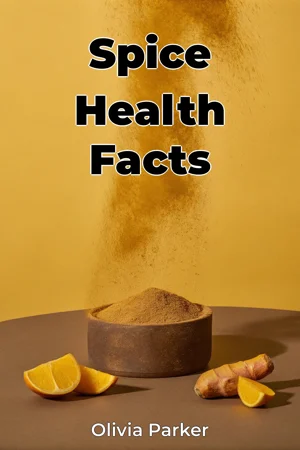
"Spice Health Facts" explores the remarkable health benefits found within your spice rack, focusing on how spices like turmeric, cinnamon, and ginger can combat inflammation and boost metabolism. Chronic inflammation is a root cause of many diseases, making spices a proactive dietary tool. Metabolism, crucial for energy and weight management, can be positively influenced by these bioactive compounds. This book examines both traditional uses and modern clinical research, translating complex science into understandable language. For example, it explains how curcumin in turmeric needs enhanced absorption for optimal benefit. It also presents how cinnamon impacts blood sugar. The book progresses logically, starting with inflammation and metabolic processes, then diving into specific spices, and culminating with practical meal planning advice. Ultimately, "Spice Health Facts" empowers readers to improve their health by incorporating these natural ingredients into their daily diet. Its unique value lies in bridging the gap between ancient wisdom and current scientific findings, offering evidence-based conclusions drawn from peer-reviewed studies.
Book Details
ISBN
9788233960995
Publisher
Publifye AS
Your Licenses
You don't own any licenses for this book
Purchase a license below to unlock this book and download the EPUB.
Purchase License
Select a tier to unlock this book
Need bulk licensing?
Contact us for enterprise agreements.