
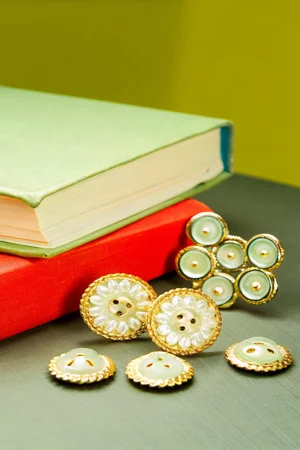
About This Book
Have you ever considered the humble button, an object so ubiquitous it often fades into the background of our daily lives? "Button Design History" seeks to elevate this overlooked artifact, tracing its evolution from rudimentary shell fasteners to the complex, mass-produced components of modern fashion and industry. This book argues that the button, far from being a mere functional item, serves as a microcosm of broader historical, social, and technological shifts. The primary focus will be on three key areas: the history of button materials and manufacturing techniques, the social and cultural significance of buttons as indicators of status and identity, and the aesthetic evolution of button design. Understanding these aspects is crucial because buttons provide a tangible link to past eras, reflecting technological advancements, economic conditions, and prevailing cultural values. Dismissing the button as insignificant is to ignore a silent witness to centuries of human progress. To provide context, the book first establishes the pre-button era, examining early methods of fastening clothing and adornment in various cultures. The introduction of the button as both a functional closure and a decorative element is explored against the backdrop of evolving textile technologies and social structures. The rise of industrial production and global trade networks are examined showing how mass production impacted button design and availability. "Button Design History" presents a chronological narrative beginning with the earliest known button-like objects found in archaeological digs, transitioning to the crafted buttons of pre-industrial societies, and culminating in the automated production lines of today. Each chapter delves into specific periods, such as the elaborate, hand-crafted buttons of the Renaissance or the utilitarian metal buttons of military uniforms. The book demonstrates how these changes reflect shifts in fashion, technology, and social hierarchy. The arguments presented are supported by a diverse range of evidence, including archaeological finds, historical inventories, period paintings and illustrations, patent records, and examples from museum collections worldwide. Primary source materials, such as trade catalogs and personal letters, enrich the narrative and provide firsthand accounts of the button's impact on daily life. This study intersects with several disciplines including archaeology, material culture studies, fashion history, and engineering. By examining the button through these different lenses, the book offers a more holistic understanding of its importance. A unique aspect of this book is its emphasis on the design thinking behind the button. It examines not only the technical aspects of manufacturing, but also the artistic and cultural considerations that have shaped button aesthetics throughout history. Written in a clear and engaging style, "Button Design History" intends to be accessible to a broad audience, including historians, designers, collectors, and anyone with an interest in material culture. The book follows the conventions of historical non-fiction, providing a well-researched and meticulously documented account of the button's journey through time. The book's scope is limited to buttons used primarily for fastening and ornamentation, excluding buttons used in electrical or mechanical devices. Its in-depth analysis offers practical use to designers seeking inspiration from historical motifs, historians researching social and economic trends, and collectors looking to deepen their knowledge of button lore. While the button may seem like a simple object, its story is interwoven with debates about social class, gender roles, and technological progress. "Button Design History" invites readers to reconsider the significance of this small but powerful artifact and to appreciate its enduring presence in our lives.
Have you ever considered the humble button, an object so ubiquitous it often fades into the background of our daily lives? "Button Design History" seeks to elevate this overlooked artifact, tracing its evolution from rudimentary shell fasteners to the complex, mass-produced components of modern fashion and industry. This book argues that the button, far from being a mere functional item, serves as a microcosm of broader historical, social, and technological shifts. The primary focus will be on three key areas: the history of button materials and manufacturing techniques, the social and cultural significance of buttons as indicators of status and identity, and the aesthetic evolution of button design. Understanding these aspects is crucial because buttons provide a tangible link to past eras, reflecting technological advancements, economic conditions, and prevailing cultural values. Dismissing the button as insignificant is to ignore a silent witness to centuries of human progress. To provide context, the book first establishes the pre-button era, examining early methods of fastening clothing and adornment in various cultures. The introduction of the button as both a functional closure and a decorative element is explored against the backdrop of evolving textile technologies and social structures. The rise of industrial production and global trade networks are examined showing how mass production impacted button design and availability. "Button Design History" presents a chronological narrative beginning with the earliest known button-like objects found in archaeological digs, transitioning to the crafted buttons of pre-industrial societies, and culminating in the automated production lines of today. Each chapter delves into specific periods, such as the elaborate, hand-crafted buttons of the Renaissance or the utilitarian metal buttons of military uniforms. The book demonstrates how these changes reflect shifts in fashion, technology, and social hierarchy. The arguments presented are supported by a diverse range of evidence, including archaeological finds, historical inventories, period paintings and illustrations, patent records, and examples from museum collections worldwide. Primary source materials, such as trade catalogs and personal letters, enrich the narrative and provide firsthand accounts of the button's impact on daily life. This study intersects with several disciplines including archaeology, material culture studies, fashion history, and engineering. By examining the button through these different lenses, the book offers a more holistic understanding of its importance. A unique aspect of this book is its emphasis on the design thinking behind the button. It examines not only the technical aspects of manufacturing, but also the artistic and cultural considerations that have shaped button aesthetics throughout history. Written in a clear and engaging style, "Button Design History" intends to be accessible to a broad audience, including historians, designers, collectors, and anyone with an interest in material culture. The book follows the conventions of historical non-fiction, providing a well-researched and meticulously documented account of the button's journey through time. The book's scope is limited to buttons used primarily for fastening and ornamentation, excluding buttons used in electrical or mechanical devices. Its in-depth analysis offers practical use to designers seeking inspiration from historical motifs, historians researching social and economic trends, and collectors looking to deepen their knowledge of button lore. While the button may seem like a simple object, its story is interwoven with debates about social class, gender roles, and technological progress. "Button Design History" invites readers to reconsider the significance of this small but powerful artifact and to appreciate its enduring presence in our lives.
"Button Design History" unveils the surprising story of the button, an object often overlooked, yet deeply intertwined with human history. This book elevates the humble button, revealing its evolution from basic fasteners to complex design elements. It argues that buttons are more than mere closures; they're tangible reflections of technological progress, economic conditions, and cultural values. The book will appeal to those interested in design history and fashion history. The book traces the button's journey chronologically, from archaeological discoveries to Renaissance craftsmanship and mass production. Each chapter explores specific eras, like the utilitarian military buttons. Supported by diverse evidence, it offers a unique perspective on how design thinking has shaped button aesthetics. This approach provides designers with inspiration, historians with social insights, and collectors with a deeper understanding of button lore.
Book Details
ISBN
9788233960537
Publisher
Publifye AS
Your Licenses
You don't own any licenses for this book
Purchase a license below to unlock this book and download the EPUB.
Purchase License
Select a tier to unlock this book
Need bulk licensing?
Contact us for enterprise agreements.