
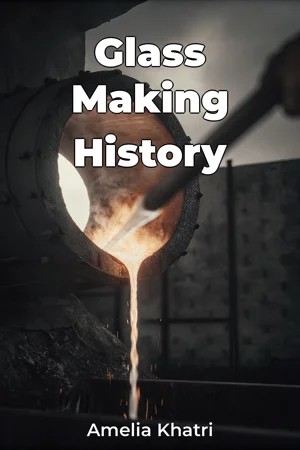
About This Book
Have you ever considered the long and complex story behind the seemingly simple glass object in your hand? "Glass Making History" traces this narrative from its rudimentary beginnings to the sophisticated processes of today, revealing the crucial role glass has played in shaping civilization. This book is a journey through time, exploring the historical, technological, and cultural facets of glass creation. This book will delve into three primary areas. First, we will explore the early accidental discoveries of glassmaking, primarily focusing on the potential contributions from Phoenician merchants and the conditions that might have led to their breakthroughs. Second, we will examine the Roman period, highlighting innovations in glassblowing and the widespread adoption of glass in architecture and everyday life. Third, we will analyze the evolution of modern glass manufacturing, emphasizing the advancements in industrial processes, scientific understanding, and the sheer scale of production. Understanding the history of glass provides insights into the development of materials science, trade networks, and the changing needs and desires of societies across millennia. The context for this history begins in ancient Mesopotamia and Egypt, where the earliest forms of glass were initially used for glazes and beads. The book will build upon this foundation, explaining the chemical composition of glass, the necessity of high temperatures for its creation, and the relatively scarce availability of ingredients like silica, soda ash, and lime in specific geographical locations. No prior technical knowledge is required; the book will explain all necessary concepts in a clear and accessible manner. The central argument of "Glass Making History" is that the evolution of glassmaking is a microcosm of technological and societal progress. As glassmaking techniques improved, they spurred advances in other fields like optics, chemistry, and construction, ultimately reflecting and influencing cultural values and economic structures. This book aims to demonstrate that the story of glass is intrinsically linked to the broader story of human innovation. The book begins by establishing the ancient origins of glass, moving chronologically to the Roman era, where mass production became a reality. The Roman section will highlight the sociological impacts of widespread affordable glass. The narrative then jumps to the Venetian glassmaking traditions, the impact of the industrial revolution, and ends with modern automated glass production. Each section will delve into both the techniques and the social and economic contexts that drove those techniques. The book will draw on archaeological findings, historical texts, accounts from early natural philosophers, and modern scientific analyses of glass artifacts. Patent records and industrial archives will also provide crucial evidence of the developments in mechanized glass production. "Glass Making History" connects to multiple disciplines. It provides a case study for material science, demonstrating the impact of manipulating combinations of elements. To the field of economics, the book highlights the development of global trade networks for essential glassmaking materials. To art history, the book shows the evolution of glassblowing techniques and the changing aesthetics of glass objects. These interdisciplinary connections enrich the reader’s understanding of glass as more than just a material. The book offers a unique perspective by combining a chronological narrative with in-depth analyses of technological advancements and their societal impacts. Instead of just recounting historical events, it seeks to understand the underlying reasons for innovation and the consequences of these changes. The tone of the book is informative and engaging, aiming to provide a balanced and accessible overview of a complex subject. It avoids technical jargon and uses clear explanations to make the content understandable to a wide audience. "Glass Making History" is targeted towards general readers with an interest in history, technology, or material culture. Anyone curious about how everyday objects have evolved over time will find this book highly engaging. As a work of history and technology, the book adheres to principles of accuracy, objectivity, and evidence-based analysis. It presents well-researched information and avoids speculation or conjecture. The scope of the book is limited to the development of glassmaking technologies and their societal contexts, intentionally excluding detailed discussions of glass art or contemporary studio glass movements. Understanding the history of glassmaking is fundamental to appreciating the interconnectedness of technology, society, and the environment. The advances in glass production have impacted fields as diverse as medicine, architecture, and telecommunications. The book will also address ongoing debates about the precise origins of glassmaking and will present different interpretations of the archaeological evidence. A key point of discussion will be whether different cultures independently 'discovered' glass or if there was a single cultural point of origin.
Have you ever considered the long and complex story behind the seemingly simple glass object in your hand? "Glass Making History" traces this narrative from its rudimentary beginnings to the sophisticated processes of today, revealing the crucial role glass has played in shaping civilization. This book is a journey through time, exploring the historical, technological, and cultural facets of glass creation. This book will delve into three primary areas. First, we will explore the early accidental discoveries of glassmaking, primarily focusing on the potential contributions from Phoenician merchants and the conditions that might have led to their breakthroughs. Second, we will examine the Roman period, highlighting innovations in glassblowing and the widespread adoption of glass in architecture and everyday life. Third, we will analyze the evolution of modern glass manufacturing, emphasizing the advancements in industrial processes, scientific understanding, and the sheer scale of production. Understanding the history of glass provides insights into the development of materials science, trade networks, and the changing needs and desires of societies across millennia. The context for this history begins in ancient Mesopotamia and Egypt, where the earliest forms of glass were initially used for glazes and beads. The book will build upon this foundation, explaining the chemical composition of glass, the necessity of high temperatures for its creation, and the relatively scarce availability of ingredients like silica, soda ash, and lime in specific geographical locations. No prior technical knowledge is required; the book will explain all necessary concepts in a clear and accessible manner. The central argument of "Glass Making History" is that the evolution of glassmaking is a microcosm of technological and societal progress. As glassmaking techniques improved, they spurred advances in other fields like optics, chemistry, and construction, ultimately reflecting and influencing cultural values and economic structures. This book aims to demonstrate that the story of glass is intrinsically linked to the broader story of human innovation. The book begins by establishing the ancient origins of glass, moving chronologically to the Roman era, where mass production became a reality. The Roman section will highlight the sociological impacts of widespread affordable glass. The narrative then jumps to the Venetian glassmaking traditions, the impact of the industrial revolution, and ends with modern automated glass production. Each section will delve into both the techniques and the social and economic contexts that drove those techniques. The book will draw on archaeological findings, historical texts, accounts from early natural philosophers, and modern scientific analyses of glass artifacts. Patent records and industrial archives will also provide crucial evidence of the developments in mechanized glass production. "Glass Making History" connects to multiple disciplines. It provides a case study for material science, demonstrating the impact of manipulating combinations of elements. To the field of economics, the book highlights the development of global trade networks for essential glassmaking materials. To art history, the book shows the evolution of glassblowing techniques and the changing aesthetics of glass objects. These interdisciplinary connections enrich the reader’s understanding of glass as more than just a material. The book offers a unique perspective by combining a chronological narrative with in-depth analyses of technological advancements and their societal impacts. Instead of just recounting historical events, it seeks to understand the underlying reasons for innovation and the consequences of these changes. The tone of the book is informative and engaging, aiming to provide a balanced and accessible overview of a complex subject. It avoids technical jargon and uses clear explanations to make the content understandable to a wide audience. "Glass Making History" is targeted towards general readers with an interest in history, technology, or material culture. Anyone curious about how everyday objects have evolved over time will find this book highly engaging. As a work of history and technology, the book adheres to principles of accuracy, objectivity, and evidence-based analysis. It presents well-researched information and avoids speculation or conjecture. The scope of the book is limited to the development of glassmaking technologies and their societal contexts, intentionally excluding detailed discussions of glass art or contemporary studio glass movements. Understanding the history of glassmaking is fundamental to appreciating the interconnectedness of technology, society, and the environment. The advances in glass production have impacted fields as diverse as medicine, architecture, and telecommunications. The book will also address ongoing debates about the precise origins of glassmaking and will present different interpretations of the archaeological evidence. A key point of discussion will be whether different cultures independently 'discovered' glass or if there was a single cultural point of origin.
"Glass Making History" explores the fascinating evolution of glassmaking, tracing its origins from accidental discoveries to modern industrial production. The book highlights glass's pivotal role in shaping civilization by examining its historical, technological, and cultural dimensions. Discover how Phoenician merchants might have stumbled upon early glassmaking techniques and how the Romans popularized glassblowing, integrating glass into architecture and daily life. The book argues that glassmaking's progress mirrors broader technological and societal advancements. As techniques improved, they spurred developments in fields like optics and chemistry. Beginning with ancient Mesopotamia and Egypt, the narrative progresses chronologically through the Roman era, Venetian traditions, the Industrial Revolution, and modern automated production. Each section delves into the techniques and the socio-economic contexts that drove them, offering a comprehensive view of glassmaking's journey through time.
Book Details
ISBN
9788233960513
Publisher
Publifye AS
Your Licenses
You don't own any licenses for this book
Purchase a license below to unlock this book and download the EPUB.
Purchase License
Select a tier to unlock this book
Need bulk licensing?
Contact us for enterprise agreements.