
About This Book
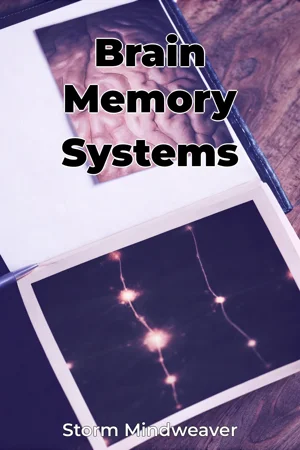
Have you ever wondered exactly how memories are formed, stored, and retrieved? This book, "Brain Memory Systems," delves into the intricate world of human memory, exploring its biological underpinnings and cognitive functions through the lenses of neuroscience and psychological research. Understanding the complex processes of memory provides vital insights into not only how we learn and remember, but also how these processes can be affected by aging, disease, and trauma. "Brain Memory Systems" focuses on three main areas: the neurobiological mechanisms of memory, the cognitive architectures that organize and utilize memories, and the practical implications of current memory research. We begin by examining the specific brain structures, such as the hippocampus, amygdala, and prefrontal cortex, and their roles in encoding, consolidating, and retrieving different types of memories. Then, we explore how cognitive models explain the organization of memory systems, including working memory, semantic memory, and episodic memory. Finally, we discuss how this knowledge can be applied to enhance learning, treat memory disorders, and understand the impact of technology on memory. Our exploration builds on decades of neuroscience research, including lesion studies, neuroimaging techniques (fMRI, EEG), and single-cell recordings. Cognitive research provides complementary insights through behavioral experiments and computational modeling. The book emphasizes the interplay between these disciplines to provide a comprehensive understanding of memory. The central argument of "Brain Memory Systems" is that a holistic understanding of memory requires integrating neurobiological findings with cognitive theories to bridge the gap between brain activity and conscious experience. This integration is crucial for developing effective strategies to improve memory function and address memory-related disorders. The book is structured logically, starting with an introduction to the basic principles of neuroscience and cognitive psychology relevant to memory research. We then delve into the specific neural circuits and molecular mechanisms involved in memory formation. Subsequent chapters explore different memory systems, such as working memory, long-term memory, and emotional memory, detailing their unique characteristics and functions. The culmination of the book focuses on the practical applications of memory research, including strategies for memory enhancement, treatments for memory disorders, and the societal implications of our increasing understanding of memory. The evidence presented is grounded in peer-reviewed scientific literature, including experimental studies, meta-analyses, and case reports. The book also considers emerging research areas, such as the role of genetics and epigenetics in memory processes, and the impact of sleep on memory consolidation. "Brain Memory Systems" also connects to several other fields, including neurology, pharmacology, and education. The book considers how neurological disorders, such as Alzheimer's disease, affect memory systems and explores the potential of pharmacological interventions to improve memory function. It also investigates how educational strategies can be optimized based on principles of memory formation and retrieval. The book takes a balanced approach, presenting various perspectives on memory research and acknowledging the complexities and ongoing debates in the field. The tone is academic yet accessible, aiming to convey complex scientific information clearly and concisely. "Brain Memory Systems" is primarily targeted towards undergraduate and graduate students in psychology, neuroscience, and related fields, as well as researchers and clinicians interested in learning more about the science of memory. The scope of the book covers a broad range of memory systems and processes, but it does not delve into the specific details of every memory disorder or therapeutic intervention. Rather, it provides a comprehensive overview of the fundamental principles and current research directions in the field. The practical implications of the book are numerous. Readers will gain insights into effective study strategies, memory enhancement techniques, and approaches to preventing age-related cognitive decline. For clinicians, the book provides a valuable resource for understanding the neurobiological and cognitive bases of memory disorders, informing diagnostic and treatment approaches. "Brain Memory Systems" acknowledges points of ongoing debate and controversy in memory research, such as the precise roles of different brain regions in memory consolidation and the effectiveness of various memory enhancement techniques. By addressing these controversies, the book encourages critical thinking and further exploration of the field.
Have you ever wondered exactly how memories are formed, stored, and retrieved? This book, "Brain Memory Systems," delves into the intricate world of human memory, exploring its biological underpinnings and cognitive functions through the lenses of neuroscience and psychological research. Understanding the complex processes of memory provides vital insights into not only how we learn and remember, but also how these processes can be affected by aging, disease, and trauma. "Brain Memory Systems" focuses on three main areas: the neurobiological mechanisms of memory, the cognitive architectures that organize and utilize memories, and the practical implications of current memory research. We begin by examining the specific brain structures, such as the hippocampus, amygdala, and prefrontal cortex, and their roles in encoding, consolidating, and retrieving different types of memories. Then, we explore how cognitive models explain the organization of memory systems, including working memory, semantic memory, and episodic memory. Finally, we discuss how this knowledge can be applied to enhance learning, treat memory disorders, and understand the impact of technology on memory. Our exploration builds on decades of neuroscience research, including lesion studies, neuroimaging techniques (fMRI, EEG), and single-cell recordings. Cognitive research provides complementary insights through behavioral experiments and computational modeling. The book emphasizes the interplay between these disciplines to provide a comprehensive understanding of memory. The central argument of "Brain Memory Systems" is that a holistic understanding of memory requires integrating neurobiological findings with cognitive theories to bridge the gap between brain activity and conscious experience. This integration is crucial for developing effective strategies to improve memory function and address memory-related disorders. The book is structured logically, starting with an introduction to the basic principles of neuroscience and cognitive psychology relevant to memory research. We then delve into the specific neural circuits and molecular mechanisms involved in memory formation. Subsequent chapters explore different memory systems, such as working memory, long-term memory, and emotional memory, detailing their unique characteristics and functions. The culmination of the book focuses on the practical applications of memory research, including strategies for memory enhancement, treatments for memory disorders, and the societal implications of our increasing understanding of memory. The evidence presented is grounded in peer-reviewed scientific literature, including experimental studies, meta-analyses, and case reports. The book also considers emerging research areas, such as the role of genetics and epigenetics in memory processes, and the impact of sleep on memory consolidation. "Brain Memory Systems" also connects to several other fields, including neurology, pharmacology, and education. The book considers how neurological disorders, such as Alzheimer's disease, affect memory systems and explores the potential of pharmacological interventions to improve memory function. It also investigates how educational strategies can be optimized based on principles of memory formation and retrieval. The book takes a balanced approach, presenting various perspectives on memory research and acknowledging the complexities and ongoing debates in the field. The tone is academic yet accessible, aiming to convey complex scientific information clearly and concisely. "Brain Memory Systems" is primarily targeted towards undergraduate and graduate students in psychology, neuroscience, and related fields, as well as researchers and clinicians interested in learning more about the science of memory. The scope of the book covers a broad range of memory systems and processes, but it does not delve into the specific details of every memory disorder or therapeutic intervention. Rather, it provides a comprehensive overview of the fundamental principles and current research directions in the field. The practical implications of the book are numerous. Readers will gain insights into effective study strategies, memory enhancement techniques, and approaches to preventing age-related cognitive decline. For clinicians, the book provides a valuable resource for understanding the neurobiological and cognitive bases of memory disorders, informing diagnostic and treatment approaches. "Brain Memory Systems" acknowledges points of ongoing debate and controversy in memory research, such as the precise roles of different brain regions in memory consolidation and the effectiveness of various memory enhancement techniques. By addressing these controversies, the book encourages critical thinking and further exploration of the field.
"Brain Memory Systems" offers a comprehensive exploration of human memory, bridging neuroscience and cognitive psychology to reveal how memories are formed, stored, and retrieved. The book uniquely integrates neurobiological findings with cognitive theories, emphasizing the interplay between brain activity and conscious experience. It unveils the roles of key brain structures like the hippocampus, amygdala, and prefrontal cortex in various memory processes, while also detailing cognitive models such as working memory, semantic memory, and episodic memory. Intriguingly, the book highlights how memories aren't just passively stored but actively reconstructed during recall, and how sleep plays a crucial role in memory consolidation. The book progresses logically from fundamental principles to specific neural circuits, exploring different memory systems and culminating in practical applications. It delves into how neurological disorders such as Alzheimer's disease impact memory and considers the potential of pharmacological interventions. Readers will gain insights into memory enhancement techniques and strategies to prevent age-related cognitive decline. By presenting diverse perspectives and addressing ongoing debates, "Brain Memory Systems" fosters critical thinking and encourages further exploration into the science of memory and cognitive decline.
Book Details
ISBN
9788233960452
Publisher
Publifye AS
Your Licenses
You don't own any licenses for this book
Purchase a license below to unlock this book and download the EPUB.
Purchase License
Select a tier to unlock this book
Need bulk licensing?
Contact us for enterprise agreements.