
About This Book
How did access to clean water and effective sanitation transform from a privilege to a presumed right, and what were the pivotal turning points in this evolution? *Water Access History* investigates this transformation, drawing on archaeological discoveries, engineering breakthroughs, and historical accounts to chronicle the development of water infrastructure and sanitation systems from ancient times to the present day. This book examines not only the technological advancements but also the societal values and priorities that shaped these systems. The book focuses on three core themes: the initial development of water and sanitation technologies in ancient civilizations, the impact of industrialization and urbanization on water systems, and the challenges of providing equitable access to clean water and sanitation in the modern world. Understanding these themes is crucial because they reveal how human societies have consistently struggled to balance technological progress with the needs of public health and environmental sustainability. Furthermore, the book examines the historical roots of contemporary water crises and debates. This history unfolds against a backdrop of changing social structures, evolving scientific understanding, and shifting environmental conditions. Readers may find it helpful to recall basic principles of hydraulics and public health, although these are explained as needed. The central argument of *Water Access History* is that the evolution of water infrastructure and sanitation is not simply a story of technological progress, but one deeply intertwined with social equity, political power, and environmental stewardship. Examining these intersections is vital for understanding the complex challenges of water management today. *Water Access History* begins by exploring early water management practices in ancient Mesopotamia, Egypt, the Roman Empire, and the Indus Valley, emphasizing the engineering ingenuity displayed in aqueducts, wastewater drainage, and early forms of water treatment. It then transitions to the Middle Ages and the Renaissance, highlighting the stagnation and subsequent revival of sanitation technologies. The core of the book focuses on the Industrial Revolution and its profound impact. Chapters detail the rise of modern water and wastewater treatment plants, the construction of large-scale urban water networks, and the challenges of managing waterborne diseases in densely populated areas. The book concludes by examining contemporary issues such as water scarcity, climate change impacts on water resources, and the struggle to achieve universal access to safe drinking water and sanitation. The book utilizes a diverse range of evidence, including archaeological surveys of ancient water systems, engineering reports on the design and performance of water infrastructure, historical documents detailing public health policies, demographic data illustrating the impact of sanitation on population growth, and case studies of different water management strategies around the world. Archival records of engineering firms and public health organizations are presented. *Water Access History* bridges engineering history, environmental studies, and public health. This interdisciplinary approach provides a more nuanced understanding of the complex drivers and consequences of water infrastructure development. This book offers a nuanced perspective by highlighting not only the technological achievements but also the social and environmental costs associated with different approaches to water management. The book avoids overly technical jargon, instead relying on clear explanations and historical narratives to engage readers. The target audience includes students and researchers in history, engineering, environmental science, and public health, as well as policymakers and anyone interested in the history of technology and the challenges of water management. Readers will gain a deeper understanding of the historical context behind current water-related issues and the lessons that history can offer for addressing these challenges. As a history book, it adheres to standards of accurate record-keeping, source citation, and objective analysis. The book's scope encompasses a broad historical overview of water and sanitation systems worldwide, with detailed case studies of particular regions and technologies. However, it does not delve into the specific technical details of modern water and wastewater treatment processes, which are covered comprehensively in specialized engineering texts. The insights in *Water Access History* can inform contemporary debates about water policy, infrastructure investment, and sustainable development. By understanding the historical successes and failures of past water management strategies, readers can contribute to more informed decision-making in the present. The book also addresses ongoing controversies regarding privatization of water resources, the environmental impacts of large-scale water projects, and the role of technology in addressing water scarcity.
How did access to clean water and effective sanitation transform from a privilege to a presumed right, and what were the pivotal turning points in this evolution? *Water Access History* investigates this transformation, drawing on archaeological discoveries, engineering breakthroughs, and historical accounts to chronicle the development of water infrastructure and sanitation systems from ancient times to the present day. This book examines not only the technological advancements but also the societal values and priorities that shaped these systems. The book focuses on three core themes: the initial development of water and sanitation technologies in ancient civilizations, the impact of industrialization and urbanization on water systems, and the challenges of providing equitable access to clean water and sanitation in the modern world. Understanding these themes is crucial because they reveal how human societies have consistently struggled to balance technological progress with the needs of public health and environmental sustainability. Furthermore, the book examines the historical roots of contemporary water crises and debates. This history unfolds against a backdrop of changing social structures, evolving scientific understanding, and shifting environmental conditions. Readers may find it helpful to recall basic principles of hydraulics and public health, although these are explained as needed. The central argument of *Water Access History* is that the evolution of water infrastructure and sanitation is not simply a story of technological progress, but one deeply intertwined with social equity, political power, and environmental stewardship. Examining these intersections is vital for understanding the complex challenges of water management today. *Water Access History* begins by exploring early water management practices in ancient Mesopotamia, Egypt, the Roman Empire, and the Indus Valley, emphasizing the engineering ingenuity displayed in aqueducts, wastewater drainage, and early forms of water treatment. It then transitions to the Middle Ages and the Renaissance, highlighting the stagnation and subsequent revival of sanitation technologies. The core of the book focuses on the Industrial Revolution and its profound impact. Chapters detail the rise of modern water and wastewater treatment plants, the construction of large-scale urban water networks, and the challenges of managing waterborne diseases in densely populated areas. The book concludes by examining contemporary issues such as water scarcity, climate change impacts on water resources, and the struggle to achieve universal access to safe drinking water and sanitation. The book utilizes a diverse range of evidence, including archaeological surveys of ancient water systems, engineering reports on the design and performance of water infrastructure, historical documents detailing public health policies, demographic data illustrating the impact of sanitation on population growth, and case studies of different water management strategies around the world. Archival records of engineering firms and public health organizations are presented. *Water Access History* bridges engineering history, environmental studies, and public health. This interdisciplinary approach provides a more nuanced understanding of the complex drivers and consequences of water infrastructure development. This book offers a nuanced perspective by highlighting not only the technological achievements but also the social and environmental costs associated with different approaches to water management. The book avoids overly technical jargon, instead relying on clear explanations and historical narratives to engage readers. The target audience includes students and researchers in history, engineering, environmental science, and public health, as well as policymakers and anyone interested in the history of technology and the challenges of water management. Readers will gain a deeper understanding of the historical context behind current water-related issues and the lessons that history can offer for addressing these challenges. As a history book, it adheres to standards of accurate record-keeping, source citation, and objective analysis. The book's scope encompasses a broad historical overview of water and sanitation systems worldwide, with detailed case studies of particular regions and technologies. However, it does not delve into the specific technical details of modern water and wastewater treatment processes, which are covered comprehensively in specialized engineering texts. The insights in *Water Access History* can inform contemporary debates about water policy, infrastructure investment, and sustainable development. By understanding the historical successes and failures of past water management strategies, readers can contribute to more informed decision-making in the present. The book also addresses ongoing controversies regarding privatization of water resources, the environmental impacts of large-scale water projects, and the role of technology in addressing water scarcity.
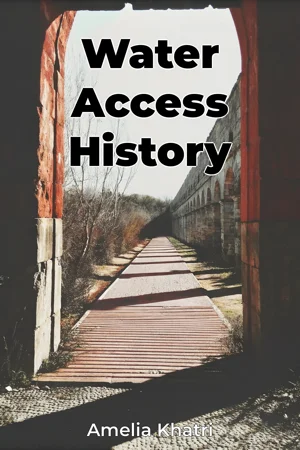
*Water Access History* explores the evolution of clean water and sanitation from a luxury to a presumed right, examining how societies have historically grappled with balancing technological advances, public health, and environmental concerns. It delves into the development of water infrastructure from ancient civilizations to the present day, highlighting the societal values and engineering breakthroughs that shaped these systems. For instance, the book showcases how ancient societies like Mesopotamia and Rome engineered complex aqueducts and drainage systems, demonstrating early ingenuity in water management. Readers will find insights into how the expansion of cities and industries during the Industrial Revolution spurred modern water and wastewater treatment plants. The book progresses chronologically, starting with ancient water management practices and moving through the Middle Ages and the Renaissance before focusing on the profound impact of the Industrial Revolution. It concludes by examining contemporary issues like water scarcity and climate change. By using archaeological discoveries, historical accounts and demographic data, the book emphasizes the social, political, and environmental intersections vital for understanding today's water management challenges.
Book Details
ISBN
9788233960322
Publisher
Publifye AS
Your Licenses
You don't own any licenses for this book
Purchase a license below to unlock this book and download the EPUB.
Purchase License
Select a tier to unlock this book
Need bulk licensing?
Contact us for enterprise agreements.