
About This Book
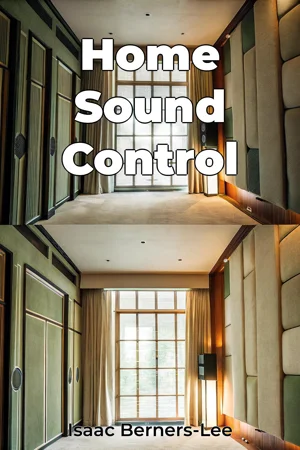
Are you struggling to find peace and quiet in your own home, or perhaps striving to create the perfect listening environment for music? "Home Sound Control" provides a comprehensive, scientifically grounded approach to acoustic management, empowering you to optimize your living spaces for sound. This book merges the technical precision of audio engineering with practical, accessible strategies for improving the sonic environment of any home. This book centers on three core areas: understanding sound behavior, controlling noise, and optimizing acoustics for specific purposes. Each plays a crucial role in establishing a balanced and comfortable auditory landscape. Understanding sound propagation, reflection, and absorption is fundamental to predicting and manipulating sound within a space. Controlling noise, both internal and external, addresses unwanted sounds that disrupt focus and relaxation. Finally, optimizing acoustics, explores creating tailored soundscapes for listening rooms, home theaters, or simply enhancing the overall ambiance of a home. The principles of acoustics have evolved for decades, drawing from fields like physics, architecture, and audio engineering. While traditionally applied in professional settings like recording studios and concert halls, the core concepts are readily adaptable to domestic environments. No prior expertise in acoustics or audio engineering is needed to grasp the material presented; the book builds from basic principles upwards, making it accessible to a broad audience. The central message of this book is that anyone, regardless of technical background, can significantly improve their home's sound environment by applying fundamental principles of acoustics. By understanding how sound behaves and then employing practical control techniques, it becomes possible to mitigate noise, enhance clarity, and create spaces that are both functional and enjoyable. "Home Sound Control" follows a structured path to guide readers from fundamental principles to practical application. First, the book introduces core acoustic concepts, defining terms like sound pressure level, frequency response, and reverberation time. It then explores noise control techniques, including soundproofing strategies, absorption materials, and masking techniques. From there, the book moves into acoustic optimization, detailing how to strategically position furniture, use acoustic panels, and fine-tune loudspeaker placement for optimal listening experiences. The culmination of the book provides step-by-step guides for various home environments, from setting up a dedicated listening room to minimizing noise in a home office. Numerous case studies and real-world examples throughout the book illustrate these principles in action. The recommendations are supported by principles of physics, experimental data from acoustic testing, and research from audio engineering. The book draws upon published research papers, industry standards, and case studies of real-world installations, providing a strong evidence base for its claims. This book connects acoustics with multiple broader fields, including interior design, architecture, and health. Interior design considerations are crucial for integrating acoustic treatments aesthetically into a home. Architectural principles influence the initial sound characteristics of a space, and design choices can greatly impact the effectiveness of acoustic treatments. The field of health is also connected, as studies show poor acoustics can contribute to stress, fatigue, and reduced cognitive performance. "Home Sound Control" distinguishes itself by its emphasis on practical, DIY-friendly solutions. While many books on acoustics are geared towards professionals, this book focuses on empowering homeowners and hobbyists with the knowledge and tools to make tangible improvements themselves. It also offers a unified perspective, bridging the gap between theoretical knowledge and real-world implementation within the specific context of home environments. Written in an accessible and informative style, "Home Sound Control" avoids jargon and uses clear explanations and illustrations to convey complex concepts. The book prioritizes comprehension and application, making it suitable for readers with varying levels of technical knowledge. The target audience includes homeowners struggling with noise, audiophiles seeking to optimize their listening spaces, home theater enthusiasts, musicians, and anyone interested in improving their living environment through better sound control. This book will prove valuable to anyone who wishes to take control of the sound environment in their home to create a more comfortable, productive, and enjoyable space. As a work of technology and music-related nonfiction, the book avoids sensationalism and instead focuses on providing accurate, reliable information. It conforms to industry standards for acoustic measurement and analysis while remaining accessible to a non-technical audience. The scope of "Home Sound Control" is primarily limited to residential environments. While the principles discussed can be applied more broadly, the specific strategies and examples are tailored towards homes, apartments, and similar living spaces. It does not delve into highly specialized areas like industrial noise control or architectural acoustics for large venues. The practical applications are extensive. Readers will learn how to reduce noise from neighbors, create a dedicated listening space, improve the clarity of their home theater audio, mitigate echo in a large room, or simply create a more peaceful and relaxing home environment. While the fundamentals of acoustics are well-established, debates do exist regarding the relative effectiveness of different acoustic treatments and the subjective perception of sound quality. The book acknowledges these nuances and encourages readers to experiment and find solutions that best meet their individual needs and preferences.
Are you struggling to find peace and quiet in your own home, or perhaps striving to create the perfect listening environment for music? "Home Sound Control" provides a comprehensive, scientifically grounded approach to acoustic management, empowering you to optimize your living spaces for sound. This book merges the technical precision of audio engineering with practical, accessible strategies for improving the sonic environment of any home. This book centers on three core areas: understanding sound behavior, controlling noise, and optimizing acoustics for specific purposes. Each plays a crucial role in establishing a balanced and comfortable auditory landscape. Understanding sound propagation, reflection, and absorption is fundamental to predicting and manipulating sound within a space. Controlling noise, both internal and external, addresses unwanted sounds that disrupt focus and relaxation. Finally, optimizing acoustics, explores creating tailored soundscapes for listening rooms, home theaters, or simply enhancing the overall ambiance of a home. The principles of acoustics have evolved for decades, drawing from fields like physics, architecture, and audio engineering. While traditionally applied in professional settings like recording studios and concert halls, the core concepts are readily adaptable to domestic environments. No prior expertise in acoustics or audio engineering is needed to grasp the material presented; the book builds from basic principles upwards, making it accessible to a broad audience. The central message of this book is that anyone, regardless of technical background, can significantly improve their home's sound environment by applying fundamental principles of acoustics. By understanding how sound behaves and then employing practical control techniques, it becomes possible to mitigate noise, enhance clarity, and create spaces that are both functional and enjoyable. "Home Sound Control" follows a structured path to guide readers from fundamental principles to practical application. First, the book introduces core acoustic concepts, defining terms like sound pressure level, frequency response, and reverberation time. It then explores noise control techniques, including soundproofing strategies, absorption materials, and masking techniques. From there, the book moves into acoustic optimization, detailing how to strategically position furniture, use acoustic panels, and fine-tune loudspeaker placement for optimal listening experiences. The culmination of the book provides step-by-step guides for various home environments, from setting up a dedicated listening room to minimizing noise in a home office. Numerous case studies and real-world examples throughout the book illustrate these principles in action. The recommendations are supported by principles of physics, experimental data from acoustic testing, and research from audio engineering. The book draws upon published research papers, industry standards, and case studies of real-world installations, providing a strong evidence base for its claims. This book connects acoustics with multiple broader fields, including interior design, architecture, and health. Interior design considerations are crucial for integrating acoustic treatments aesthetically into a home. Architectural principles influence the initial sound characteristics of a space, and design choices can greatly impact the effectiveness of acoustic treatments. The field of health is also connected, as studies show poor acoustics can contribute to stress, fatigue, and reduced cognitive performance. "Home Sound Control" distinguishes itself by its emphasis on practical, DIY-friendly solutions. While many books on acoustics are geared towards professionals, this book focuses on empowering homeowners and hobbyists with the knowledge and tools to make tangible improvements themselves. It also offers a unified perspective, bridging the gap between theoretical knowledge and real-world implementation within the specific context of home environments. Written in an accessible and informative style, "Home Sound Control" avoids jargon and uses clear explanations and illustrations to convey complex concepts. The book prioritizes comprehension and application, making it suitable for readers with varying levels of technical knowledge. The target audience includes homeowners struggling with noise, audiophiles seeking to optimize their listening spaces, home theater enthusiasts, musicians, and anyone interested in improving their living environment through better sound control. This book will prove valuable to anyone who wishes to take control of the sound environment in their home to create a more comfortable, productive, and enjoyable space. As a work of technology and music-related nonfiction, the book avoids sensationalism and instead focuses on providing accurate, reliable information. It conforms to industry standards for acoustic measurement and analysis while remaining accessible to a non-technical audience. The scope of "Home Sound Control" is primarily limited to residential environments. While the principles discussed can be applied more broadly, the specific strategies and examples are tailored towards homes, apartments, and similar living spaces. It does not delve into highly specialized areas like industrial noise control or architectural acoustics for large venues. The practical applications are extensive. Readers will learn how to reduce noise from neighbors, create a dedicated listening space, improve the clarity of their home theater audio, mitigate echo in a large room, or simply create a more peaceful and relaxing home environment. While the fundamentals of acoustics are well-established, debates do exist regarding the relative effectiveness of different acoustic treatments and the subjective perception of sound quality. The book acknowledges these nuances and encourages readers to experiment and find solutions that best meet their individual needs and preferences.
"Home Sound Control" offers a practical guide to improving your home's sound environment, merging audio engineering with accessible DIY strategies. It emphasizes understanding sound behavior – how it reflects, propagates, and is absorbed – to effectively manage acoustics. The book uniquely tailors acoustic principles, traditionally used in professional settings, for home environments, enabling anyone to mitigate noise and enhance audio clarity. The approach progresses systematically, starting with core acoustic concepts and noise control techniques before delving into acoustic optimization for spaces like listening rooms and home theaters. You'll learn how strategic furniture placement and acoustic panels can dramatically improve sound quality. Intriguingly, poor acoustics can contribute to stress and reduced cognitive performance, highlighting the importance of sound management. This book stands out by focusing on DIY solutions, empowering homeowners to take control of their soundscapes. It provides a unified perspective, bridging theoretical knowledge with real-world implementation in homes. Case studies and real-world examples illustrate these principles, making "Home Sound Control" a valuable resource for creating a more comfortable and enjoyable home.
Book Details
ISBN
9788233960230
Publisher
Publifye AS
Your Licenses
You don't own any licenses for this book
Purchase a license below to unlock this book and download the EPUB.
Purchase License
Select a tier to unlock this book
Need bulk licensing?
Contact us for enterprise agreements.