
About This Book
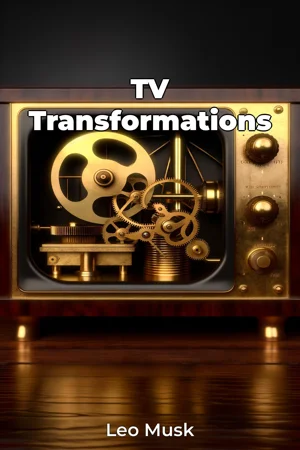
From the first flickering images of John Logie Baird's mechanical television in 1925 to today's quantum dot displays, "TV Transformations" chronicles the technological revolution that has reshaped how we consume visual media. This comprehensive examination traces the engineering breakthroughs, market forces, and scientific innovations that transformed television from a experimental curiosity into an integral part of modern life. The book presents three fundamental transitions that defined television's evolution: the shift from mechanical to electronic systems, the movement from analog to digital broadcasting, and the emergence of internet-based streaming platforms. Through detailed technical analysis and historical context, readers gain insight into how each advancement built upon previous innovations while introducing new possibilities for content delivery and viewing experiences. Drawing from extensive engineering documents, patent filings, and interviews with industry pioneers, the narrative explores pivotal developments including the invention of the cathode ray tube, the standardization of color TV protocols, and the implementation of high-definition digital formats. The text examines how competing technologies and formats—like the battle between plasma and LCD displays—drove innovation while shaping consumer options and market dynamics. Central to the book's thesis is how television technology both influenced and responded to changing viewer habits. The transition from family gatherings around single screens to personalized streaming on multiple devices reflects broader social changes, while advances in display technology enabled new forms of content creation and consumption patterns. The work is structured chronologically, beginning with early experiments in image transmission and progressing through distinct technological eras. Key chapters focus on the development of broadcasting infrastructure, the evolution of display technologies, and the integration of internet protocols into modern smart TVs. The final section examines emerging technologies like micro-LED displays and advanced AI upscaling, offering insights into television's future trajectory. Technical concepts are presented through accessible explanations that bridge engineering principles with practical applications. The book connects television's development to advances in semiconductor physics, signal processing, and computer networking, demonstrating how progress in these fields enabled new capabilities in TV technology. The text maintains an analytical tone while providing detailed technical information suitable for both industry professionals and interested general readers. Engineers will find value in the technical specifications and engineering challenges described, while media studies scholars will appreciate the analysis of how these technologies shaped content creation and distribution methods. Particular attention is given to the environmental and manufacturing challenges of modern display production, including the complex supply chains required for OLED panels and the industry's efforts to develop more sustainable production methods. The book addresses ongoing debates about energy efficiency, planned obsolescence, and the environmental impact of rapid technological turnover. By examining television's technical evolution within its historical and social context, "TV Transformations" provides readers with a framework for understanding both past innovations and future developments in visual display technology. This work serves as a valuable reference for understanding how engineering solutions and market demands continue to shape the future of home entertainment.
From the first flickering images of John Logie Baird's mechanical television in 1925 to today's quantum dot displays, "TV Transformations" chronicles the technological revolution that has reshaped how we consume visual media. This comprehensive examination traces the engineering breakthroughs, market forces, and scientific innovations that transformed television from a experimental curiosity into an integral part of modern life. The book presents three fundamental transitions that defined television's evolution: the shift from mechanical to electronic systems, the movement from analog to digital broadcasting, and the emergence of internet-based streaming platforms. Through detailed technical analysis and historical context, readers gain insight into how each advancement built upon previous innovations while introducing new possibilities for content delivery and viewing experiences. Drawing from extensive engineering documents, patent filings, and interviews with industry pioneers, the narrative explores pivotal developments including the invention of the cathode ray tube, the standardization of color TV protocols, and the implementation of high-definition digital formats. The text examines how competing technologies and formats—like the battle between plasma and LCD displays—drove innovation while shaping consumer options and market dynamics. Central to the book's thesis is how television technology both influenced and responded to changing viewer habits. The transition from family gatherings around single screens to personalized streaming on multiple devices reflects broader social changes, while advances in display technology enabled new forms of content creation and consumption patterns. The work is structured chronologically, beginning with early experiments in image transmission and progressing through distinct technological eras. Key chapters focus on the development of broadcasting infrastructure, the evolution of display technologies, and the integration of internet protocols into modern smart TVs. The final section examines emerging technologies like micro-LED displays and advanced AI upscaling, offering insights into television's future trajectory. Technical concepts are presented through accessible explanations that bridge engineering principles with practical applications. The book connects television's development to advances in semiconductor physics, signal processing, and computer networking, demonstrating how progress in these fields enabled new capabilities in TV technology. The text maintains an analytical tone while providing detailed technical information suitable for both industry professionals and interested general readers. Engineers will find value in the technical specifications and engineering challenges described, while media studies scholars will appreciate the analysis of how these technologies shaped content creation and distribution methods. Particular attention is given to the environmental and manufacturing challenges of modern display production, including the complex supply chains required for OLED panels and the industry's efforts to develop more sustainable production methods. The book addresses ongoing debates about energy efficiency, planned obsolescence, and the environmental impact of rapid technological turnover. By examining television's technical evolution within its historical and social context, "TV Transformations" provides readers with a framework for understanding both past innovations and future developments in visual display technology. This work serves as a valuable reference for understanding how engineering solutions and market demands continue to shape the future of home entertainment.
"TV Transformations" presents a fascinating journey through television's technological evolution, from John Logie Baird's mechanical invention in 1925 to today's sophisticated quantum dot displays. This comprehensive exploration focuses on three pivotal transitions that revolutionized television: the mechanical-to-electronic shift, analog-to-digital broadcasting transformation, and the rise of internet streaming platforms. Through accessible explanations of complex engineering concepts, the book illuminates how each advancement built upon previous innovations while creating new possibilities for content delivery and viewing experiences. Drawing from engineering documents, patent filings, and pioneer interviews, the book meticulously traces how competing technologies like plasma and LCD displays drove innovation and shaped consumer choices. The narrative expertly weaves together technical developments—from cathode ray tubes to OLED displays—with their broader social implications, demonstrating how television technology both responded to and influenced changing viewer habits. The chronological progression helps readers understand how each technological era laid the groundwork for subsequent breakthroughs. The book bridges the gap between technical expertise and general interest, making it valuable for both engineering professionals and casual readers. It explores contemporary challenges in display technology, including environmental considerations in manufacturing and the complex supply chains behind modern screens. By connecting television's development to advances in semiconductor physics, signal processing, and computer networking, the book provides a comprehensive understanding of how these interconnected innovations continue to shape the future of visual entertainment.
Book Details
ISBN
9788233959999
Publisher
Publifye AS
Your Licenses
You don't own any licenses for this book
Purchase a license below to unlock this book and download the EPUB.
Purchase License
Select a tier to unlock this book
Need bulk licensing?
Contact us for enterprise agreements.