
About This Book
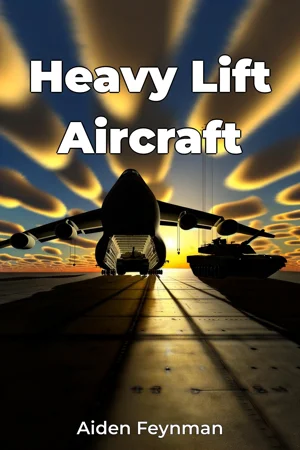
When a C-5 Galaxy aircraft lifts a 70-ton M1 Abrams tank into the sky, it demonstrates one of military aviation's most crucial capabilities: the power to transport massive cargo across continents within hours. "Heavy Lift Aircraft" examines the development, engineering, and operational impact of these aerial giants that have transformed both military logistics and civilian cargo transport. The book presents three core aspects of heavy-lift aviation: the engineering challenges of creating aircraft capable of carrying unprecedented loads, the strategic military advantages these platforms provide, and their role in shaping modern global logistics. Through detailed technical analysis and historical documentation, readers gain insight into how these aircraft evolved from modest transport planes to today's massive cargo carriers. Starting with the Berlin Airlift's C-54 Skymaster operations, the narrative traces the technological progression through the C-130 Hercules, C-17 Globemaster III, and the mammoth An-225 Mriya. Each aircraft represents significant advances in aeronautical engineering, including innovations in propulsion systems, cargo bay design, and load-bearing structures that make these feats of heavy lifting possible. The book's central thesis argues that heavy-lift aircraft have fundamentally altered military doctrine and humanitarian response capabilities, creating a new paradigm in rapid global mobility. This argument is supported by extensive operational data from military deployments, humanitarian missions, and commercial applications. Technical specifications and engineering analyses are balanced with operational case studies, including the rapid deployment during Operation Desert Shield, humanitarian airlifts following natural disasters, and commercial outsized cargo operations. The text incorporates declassified military documents, interviews with aircraft designers, and maintenance records to provide comprehensive insight into these platforms' capabilities and limitations. The work connects multiple disciplines, linking aerospace engineering with military strategy, logistics management, and international relations. It examines how heavy-lift capabilities influence military planning, affect diplomatic options, and enable rapid humanitarian response. Written in a technical yet accessible style, the book serves military personnel, aerospace engineers, and aviation enthusiasts. It provides detailed analysis of aircraft systems while maintaining clarity for readers without extensive technical backgrounds. Each chapter builds upon fundamental concepts, progressing from basic aerodynamics to complex systems integration. The scope encompasses both Western and Eastern bloc aircraft developments, offering comparative analysis of different design philosophies and operational approaches. While focusing primarily on military applications, the book addresses civilian adaptations and future developments in heavy-lift technology. Particular attention is paid to current debates regarding the cost-effectiveness of heavy-lift platforms versus alternative transport methods, and the ongoing discussion about the optimal balance between payload capacity and operational flexibility. The book concludes by examining emerging technologies and their potential impact on future heavy-lift capabilities, including advanced materials, hybrid propulsion systems, and autonomous loading systems. These developments are presented within the context of evolving military requirements and changing global logistics patterns. This comprehensive examination of heavy-lift aircraft serves as both a technical reference and a historical record of one of aviation's most significant developments, offering readers a thorough understanding of these crucial platforms' past, present, and future roles in military and civilian operations.
When a C-5 Galaxy aircraft lifts a 70-ton M1 Abrams tank into the sky, it demonstrates one of military aviation's most crucial capabilities: the power to transport massive cargo across continents within hours. "Heavy Lift Aircraft" examines the development, engineering, and operational impact of these aerial giants that have transformed both military logistics and civilian cargo transport. The book presents three core aspects of heavy-lift aviation: the engineering challenges of creating aircraft capable of carrying unprecedented loads, the strategic military advantages these platforms provide, and their role in shaping modern global logistics. Through detailed technical analysis and historical documentation, readers gain insight into how these aircraft evolved from modest transport planes to today's massive cargo carriers. Starting with the Berlin Airlift's C-54 Skymaster operations, the narrative traces the technological progression through the C-130 Hercules, C-17 Globemaster III, and the mammoth An-225 Mriya. Each aircraft represents significant advances in aeronautical engineering, including innovations in propulsion systems, cargo bay design, and load-bearing structures that make these feats of heavy lifting possible. The book's central thesis argues that heavy-lift aircraft have fundamentally altered military doctrine and humanitarian response capabilities, creating a new paradigm in rapid global mobility. This argument is supported by extensive operational data from military deployments, humanitarian missions, and commercial applications. Technical specifications and engineering analyses are balanced with operational case studies, including the rapid deployment during Operation Desert Shield, humanitarian airlifts following natural disasters, and commercial outsized cargo operations. The text incorporates declassified military documents, interviews with aircraft designers, and maintenance records to provide comprehensive insight into these platforms' capabilities and limitations. The work connects multiple disciplines, linking aerospace engineering with military strategy, logistics management, and international relations. It examines how heavy-lift capabilities influence military planning, affect diplomatic options, and enable rapid humanitarian response. Written in a technical yet accessible style, the book serves military personnel, aerospace engineers, and aviation enthusiasts. It provides detailed analysis of aircraft systems while maintaining clarity for readers without extensive technical backgrounds. Each chapter builds upon fundamental concepts, progressing from basic aerodynamics to complex systems integration. The scope encompasses both Western and Eastern bloc aircraft developments, offering comparative analysis of different design philosophies and operational approaches. While focusing primarily on military applications, the book addresses civilian adaptations and future developments in heavy-lift technology. Particular attention is paid to current debates regarding the cost-effectiveness of heavy-lift platforms versus alternative transport methods, and the ongoing discussion about the optimal balance between payload capacity and operational flexibility. The book concludes by examining emerging technologies and their potential impact on future heavy-lift capabilities, including advanced materials, hybrid propulsion systems, and autonomous loading systems. These developments are presented within the context of evolving military requirements and changing global logistics patterns. This comprehensive examination of heavy-lift aircraft serves as both a technical reference and a historical record of one of aviation's most significant developments, offering readers a thorough understanding of these crucial platforms' past, present, and future roles in military and civilian operations.
"Heavy Lift Aircraft" explores the fascinating evolution and critical importance of massive cargo-carrying aircraft that revolutionized military logistics and global transport capabilities. From the game-changing C-54 Skymaster during the Berlin Airlift to the awe-inspiring An-225 Mriya, the book chronicles how these aerial giants progressed from modest beginnings to become indispensable assets in modern military operations and humanitarian missions. Through a balanced mix of technical analysis and operational history, the text illuminates how these remarkable machines can accomplish feats like lifting a 70-ton M1 Abrams tank into the sky. The book masterfully weaves together three essential narratives: the engineering challenges of creating aircraft capable of carrying unprecedented loads, the strategic military advantages these platforms provide, and their transformative impact on global logistics. Drawing from declassified military documents, designer interviews, and maintenance records, readers gain comprehensive insight into iconic aircraft like the C-130 Hercules and C-17 Globemaster III. The text explores crucial innovations in propulsion systems, cargo bay design, and load-bearing structures that make these extraordinary capabilities possible. Written in an accessible yet technically precise style, the work connects aerospace engineering with military strategy and international relations, making it valuable for both professionals and aviation enthusiasts. The narrative progresses logically from fundamental aerodynamics to complex systems integration, incorporating real-world examples from military deployments and humanitarian operations. The book concludes with an examination of emerging technologies and their potential impact on future heavy-lift capabilities, offering a complete picture of these crucial platforms' evolving role in military and civilian operations.
Book Details
ISBN
9788233959845
Publisher
Publifye AS
Your Licenses
You don't own any licenses for this book
Purchase a license below to unlock this book and download the EPUB.
Purchase License
Select a tier to unlock this book
Need bulk licensing?
Contact us for enterprise agreements.