
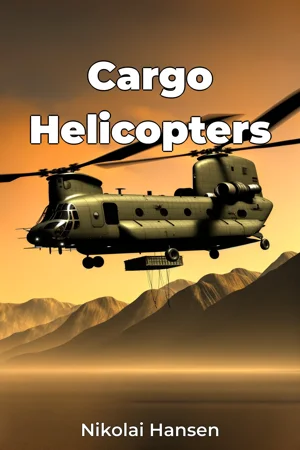
About This Book
In the aftermath of World War II, military strategists faced a critical challenge: how to transport essential supplies and personnel across terrain that conventional vehicles couldn't navigate. "Cargo Helicopters" examines the revolutionary impact of rotary-wing aircraft in solving this logistical puzzle, transforming military operations and humanitarian missions worldwide. This comprehensive analysis traces the development and deployment of cargo helicopters from their early prototypes to modern-day workhorses like the CH-47 Chinook and Mi-26. The book demonstrates how these aircraft became indispensable assets in military logistics, combining technical innovation with operational necessity to overcome geographical obstacles and tactical constraints. The work is structured in three major sections. The first explores the engineering evolution of cargo helicopters, detailing how advances in rotor systems, payload capacity, and fuel efficiency addressed the growing demands of military transport. The second section examines operational deployments, from the Korean War's challenging mountainous terrain to contemporary combat zones in Afghanistan, where high-altitude operations pushed the boundaries of helicopter capabilities. The final section analyzes the integration of cargo helicopters into modern military doctrine and their expanding role in humanitarian operations. Drawing from declassified military documents, technical specifications, and firsthand accounts from pilots and engineers, the book provides detailed insights into the mechanical principles and operational challenges of heavy-lift helicopters. It includes comprehensive data on payload configurations, range limitations, and environmental factors affecting performance. The text establishes clear connections between military engineering, logistics management, and humanitarian aid operations. It demonstrates how innovations in military cargo helicopter design have influenced civilian applications, particularly in disaster relief and remote construction projects. The analysis extends to the economic implications of helicopter transport, comparing operational costs with traditional ground-based logistics. Written in a technical yet accessible style, the book combines rigorous engineering analysis with operational narrative, making complex mechanical concepts understandable to both military professionals and aviation enthusiasts. Each chapter includes detailed diagrams, performance charts, and case studies that illustrate key concepts. The primary audience includes military historians, aerospace engineers, and logistics professionals, though the content remains valuable for anyone interested in military aviation or mechanical engineering. The book addresses current debates about the future of military transport, including the role of autonomous systems and the balance between speed and payload capacity. The scope encompasses both Western and Eastern helicopter designs, providing a global perspective on cargo helicopter development. While focusing primarily on military applications, the book acknowledges civilian adaptations and future development trajectories. It examines ongoing challenges in helicopter design, including fuel efficiency, noise reduction, and maintenance requirements. The work maintains objectivity when discussing various nations' contributions to cargo helicopter development, acknowledging both successes and limitations. It provides practical insights for military planners and logistics professionals while offering valuable historical context for understanding modern military transport capabilities. Through careful analysis of operational data and engineering principles, the book demonstrates how cargo helicopters have become essential tools in modern military logistics, humanitarian operations, and remote-area support missions.
In the aftermath of World War II, military strategists faced a critical challenge: how to transport essential supplies and personnel across terrain that conventional vehicles couldn't navigate. "Cargo Helicopters" examines the revolutionary impact of rotary-wing aircraft in solving this logistical puzzle, transforming military operations and humanitarian missions worldwide. This comprehensive analysis traces the development and deployment of cargo helicopters from their early prototypes to modern-day workhorses like the CH-47 Chinook and Mi-26. The book demonstrates how these aircraft became indispensable assets in military logistics, combining technical innovation with operational necessity to overcome geographical obstacles and tactical constraints. The work is structured in three major sections. The first explores the engineering evolution of cargo helicopters, detailing how advances in rotor systems, payload capacity, and fuel efficiency addressed the growing demands of military transport. The second section examines operational deployments, from the Korean War's challenging mountainous terrain to contemporary combat zones in Afghanistan, where high-altitude operations pushed the boundaries of helicopter capabilities. The final section analyzes the integration of cargo helicopters into modern military doctrine and their expanding role in humanitarian operations. Drawing from declassified military documents, technical specifications, and firsthand accounts from pilots and engineers, the book provides detailed insights into the mechanical principles and operational challenges of heavy-lift helicopters. It includes comprehensive data on payload configurations, range limitations, and environmental factors affecting performance. The text establishes clear connections between military engineering, logistics management, and humanitarian aid operations. It demonstrates how innovations in military cargo helicopter design have influenced civilian applications, particularly in disaster relief and remote construction projects. The analysis extends to the economic implications of helicopter transport, comparing operational costs with traditional ground-based logistics. Written in a technical yet accessible style, the book combines rigorous engineering analysis with operational narrative, making complex mechanical concepts understandable to both military professionals and aviation enthusiasts. Each chapter includes detailed diagrams, performance charts, and case studies that illustrate key concepts. The primary audience includes military historians, aerospace engineers, and logistics professionals, though the content remains valuable for anyone interested in military aviation or mechanical engineering. The book addresses current debates about the future of military transport, including the role of autonomous systems and the balance between speed and payload capacity. The scope encompasses both Western and Eastern helicopter designs, providing a global perspective on cargo helicopter development. While focusing primarily on military applications, the book acknowledges civilian adaptations and future development trajectories. It examines ongoing challenges in helicopter design, including fuel efficiency, noise reduction, and maintenance requirements. The work maintains objectivity when discussing various nations' contributions to cargo helicopter development, acknowledging both successes and limitations. It provides practical insights for military planners and logistics professionals while offering valuable historical context for understanding modern military transport capabilities. Through careful analysis of operational data and engineering principles, the book demonstrates how cargo helicopters have become essential tools in modern military logistics, humanitarian operations, and remote-area support missions.
"Cargo Helicopters" explores the transformative role of rotary-wing aircraft in military logistics and humanitarian operations since World War II, chronicling how these versatile machines revolutionized the transportation of supplies and personnel across challenging terrains. The book masterfully weaves together the technical evolution of heavy-lift helicopters like the CH-47 Chinook and Mi-26 with their operational impact, demonstrating how engineering innovations addressed critical military requirements. Through a well-structured three-part narrative, the book first delves into the engineering developments that enhanced rotor systems and payload capacity, making these aircraft increasingly capable. The middle section brings history to life by examining real-world deployments, from the Korean War's mountainous challenges to modern operations in Afghanistan. The final portion analyzes how cargo helicopters have shaped military doctrine and humanitarian missions, supported by declassified documents and firsthand accounts from pilots and engineers. What sets this work apart is its comprehensive approach to both Western and Eastern helicopter designs, offering readers a global perspective while maintaining technical accuracy and readability. The book effectively bridges the gap between complex engineering concepts and practical applications, making it invaluable for military professionals, aerospace engineers, and aviation enthusiasts alike. Through detailed diagrams, performance charts, and case studies, readers gain a thorough understanding of how these aircraft have become indispensable in modern military and humanitarian operations.
Book Details
ISBN
9788233959760
Publisher
Publifye AS
Your Licenses
You don't own any licenses for this book
Purchase a license below to unlock this book and download the EPUB.
Purchase License
Select a tier to unlock this book
Need bulk licensing?
Contact us for enterprise agreements.