
About This Book
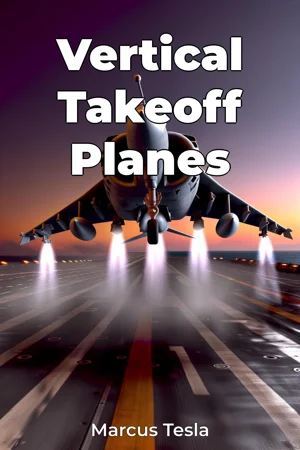
In the race to dominate military aviation, vertical takeoff aircraft represent one of the most significant technological achievements since the Wright brothers' first flight. "Vertical Takeoff Planes" examines the complex engineering principles and military applications that have shaped these remarkable machines from their inception to their current deployment in modern warfare. The book presents a detailed analysis of three pivotal developments: the pioneering work on thrust vectoring in the 1950s, the evolution of computer-controlled stability systems, and the integration of advanced materials that made vertical takeoff aircraft practically feasible. Through technical drawings, wind tunnel data, and actual flight test results, readers gain insight into the precise calculations and engineering breakthroughs that overcame the seemingly impossible challenge of vertical flight. Starting with the British Harrier, the first operational vertical takeoff fighter, the narrative traces how competing military requirements drove innovation. The text explores how the Cold War accelerated development, with both NATO and Warsaw Pact nations pursuing various approaches to solving the vertical takeoff challenge. This historical context provides essential background for understanding current designs and capabilities. The book's core argument maintains that vertical takeoff technology fundamentally altered military aviation by eliminating the traditional dependency on long runways, thereby reshaping tactical and strategic planning. This transformation is demonstrated through detailed case studies of combat deployments, including the Falklands War, where Harriers proved decisive in projecting air power from small aircraft carriers. Technical chapters examine the physics of vertical flight, propulsion systems, and control mechanisms. The author presents original research drawn from declassified military documents, interviews with test pilots, and engineering specifications. This material is complemented by detailed analyses of successful designs like the F-35B Lightning II and experimental aircraft that never reached production. The interdisciplinary approach connects aeronautical engineering with military strategy, materials science, and computer systems development. Readers learn how advances in one field enabled progress in others, creating a web of technological innovation that continues to evolve. The text maintains a balanced technical level, making complex concepts accessible to general readers while providing sufficient depth for aviation professionals. The book addresses ongoing debates about the cost-effectiveness of vertical takeoff capability versus conventional aircraft, examining operational data and maintenance requirements. It also explores future developments, including unmanned vertical takeoff systems and potential civilian applications. Written in a methodical, technical style appropriate for its subject matter, the work serves military historians, aerospace engineers, and defense industry professionals. The author's academic approach is enhanced by practical insights from military operations and flight testing programs. The scope encompasses both successful and failed programs, offering valuable lessons from each. While focused primarily on military applications, the book acknowledges emerging commercial possibilities, particularly in urban air mobility. It concludes by examining how vertical takeoff technology might influence future warfare and aviation development, supported by current research and development programs worldwide. This comprehensive examination of vertical takeoff aircraft combines technical precision with historical context, making it an essential reference for understanding this crucial aspect of modern military aviation.
In the race to dominate military aviation, vertical takeoff aircraft represent one of the most significant technological achievements since the Wright brothers' first flight. "Vertical Takeoff Planes" examines the complex engineering principles and military applications that have shaped these remarkable machines from their inception to their current deployment in modern warfare. The book presents a detailed analysis of three pivotal developments: the pioneering work on thrust vectoring in the 1950s, the evolution of computer-controlled stability systems, and the integration of advanced materials that made vertical takeoff aircraft practically feasible. Through technical drawings, wind tunnel data, and actual flight test results, readers gain insight into the precise calculations and engineering breakthroughs that overcame the seemingly impossible challenge of vertical flight. Starting with the British Harrier, the first operational vertical takeoff fighter, the narrative traces how competing military requirements drove innovation. The text explores how the Cold War accelerated development, with both NATO and Warsaw Pact nations pursuing various approaches to solving the vertical takeoff challenge. This historical context provides essential background for understanding current designs and capabilities. The book's core argument maintains that vertical takeoff technology fundamentally altered military aviation by eliminating the traditional dependency on long runways, thereby reshaping tactical and strategic planning. This transformation is demonstrated through detailed case studies of combat deployments, including the Falklands War, where Harriers proved decisive in projecting air power from small aircraft carriers. Technical chapters examine the physics of vertical flight, propulsion systems, and control mechanisms. The author presents original research drawn from declassified military documents, interviews with test pilots, and engineering specifications. This material is complemented by detailed analyses of successful designs like the F-35B Lightning II and experimental aircraft that never reached production. The interdisciplinary approach connects aeronautical engineering with military strategy, materials science, and computer systems development. Readers learn how advances in one field enabled progress in others, creating a web of technological innovation that continues to evolve. The text maintains a balanced technical level, making complex concepts accessible to general readers while providing sufficient depth for aviation professionals. The book addresses ongoing debates about the cost-effectiveness of vertical takeoff capability versus conventional aircraft, examining operational data and maintenance requirements. It also explores future developments, including unmanned vertical takeoff systems and potential civilian applications. Written in a methodical, technical style appropriate for its subject matter, the work serves military historians, aerospace engineers, and defense industry professionals. The author's academic approach is enhanced by practical insights from military operations and flight testing programs. The scope encompasses both successful and failed programs, offering valuable lessons from each. While focused primarily on military applications, the book acknowledges emerging commercial possibilities, particularly in urban air mobility. It concludes by examining how vertical takeoff technology might influence future warfare and aviation development, supported by current research and development programs worldwide. This comprehensive examination of vertical takeoff aircraft combines technical precision with historical context, making it an essential reference for understanding this crucial aspect of modern military aviation.
"Vertical Takeoff Planes" presents a fascinating exploration of one of aviation's most revolutionary developments, tracing the evolution of aircraft capable of lifting off without traditional runways. The book masterfully weaves together the complex engineering challenges, military applications, and historical significance of vertical takeoff technology, from its early experimental stages to modern-day implementation in advanced aircraft like the F-35B Lightning II. Through a combination of technical analysis and historical narrative, the book examines three crucial developments that made vertical takeoff possible: thrust vectoring technology, computer-controlled stability systems, and advanced materials science. The author draws from declassified military documents, test pilot interviews, and engineering data to illustrate how these innovations transformed military aviation. The pivotal role of the British Harrier in proving the concept's combat effectiveness, particularly during the Falklands War, serves as a compelling case study of how this technology reshapes military strategy. The text progresses chronologically while maintaining thematic coherence, exploring both successful and failed programs to provide a comprehensive understanding of vertical takeoff aviation. What sets this book apart is its balanced approach to technical content, making complex aeronautical concepts accessible to general readers while offering sufficient depth for aviation professionals. The author's examination of current developments and future possibilities, including unmanned systems and urban air mobility applications, provides valuable insights into the continuing evolution of this transformative technology.
Book Details
ISBN
9788233959708
Publisher
Publifye AS
Your Licenses
You don't own any licenses for this book
Purchase a license below to unlock this book and download the EPUB.
Purchase License
Select a tier to unlock this book
Need bulk licensing?
Contact us for enterprise agreements.