
About This Book
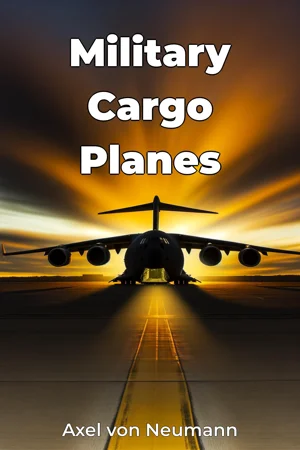
From the first military cargo drop in 1911 using a Wright Model B aircraft to today's massive C-17 Globemaster III, military transport planes have fundamentally transformed modern warfare and humanitarian operations. "Military Cargo Planes" presents a comprehensive analysis of these versatile aircraft, examining their technical evolution, strategic impact, and crucial role in shaping military logistics over the past century. The book systematically explores three core aspects: the technological advancement of military transport aircraft, their operational impact on military strategy, and their dual-use capabilities in both combat support and humanitarian missions. Through detailed technical specifications, historical records, and military archives, readers gain insight into how these aircraft evolved from simple cargo haulers to sophisticated platforms capable of rapid global response. Beginning with the early developments of World War I, the narrative traces how military transport planes progressed through distinct phases. The text examines pivotal moments, including the Berlin Airlift, which demonstrated the critical importance of air transport capabilities, and the Vietnam War's establishment of modern tactical airlift doctrine. Each chapter builds upon this historical framework to illustrate how engineering advances directly influenced military operational capabilities. The book provides detailed analysis of key aircraft designs, including the C-47 Skytrain, C-130 Hercules, and modern giants like the C-5 Galaxy. Technical discussions cover aerodynamic innovations, cargo handling systems, and propulsion developments that enabled these aircraft to carry increasingly heavy loads over longer distances. These technical aspects are presented alongside operational contexts, showing how each advancement addressed specific military requirements. Readers will find extensive coverage of military logistics principles, including air mobility concepts, strategic airlift planning, and the integration of transport aircraft into joint operations. The text incorporates declassified military documents, engineering specifications, and interviews with veteran pilots and loadmasters to provide authoritative insights into real-world operations. The interdisciplinary approach connects military history with aerospace engineering and global logistics. This integration helps readers understand how political decisions, technological capabilities, and operational requirements intersected to drive transport aircraft development. The book examines how these aircraft influenced military doctrine and how their capabilities shaped strategic planning at the highest levels. Written in a technical yet accessible style, the book serves military historians, aerospace engineers, and defense industry professionals. Each chapter includes detailed diagrams, performance data, and operational analysis, making complex technical concepts understandable without oversimplifying the material. The work addresses current debates in military aviation, including the balance between strategic and tactical airlift capabilities, the role of commercial aircraft in military operations, and future requirements for military transport aircraft. It examines ongoing modernization programs and the challenges of developing next-generation transport aircraft to meet evolving military needs. The scope encompasses both Western and Eastern military transport developments, providing comparative analysis of different design philosophies and operational approaches. While focusing primarily on the period from World War II to the present, the book acknowledges its limitations in classified or proprietary information access. This comprehensive examination of military transport aircraft offers valuable insights for defense planners, military logistics officers, and aviation industry professionals while providing a solid foundation for understanding the crucial role these aircraft continue to play in military operations worldwide.
From the first military cargo drop in 1911 using a Wright Model B aircraft to today's massive C-17 Globemaster III, military transport planes have fundamentally transformed modern warfare and humanitarian operations. "Military Cargo Planes" presents a comprehensive analysis of these versatile aircraft, examining their technical evolution, strategic impact, and crucial role in shaping military logistics over the past century. The book systematically explores three core aspects: the technological advancement of military transport aircraft, their operational impact on military strategy, and their dual-use capabilities in both combat support and humanitarian missions. Through detailed technical specifications, historical records, and military archives, readers gain insight into how these aircraft evolved from simple cargo haulers to sophisticated platforms capable of rapid global response. Beginning with the early developments of World War I, the narrative traces how military transport planes progressed through distinct phases. The text examines pivotal moments, including the Berlin Airlift, which demonstrated the critical importance of air transport capabilities, and the Vietnam War's establishment of modern tactical airlift doctrine. Each chapter builds upon this historical framework to illustrate how engineering advances directly influenced military operational capabilities. The book provides detailed analysis of key aircraft designs, including the C-47 Skytrain, C-130 Hercules, and modern giants like the C-5 Galaxy. Technical discussions cover aerodynamic innovations, cargo handling systems, and propulsion developments that enabled these aircraft to carry increasingly heavy loads over longer distances. These technical aspects are presented alongside operational contexts, showing how each advancement addressed specific military requirements. Readers will find extensive coverage of military logistics principles, including air mobility concepts, strategic airlift planning, and the integration of transport aircraft into joint operations. The text incorporates declassified military documents, engineering specifications, and interviews with veteran pilots and loadmasters to provide authoritative insights into real-world operations. The interdisciplinary approach connects military history with aerospace engineering and global logistics. This integration helps readers understand how political decisions, technological capabilities, and operational requirements intersected to drive transport aircraft development. The book examines how these aircraft influenced military doctrine and how their capabilities shaped strategic planning at the highest levels. Written in a technical yet accessible style, the book serves military historians, aerospace engineers, and defense industry professionals. Each chapter includes detailed diagrams, performance data, and operational analysis, making complex technical concepts understandable without oversimplifying the material. The work addresses current debates in military aviation, including the balance between strategic and tactical airlift capabilities, the role of commercial aircraft in military operations, and future requirements for military transport aircraft. It examines ongoing modernization programs and the challenges of developing next-generation transport aircraft to meet evolving military needs. The scope encompasses both Western and Eastern military transport developments, providing comparative analysis of different design philosophies and operational approaches. While focusing primarily on the period from World War II to the present, the book acknowledges its limitations in classified or proprietary information access. This comprehensive examination of military transport aircraft offers valuable insights for defense planners, military logistics officers, and aviation industry professionals while providing a solid foundation for understanding the crucial role these aircraft continue to play in military operations worldwide.
"Military Cargo Planes" offers a compelling journey through the evolution of military transport aircraft, from the historic Wright Model B's first cargo drop in 1911 to today's mammoth C-17 Globemaster III. The book expertly weaves together technological advancement, strategic impact, and operational capabilities, demonstrating how these versatile aircraft revolutionized both warfare and humanitarian missions. Through detailed analysis of pivotal moments like the Berlin Airlift and Vietnam War, readers gain insight into how these flying workhorses shaped modern military logistics and strategic planning. At its core, the book explores three fundamental aspects: technological progression, operational impact, and dual-use capabilities. Notable aircraft like the C-47 Skytrain, C-130 Hercules, and C-5 Galaxy serve as focal points for examining engineering innovations in aerodynamics, cargo handling systems, and propulsion technology. The narrative skillfully integrates declassified military documents, technical specifications, and firsthand accounts from veteran pilots and loadmasters, making complex concepts accessible to both military historians and aerospace enthusiasts. The work stands out for its interdisciplinary approach, connecting military history with engineering principles and global logistics. Each chapter builds chronologically, examining how political decisions and operational requirements drove aircraft development across both Western and Eastern military contexts. By addressing current debates in military aviation and ongoing modernization efforts, the book provides valuable insights for defense planners, logistics officers, and aviation industry professionals while maintaining its accessibility to general readers interested in military history and aviation technology.
Book Details
ISBN
9788233959586
Publisher
Publifye AS
Your Licenses
You don't own any licenses for this book
Purchase a license below to unlock this book and download the EPUB.
Purchase License
Select a tier to unlock this book
Need bulk licensing?
Contact us for enterprise agreements.