
About This Book
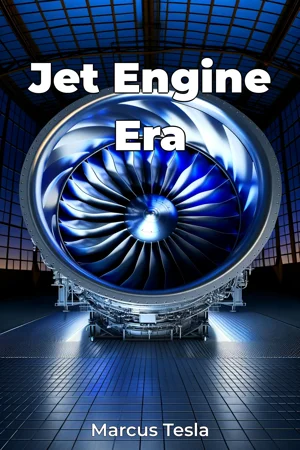
"Jet Engine Era" traces the revolutionary journey of jet propulsion technology from its conceptual beginnings to its position as the cornerstone of modern aviation. The book examines how this transformative technology reshaped both military and civilian air travel while fundamentally altering the global economy. The narrative begins with Frank Whittle and Hans von Ohain's parallel development of jet engines in the 1930s, showcasing how their groundbreaking work emerged from the limitations of piston-driven aircraft engines. Through detailed technical analysis and historical documentation, the book illustrates the progression from these early prototypes to contemporary high-bypass turbofan engines. The text is structured in three main sections. The first explores the fundamental principles of jet propulsion, explaining thermodynamics, compression, and thrust generation in terms accessible to both engineering students and aviation enthusiasts. The second section chronicles key technological developments, including the introduction of swept wings, afterburners, and composite materials. The final section examines modern applications and future innovations, such as supersonic travel and sustainable aviation fuels. Throughout the book, readers encounter detailed engineering diagrams, performance data from various engine types, and case studies of significant developments like the Rolls-Royce Trent and GE90 engines. The author draws from extensive research, including previously unreleased technical documents and interviews with industry pioneers, to provide a comprehensive understanding of jet engine evolution. The work makes important connections between aerodynamics, materials science, and environmental engineering, demonstrating how advances in these fields have contributed to jet engine development. It addresses current challenges facing the aviation industry, including fuel efficiency, noise reduction, and environmental impact, while exploring potential solutions through emerging technologies. The book maintains a technical yet accessible tone, using clear explanations and real-world examples to illustrate complex concepts. Each chapter includes practical applications, making the content valuable for aerospace engineers, aviation maintenance technicians, and industry professionals. Technical specifications and performance data are balanced with historical context and industry insights. Particular attention is given to recent developments in computational fluid dynamics and how digital modeling has revolutionized engine design and testing. The text examines ongoing debates within the industry, such as the trade-offs between efficiency and speed, and the pursuit of sustainable aviation technologies. The scope encompasses both military and commercial applications, though it focuses primarily on civilian aviation to maintain relevance for a broader audience. While the book provides detailed technical information, it also considers the broader implications of jet engine technology on global commerce, international relations, and environmental policy. By combining historical perspective with current technology and future prospects, "Jet Engine Era" serves as both a technical reference and a comprehensive guide to one of the most significant technological achievements in transportation history. It provides readers with the knowledge to understand both the principles behind jet engines and their continuing impact on modern aviation. The work is particularly relevant for engineering students, aviation professionals, and industry practitioners who require a thorough understanding of jet engine technology and its applications. It also appeals to those interested in the intersection of technological innovation and global development.
"Jet Engine Era" traces the revolutionary journey of jet propulsion technology from its conceptual beginnings to its position as the cornerstone of modern aviation. The book examines how this transformative technology reshaped both military and civilian air travel while fundamentally altering the global economy. The narrative begins with Frank Whittle and Hans von Ohain's parallel development of jet engines in the 1930s, showcasing how their groundbreaking work emerged from the limitations of piston-driven aircraft engines. Through detailed technical analysis and historical documentation, the book illustrates the progression from these early prototypes to contemporary high-bypass turbofan engines. The text is structured in three main sections. The first explores the fundamental principles of jet propulsion, explaining thermodynamics, compression, and thrust generation in terms accessible to both engineering students and aviation enthusiasts. The second section chronicles key technological developments, including the introduction of swept wings, afterburners, and composite materials. The final section examines modern applications and future innovations, such as supersonic travel and sustainable aviation fuels. Throughout the book, readers encounter detailed engineering diagrams, performance data from various engine types, and case studies of significant developments like the Rolls-Royce Trent and GE90 engines. The author draws from extensive research, including previously unreleased technical documents and interviews with industry pioneers, to provide a comprehensive understanding of jet engine evolution. The work makes important connections between aerodynamics, materials science, and environmental engineering, demonstrating how advances in these fields have contributed to jet engine development. It addresses current challenges facing the aviation industry, including fuel efficiency, noise reduction, and environmental impact, while exploring potential solutions through emerging technologies. The book maintains a technical yet accessible tone, using clear explanations and real-world examples to illustrate complex concepts. Each chapter includes practical applications, making the content valuable for aerospace engineers, aviation maintenance technicians, and industry professionals. Technical specifications and performance data are balanced with historical context and industry insights. Particular attention is given to recent developments in computational fluid dynamics and how digital modeling has revolutionized engine design and testing. The text examines ongoing debates within the industry, such as the trade-offs between efficiency and speed, and the pursuit of sustainable aviation technologies. The scope encompasses both military and commercial applications, though it focuses primarily on civilian aviation to maintain relevance for a broader audience. While the book provides detailed technical information, it also considers the broader implications of jet engine technology on global commerce, international relations, and environmental policy. By combining historical perspective with current technology and future prospects, "Jet Engine Era" serves as both a technical reference and a comprehensive guide to one of the most significant technological achievements in transportation history. It provides readers with the knowledge to understand both the principles behind jet engines and their continuing impact on modern aviation. The work is particularly relevant for engineering students, aviation professionals, and industry practitioners who require a thorough understanding of jet engine technology and its applications. It also appeals to those interested in the intersection of technological innovation and global development.
"Jet Engine Era" presents a comprehensive exploration of how jet propulsion technology revolutionized aviation and shaped our modern world. Beginning with the parallel innovations of Frank Whittle and Hans von Ohain in the 1930s, the book charts the remarkable evolution from early prototypes to today's sophisticated high-bypass turbofan engines, examining both the technical breakthroughs and their broader impacts on global transportation and commerce. The book uniquely combines technical depth with historical context, organizing its content into three distinct sections that progress from fundamental principles through technological developments to contemporary applications. Through detailed engineering diagrams, performance data, and case studies of significant engines like the Rolls-Royce Trent and GE90, readers gain insight into the complex interplay of thermodynamics, aerodynamics, and materials science that drives jet engine innovation. The author draws from extensive research and previously unreleased technical documents, making complex concepts accessible through clear explanations and real-world examples. What sets this work apart is its balanced treatment of both technical and practical aspects, addressing current industry challenges such as fuel efficiency and environmental impact while maintaining relevance for a diverse audience of engineering students, aviation professionals, and technology enthusiasts. The book skillfully weaves together historical perspective, current technology, and future prospects, creating a valuable resource that serves both as a technical reference and a comprehensive guide to one of transportation's most transformative technologies.
Book Details
ISBN
9788233959579
Publisher
Publifye AS
Your Licenses
You don't own any licenses for this book
Purchase a license below to unlock this book and download the EPUB.
Purchase License
Select a tier to unlock this book
Need bulk licensing?
Contact us for enterprise agreements.