
About This Book
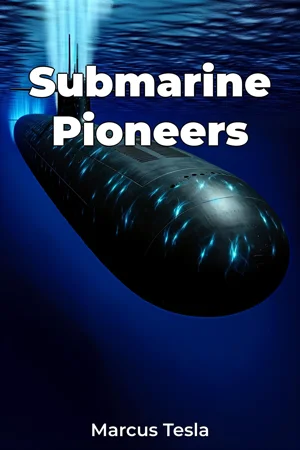
"Submarine Pioneers" traces the technological and strategic evolution of underwater warfare vessels from their primitive beginnings to their role as decisive military assets. Through detailed analysis of historical records, technical documents, and firsthand accounts, this comprehensive work illuminates how submarines transformed naval warfare and shaped global military history. The book begins with the earliest underwater vessel attempts in the 17th century, examining Alexander the Great's purported use of diving bells and progressing through David Bushnell's Revolutionary War-era Turtle. These early innovations laid the groundwork for the mechanical and engineering principles that would eventually enable true submarine operations. The narrative then follows the critical developments of the 19th century, including Robert Fulton's Nautilus and the breakthrough designs of John Philip Holland and Simon Lake. Central to the book's thesis is how submarine development accelerated during periods of conflict, particularly during World Wars I and II. The text demonstrates how submarines evolved from experimental vessels to formidable weapons that could challenge surface naval supremacy. Through detailed technical analyses, readers learn how advances in propulsion, diving systems, and weapons capabilities marked distinct phases in submarine evolution. The work is structured chronologically across three major sections: early innovation (1500-1900), wartime evolution (1900-1945), and modern development (1945-present). Each section examines key technological breakthroughs, the visionaries behind them, and their impact on naval strategy. The book incorporates declassified military documents, engineering schematics, and personal journals of submarine pioneers to provide authentic insights into the challenges and triumphs of underwater vessel development. Particular attention is given to the interdisciplinary nature of submarine advancement, showing how developments in metallurgy, electronics, and nuclear physics contributed to modern submarine capabilities. The text explores how improvements in hull design drew from hydrodynamics research, while advancements in life support systems required innovations in chemistry and environmental engineering. The book maintains an analytical tone while remaining accessible to readers with varying technical backgrounds. Through detailed diagrams and clear explanations of complex systems, it bridges the gap between technical specifications and practical understanding. Military historians, engineering professionals, and naval enthusiasts will find value in its comprehensive examination of both technical and strategic aspects of submarine development. The work addresses ongoing debates about the role of submarines in modern naval strategy, including discussions of nuclear deterrence and undersea surveillance capabilities. It examines how submarine technology continues to evolve with autonomous systems and advanced propulsion methods, while considering the ethical and strategic implications of these developments. The scope encompasses both military and civilian applications of submarine technology, including scientific research vessels and underwater exploration platforms. While focused primarily on military developments, the book acknowledges the significant contributions of civilian research and commercial enterprises to submarine technology. Through careful analysis of historical records and technical documentation, "Submarine Pioneers" provides a thorough examination of how underwater vessels evolved from dangerous experiments to sophisticated machines capable of extended submerged operations. The work serves as both a historical record and a technical reference, offering insights into the future of submarine technology and its continued importance in naval operations.
"Submarine Pioneers" traces the technological and strategic evolution of underwater warfare vessels from their primitive beginnings to their role as decisive military assets. Through detailed analysis of historical records, technical documents, and firsthand accounts, this comprehensive work illuminates how submarines transformed naval warfare and shaped global military history. The book begins with the earliest underwater vessel attempts in the 17th century, examining Alexander the Great's purported use of diving bells and progressing through David Bushnell's Revolutionary War-era Turtle. These early innovations laid the groundwork for the mechanical and engineering principles that would eventually enable true submarine operations. The narrative then follows the critical developments of the 19th century, including Robert Fulton's Nautilus and the breakthrough designs of John Philip Holland and Simon Lake. Central to the book's thesis is how submarine development accelerated during periods of conflict, particularly during World Wars I and II. The text demonstrates how submarines evolved from experimental vessels to formidable weapons that could challenge surface naval supremacy. Through detailed technical analyses, readers learn how advances in propulsion, diving systems, and weapons capabilities marked distinct phases in submarine evolution. The work is structured chronologically across three major sections: early innovation (1500-1900), wartime evolution (1900-1945), and modern development (1945-present). Each section examines key technological breakthroughs, the visionaries behind them, and their impact on naval strategy. The book incorporates declassified military documents, engineering schematics, and personal journals of submarine pioneers to provide authentic insights into the challenges and triumphs of underwater vessel development. Particular attention is given to the interdisciplinary nature of submarine advancement, showing how developments in metallurgy, electronics, and nuclear physics contributed to modern submarine capabilities. The text explores how improvements in hull design drew from hydrodynamics research, while advancements in life support systems required innovations in chemistry and environmental engineering. The book maintains an analytical tone while remaining accessible to readers with varying technical backgrounds. Through detailed diagrams and clear explanations of complex systems, it bridges the gap between technical specifications and practical understanding. Military historians, engineering professionals, and naval enthusiasts will find value in its comprehensive examination of both technical and strategic aspects of submarine development. The work addresses ongoing debates about the role of submarines in modern naval strategy, including discussions of nuclear deterrence and undersea surveillance capabilities. It examines how submarine technology continues to evolve with autonomous systems and advanced propulsion methods, while considering the ethical and strategic implications of these developments. The scope encompasses both military and civilian applications of submarine technology, including scientific research vessels and underwater exploration platforms. While focused primarily on military developments, the book acknowledges the significant contributions of civilian research and commercial enterprises to submarine technology. Through careful analysis of historical records and technical documentation, "Submarine Pioneers" provides a thorough examination of how underwater vessels evolved from dangerous experiments to sophisticated machines capable of extended submerged operations. The work serves as both a historical record and a technical reference, offering insights into the future of submarine technology and its continued importance in naval operations.
"Submarine Pioneers" presents a fascinating journey through the evolution of underwater warfare vessels, from crude diving bells to sophisticated nuclear-powered submarines. The book masterfully weaves together technological innovation, military strategy, and human ingenuity to tell the story of how submarines revolutionized naval warfare. Through careful examination of declassified documents, engineering schematics, and personal accounts, readers discover how visionaries like David Bushnell, Robert Fulton, and John Philip Holland transformed theoretical concepts into practical military assets. The narrative unfolds across three distinct chronological periods, examining how major conflicts, particularly World Wars I and II, accelerated submarine development. Readers learn how early experiments with underwater vessels in the 17th century laid the foundation for modern submarine technology, and how advances in metallurgy, electronics, and nuclear physics contributed to increasingly capable designs. The book pays particular attention to breakthrough moments, such as the development of the Revolutionary War-era Turtle and the game-changing innovations of the 19th century. What sets this work apart is its comprehensive approach to combining technical detail with accessible explanations, making complex engineering concepts understandable to readers of varying backgrounds. While maintaining a focus on military applications, the book also explores civilian contributions to submarine technology and considers the future of underwater vessels in both military and scientific roles. This thorough examination of submarine development serves as both a historical record and a technical reference, offering valuable insights for military historians, engineering professionals, and naval enthusiasts alike.
Book Details
ISBN
9788233959432
Publisher
Publifye AS
Your Licenses
You don't own any licenses for this book
Purchase a license below to unlock this book and download the EPUB.
Purchase License
Select a tier to unlock this book
Need bulk licensing?
Contact us for enterprise agreements.