
About This Book
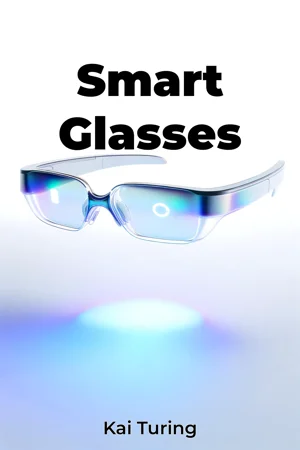
"Smart Glasses" examines the technological evolution and societal implications of wearable display technology, from its early conceptual stages to its potential role in reshaping human-computer interaction. The book traces how smart glasses have progressed from rudimentary heads-up displays to sophisticated augmented reality devices that blend digital information with our physical world. The narrative unfolds across three main sections, beginning with the technical foundations of smart glasses technology. Readers gain insights into the optical systems, sensors, and processing units that enable these devices to function, along with the challenges engineers faced in miniaturizing these components. The book explains how advances in materials science and microprocessing have made it possible to create increasingly compact and capable devices. The second section delves into the current state of smart glasses technology, exploring various applications across industries. From manufacturing, where workers use heads-up displays for assembly guidance, to healthcare, where surgeons employ augmented reality for precise procedures, the book provides detailed case studies of real-world implementations. It addresses both the successes and limitations of current smart glasses technology, offering a balanced perspective on their practical utility. The final section projects the future trajectory of smart glasses and their potential impact on daily life. It examines how integration with artificial intelligence could enable smart glasses to serve as personal assistants, providing context-aware information and enhancing human cognitive capabilities. The book considers the social and ethical implications of widespread smart glasses adoption, including privacy concerns, social etiquette, and potential effects on human interaction. Throughout the text, the author draws on research from computer science, human-computer interaction, and cognitive psychology to support key arguments. The book includes findings from user studies, technical specifications, and interviews with industry experts to provide comprehensive coverage of the subject matter. The work makes important connections to related fields, particularly neuroscience and user interface design. It explores how smart glasses must be designed with human perception and cognitive load in mind, and how they might influence the way our brains process information. The book also examines the relationship between smart glasses and the broader ecosystem of connected devices. Written in a technical yet accessible style, the book caters to technology professionals, designers, and informed general readers interested in the future of personal computing. It maintains a practical focus, including sections on development frameworks, design principles, and considerations for creating applications for smart glasses platforms. The book acknowledges ongoing debates about digital privacy and the appropriate role of technology in social interactions. It addresses concerns about surveillance and data collection while exploring potential solutions through both technical and policy approaches. Rather than making speculative claims, the text grounds its discussion in current technological capabilities and verified research. It maintains a measured tone when discussing future possibilities, focusing on demonstrable trends and technological roadmaps rather than conjecture. The book's scope encompasses both consumer and enterprise applications of smart glasses, though it primarily focuses on augmented reality implementations rather than virtual reality systems. It provides specific guidance for developers and designers working in the field while remaining accessible to readers interested in understanding this transformative technology.
"Smart Glasses" examines the technological evolution and societal implications of wearable display technology, from its early conceptual stages to its potential role in reshaping human-computer interaction. The book traces how smart glasses have progressed from rudimentary heads-up displays to sophisticated augmented reality devices that blend digital information with our physical world. The narrative unfolds across three main sections, beginning with the technical foundations of smart glasses technology. Readers gain insights into the optical systems, sensors, and processing units that enable these devices to function, along with the challenges engineers faced in miniaturizing these components. The book explains how advances in materials science and microprocessing have made it possible to create increasingly compact and capable devices. The second section delves into the current state of smart glasses technology, exploring various applications across industries. From manufacturing, where workers use heads-up displays for assembly guidance, to healthcare, where surgeons employ augmented reality for precise procedures, the book provides detailed case studies of real-world implementations. It addresses both the successes and limitations of current smart glasses technology, offering a balanced perspective on their practical utility. The final section projects the future trajectory of smart glasses and their potential impact on daily life. It examines how integration with artificial intelligence could enable smart glasses to serve as personal assistants, providing context-aware information and enhancing human cognitive capabilities. The book considers the social and ethical implications of widespread smart glasses adoption, including privacy concerns, social etiquette, and potential effects on human interaction. Throughout the text, the author draws on research from computer science, human-computer interaction, and cognitive psychology to support key arguments. The book includes findings from user studies, technical specifications, and interviews with industry experts to provide comprehensive coverage of the subject matter. The work makes important connections to related fields, particularly neuroscience and user interface design. It explores how smart glasses must be designed with human perception and cognitive load in mind, and how they might influence the way our brains process information. The book also examines the relationship between smart glasses and the broader ecosystem of connected devices. Written in a technical yet accessible style, the book caters to technology professionals, designers, and informed general readers interested in the future of personal computing. It maintains a practical focus, including sections on development frameworks, design principles, and considerations for creating applications for smart glasses platforms. The book acknowledges ongoing debates about digital privacy and the appropriate role of technology in social interactions. It addresses concerns about surveillance and data collection while exploring potential solutions through both technical and policy approaches. Rather than making speculative claims, the text grounds its discussion in current technological capabilities and verified research. It maintains a measured tone when discussing future possibilities, focusing on demonstrable trends and technological roadmaps rather than conjecture. The book's scope encompasses both consumer and enterprise applications of smart glasses, though it primarily focuses on augmented reality implementations rather than virtual reality systems. It provides specific guidance for developers and designers working in the field while remaining accessible to readers interested in understanding this transformative technology.
"Smart Glasses" offers a comprehensive exploration of wearable display technology's evolution and its potential to transform human-computer interaction. The book navigates through the journey of smart glasses from basic heads-up displays to sophisticated augmented reality devices, examining both their technological underpinnings and societal implications. Through a well-structured approach, it illuminates how advances in materials science and microprocessing have enabled the creation of increasingly powerful and compact wearable displays. The narrative progresses logically through three main sections, beginning with technical foundations, moving to current applications, and concluding with future possibilities. Particularly fascinating are the real-world implementations in healthcare, where surgeons use augmented reality for precise procedures, and manufacturing, where workers benefit from heads-up display guidance. The book draws on research from multiple disciplines, including computer science and cognitive psychology, to present a balanced view of both the technology's potential and its limitations. What sets this work apart is its practical focus combined with thoughtful consideration of broader implications. While explaining complex technical concepts, it maintains accessibility for both technology professionals and informed general readers. The book addresses crucial concerns about digital privacy and social etiquette while exploring how integration with artificial intelligence could enhance human cognitive capabilities. Rather than relying on speculation, it grounds its discussion in verified research and demonstrable trends, making it an invaluable resource for understanding the future of personal computing and augmented reality technology.
Book Details
ISBN
9788233959241
Publisher
Publifye AS
Your Licenses
You don't own any licenses for this book
Purchase a license below to unlock this book and download the EPUB.
Purchase License
Select a tier to unlock this book
Need bulk licensing?
Contact us for enterprise agreements.