
About This Book
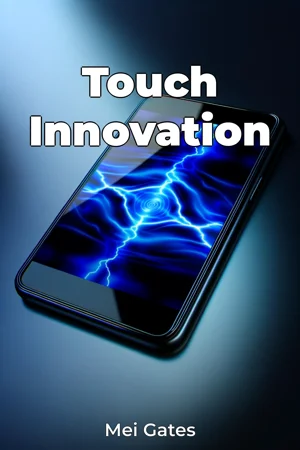
Every time you tap your smartphone screen, you're interacting with a technology that transformed human-device interaction. "Touch Innovation" traces the evolution of touchscreen technology from its early experimental days to its current status as the primary interface for modern digital devices. The book presents a detailed examination of three pivotal developments: capacitive sensing technology, multi-touch capabilities, and the integration of haptic feedback. These innovations collectively created the foundation for today's intuitive touch interfaces, fundamentally changing how we interact with technology in both personal and professional settings. Starting with the first resistive touchscreens of the 1960s, the narrative explores how researchers at CERN, Xerox PARC, and other institutions gradually refined touch technology. The book details the technical challenges they faced, including the initial problems of accuracy, responsiveness, and durability that needed to be overcome before touchscreens could become commercially viable. The central thesis argues that touchscreen technology's success lies not just in its technical capabilities, but in its ability to create a more natural and intuitive human-machine interface. This argument is supported through extensive research, including patent documentation, interviews with pioneering engineers, and case studies from major technology companies. The content is structured across three main sections. The first examines the scientific principles behind different touchscreen technologies, including capacitive, resistive, and surface acoustic wave systems. The second section chronicles the development of multi-touch capabilities and gesture controls, which expanded interface possibilities. The final section explores current applications and future developments, including flexible displays and advanced haptic systems. The book draws on technical documentation from device manufacturers, academic research papers, and industry studies to support its arguments. It includes previously unpublished data on early touchscreen prototypes and their testing phases, providing new insights into the technology's development. Interdisciplinary connections are made with cognitive psychology, examining how touch interfaces align with human spatial reasoning, and with industrial design, showing how touchscreens influenced product development across multiple sectors. The economic impact of touch technology on industries from banking to healthcare is also analyzed. The writing maintains a technical yet accessible approach, using clear explanations and practical examples to convey complex concepts. While the book contains detailed technical information, it's written for both technology professionals and informed general readers interested in understanding the systems they use daily. "Touch Innovation" is particularly relevant for technology developers, UX designers, and business strategists working with interactive systems. It also serves as a comprehensive resource for students and researchers in human-computer interaction and interface design. The scope focuses primarily on commercial touchscreen applications from the 1990s to present day, while acknowledging emerging technologies like mid-air haptics and brain-computer interfaces as future directions. The book addresses ongoing debates about optimal interface design and the balance between touch and other interaction methods, including voice commands and gesture controls. The practical applications section includes insights for developers and designers, offering guidelines for creating effective touch interfaces based on established research and user behavior patterns. This makes the book not just a historical account, but a valuable reference for current technology development.
Every time you tap your smartphone screen, you're interacting with a technology that transformed human-device interaction. "Touch Innovation" traces the evolution of touchscreen technology from its early experimental days to its current status as the primary interface for modern digital devices. The book presents a detailed examination of three pivotal developments: capacitive sensing technology, multi-touch capabilities, and the integration of haptic feedback. These innovations collectively created the foundation for today's intuitive touch interfaces, fundamentally changing how we interact with technology in both personal and professional settings. Starting with the first resistive touchscreens of the 1960s, the narrative explores how researchers at CERN, Xerox PARC, and other institutions gradually refined touch technology. The book details the technical challenges they faced, including the initial problems of accuracy, responsiveness, and durability that needed to be overcome before touchscreens could become commercially viable. The central thesis argues that touchscreen technology's success lies not just in its technical capabilities, but in its ability to create a more natural and intuitive human-machine interface. This argument is supported through extensive research, including patent documentation, interviews with pioneering engineers, and case studies from major technology companies. The content is structured across three main sections. The first examines the scientific principles behind different touchscreen technologies, including capacitive, resistive, and surface acoustic wave systems. The second section chronicles the development of multi-touch capabilities and gesture controls, which expanded interface possibilities. The final section explores current applications and future developments, including flexible displays and advanced haptic systems. The book draws on technical documentation from device manufacturers, academic research papers, and industry studies to support its arguments. It includes previously unpublished data on early touchscreen prototypes and their testing phases, providing new insights into the technology's development. Interdisciplinary connections are made with cognitive psychology, examining how touch interfaces align with human spatial reasoning, and with industrial design, showing how touchscreens influenced product development across multiple sectors. The economic impact of touch technology on industries from banking to healthcare is also analyzed. The writing maintains a technical yet accessible approach, using clear explanations and practical examples to convey complex concepts. While the book contains detailed technical information, it's written for both technology professionals and informed general readers interested in understanding the systems they use daily. "Touch Innovation" is particularly relevant for technology developers, UX designers, and business strategists working with interactive systems. It also serves as a comprehensive resource for students and researchers in human-computer interaction and interface design. The scope focuses primarily on commercial touchscreen applications from the 1990s to present day, while acknowledging emerging technologies like mid-air haptics and brain-computer interfaces as future directions. The book addresses ongoing debates about optimal interface design and the balance between touch and other interaction methods, including voice commands and gesture controls. The practical applications section includes insights for developers and designers, offering guidelines for creating effective touch interfaces based on established research and user behavior patterns. This makes the book not just a historical account, but a valuable reference for current technology development.
"Touch Innovation" offers a fascinating journey through the evolution of touchscreen technology, from its experimental beginnings to its current status as the cornerstone of modern digital interaction. The book expertly weaves together technical insights and historical developments, focusing on three game-changing innovations: capacitive sensing, multi-touch capabilities, and haptic feedback integration. Through detailed examination of early prototypes, patent documentation, and interviews with pioneering engineers, readers gain unprecedented insights into how touchscreens overcame initial challenges of accuracy and durability to become the intuitive interfaces we know today. The narrative progresses logically through three main sections, beginning with the scientific principles underlying different touchscreen technologies. It then explores the revolutionary development of multi-touch capabilities and gesture controls, before culminating in an analysis of current applications and future developments. Along the way, the book reveals intriguing facts about early experimental work at institutions like CERN and Xerox PARC, while making compelling connections between touch interfaces and human spatial reasoning. What sets this book apart is its balanced approach to technical depth and accessibility, making complex concepts understandable through practical examples and clear explanations. While maintaining its focus on technical accuracy, it serves both technology professionals and informed general readers, offering valuable insights for UX designers, developers, and business strategists. The inclusion of previously unpublished data on early prototypes and comprehensive guidelines for interface design makes it an invaluable resource for anyone involved in interactive technology development.
Book Details
ISBN
9788233959203
Publisher
Publifye AS
Your Licenses
You don't own any licenses for this book
Purchase a license below to unlock this book and download the EPUB.
Purchase License
Select a tier to unlock this book
Need bulk licensing?
Contact us for enterprise agreements.