
About This Book
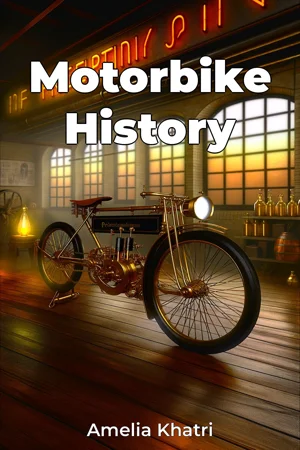
From the first steam-powered velocipede of 1867 to today's precision-engineered superbikes, "Motorbike History" traces the technical evolution and cultural impact of motorized two-wheeled transportation across more than 150 years of innovation. This comprehensive examination of motorcycle development integrates engineering analysis with historical context, exploring how these machines transformed from experimental prototypes to vital components of modern transportation. The book presents three major technological watersheds: the emergence of the first production motorcycles in the late 19th century, the post-World War II performance revolution, and the modern era of electronic integration and environmental considerations. The narrative begins with early pioneers like Gottlieb Daimler and Wilhelm Maybach, whose 1885 Petroleum Reitwagen established the fundamental architecture of the motorcycle. Readers will understand how initial designs evolved through practical experimentation and engineering necessity, leading to standardized features like the chain drive and pneumatic tires. The text examines how military requirements during both World Wars accelerated motorcycle development, resulting in innovations that later benefited civilian machines. Central to the book's argument is how motorcycle engineering has consistently reflected and driven broader technological progress. This relationship is demonstrated through detailed technical drawings, patent documentation, and period photographs that illustrate the progression of crucial developments in engine design, frame geometry, and suspension systems. The content is structured chronologically, with thematic chapters exploring specific technological aspects. Key sections address the transition from belt to chain drives, the evolution of engine configurations, and the development of modern safety features. The book includes detailed case studies of influential models, from the 1901 Indian Motorcycle to the latest electric motorcycles, analyzing their technical specifications and historical significance. Engineering concepts are explained through accessible language and clear diagrams, making complex mechanical principles comprehensible to both technical and non-technical readers. The text incorporates research from manufacturer archives, engineering journals, and contemporary reports to provide accurate technical details and historical context. The book connects motorcycle development to broader fields including materials science, aerodynamics, and industrial design. It examines how advancements in metallurgy enabled stronger frames and more powerful engines, while principles of fluid dynamics influenced fairing design and engine cooling systems. This work stands out through its systematic analysis of both successful and failed innovations, offering insights into why certain design approaches prevailed while others were abandoned. It maintains an objective, analytical tone while presenting technical information in a structured, accessible format. Written for engineering enthusiasts, automotive historians, and technology professionals, the book provides both theoretical understanding and practical insights into motorcycle design evolution. It serves as a valuable reference for students of mechanical engineering and transportation history, while remaining accessible to motorcycle enthusiasts seeking deeper technical knowledge. The scope encompasses the full spectrum of motorcycle development, from basic mechanical principles to cutting-edge technologies, though it focuses primarily on technical evolution rather than social or cultural aspects. The book addresses current debates in motorcycle design, including the transition to electric power and the balance between performance and environmental responsibility. This research-based exploration of motorcycle engineering and history provides readers with a thorough understanding of how these machines evolved from primitive motorized bicycles to sophisticated modern vehicles, demonstrating the continuous refinement of design and technology that drives the industry forward.
From the first steam-powered velocipede of 1867 to today's precision-engineered superbikes, "Motorbike History" traces the technical evolution and cultural impact of motorized two-wheeled transportation across more than 150 years of innovation. This comprehensive examination of motorcycle development integrates engineering analysis with historical context, exploring how these machines transformed from experimental prototypes to vital components of modern transportation. The book presents three major technological watersheds: the emergence of the first production motorcycles in the late 19th century, the post-World War II performance revolution, and the modern era of electronic integration and environmental considerations. The narrative begins with early pioneers like Gottlieb Daimler and Wilhelm Maybach, whose 1885 Petroleum Reitwagen established the fundamental architecture of the motorcycle. Readers will understand how initial designs evolved through practical experimentation and engineering necessity, leading to standardized features like the chain drive and pneumatic tires. The text examines how military requirements during both World Wars accelerated motorcycle development, resulting in innovations that later benefited civilian machines. Central to the book's argument is how motorcycle engineering has consistently reflected and driven broader technological progress. This relationship is demonstrated through detailed technical drawings, patent documentation, and period photographs that illustrate the progression of crucial developments in engine design, frame geometry, and suspension systems. The content is structured chronologically, with thematic chapters exploring specific technological aspects. Key sections address the transition from belt to chain drives, the evolution of engine configurations, and the development of modern safety features. The book includes detailed case studies of influential models, from the 1901 Indian Motorcycle to the latest electric motorcycles, analyzing their technical specifications and historical significance. Engineering concepts are explained through accessible language and clear diagrams, making complex mechanical principles comprehensible to both technical and non-technical readers. The text incorporates research from manufacturer archives, engineering journals, and contemporary reports to provide accurate technical details and historical context. The book connects motorcycle development to broader fields including materials science, aerodynamics, and industrial design. It examines how advancements in metallurgy enabled stronger frames and more powerful engines, while principles of fluid dynamics influenced fairing design and engine cooling systems. This work stands out through its systematic analysis of both successful and failed innovations, offering insights into why certain design approaches prevailed while others were abandoned. It maintains an objective, analytical tone while presenting technical information in a structured, accessible format. Written for engineering enthusiasts, automotive historians, and technology professionals, the book provides both theoretical understanding and practical insights into motorcycle design evolution. It serves as a valuable reference for students of mechanical engineering and transportation history, while remaining accessible to motorcycle enthusiasts seeking deeper technical knowledge. The scope encompasses the full spectrum of motorcycle development, from basic mechanical principles to cutting-edge technologies, though it focuses primarily on technical evolution rather than social or cultural aspects. The book addresses current debates in motorcycle design, including the transition to electric power and the balance between performance and environmental responsibility. This research-based exploration of motorcycle engineering and history provides readers with a thorough understanding of how these machines evolved from primitive motorized bicycles to sophisticated modern vehicles, demonstrating the continuous refinement of design and technology that drives the industry forward.
"Motorbike History" presents a fascinating journey through 150 years of motorcycle engineering and innovation, tracing the evolution from the 1867 steam-powered velocipede to today's advanced superbikes. The book expertly navigates three pivotal technological watersheds: the birth of production motorcycles in the late 19th century, the post-World War II performance boom, and the modern era of electronic and environmental advances. Through detailed technical drawings, patent documentation, and period photographs, readers gain deep insights into how pioneering inventors like Gottlieb Daimler and Wilhelm Maybach established the fundamental architecture that would shape motorcycle development for generations. The narrative skillfully weaves together engineering principles with historical context, examining how military requirements, materials science, and aerodynamics influenced motorcycle design. Readers follow the progression of crucial developments in engine configurations, frame geometry, and suspension systems through chronologically organized chapters. The book's systematic analysis covers both breakthrough successes and instructive failures, offering valuable insights into why certain design approaches prevailed while others fell by the wayside. Written for both technical and non-technical audiences, this comprehensive work makes complex mechanical concepts accessible through clear diagrams and straightforward explanations. The book stands out for its thorough examination of motorcycle development's relationship with broader technological progress, from the transition of belt to chain drives to the current evolution toward electric power. By connecting engineering innovation with practical application, it serves as an invaluable resource for enthusiasts, professionals, and students interested in mechanical engineering and transportation history.
Book Details
ISBN
9788233959173
Publisher
Publifye AS
Your Licenses
You don't own any licenses for this book
Purchase a license below to unlock this book and download the EPUB.
Purchase License
Select a tier to unlock this book
Need bulk licensing?
Contact us for enterprise agreements.