
About This Book
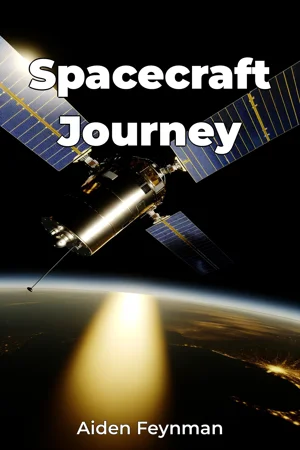
From Sputnik's first beep to the ambitious plans for human settlement on Mars, "Spacecraft Journey" chronicles humanity's remarkable advancement in space exploration technology over the past seven decades. This comprehensive examination reveals how each spacecraft innovation has pushed the boundaries of human achievement and scientific understanding. The book presents three fundamental phases of spacecraft development: the pioneering era of satellites and orbital missions, the transformative period of human spaceflight, and the current age of interplanetary exploration. Through detailed technical analysis and historical context, readers discover how early satellite technology laid the groundwork for increasingly sophisticated space vehicles and how these advances continue to shape our future in space. Drawing from NASA archives, Soviet space program documents, and contemporary commercial space ventures, the text provides in-depth coverage of crucial technological breakthroughs. The narrative examines key developments in propulsion systems, life support technologies, and navigation capabilities that enabled progressively more ambitious missions. Specific attention is given to the evolution of materials science and computer systems that made modern spacecraft possible. The book's core argument maintains that spacecraft development represents a continuous cycle of innovation, where each generation of vehicles builds upon previous successes and failures. This progression is demonstrated through detailed case studies of milestone missions, including the Apollo program, the Space Shuttle era, and the International Space Station, leading to current Mars exploration initiatives. Organized chronologically, the content flows through three major sections. The first establishes the fundamental principles of spacecraft design and early orbital achievements. The second section analyzes human spaceflight capabilities and the engineering challenges of keeping astronauts alive in space. The final portion examines current and future spacecraft technologies, including those being developed for Mars missions. The text integrates elements from multiple disciplines, connecting aerospace engineering with materials science, computer technology, and human physiology. This interdisciplinary approach helps readers understand how diverse fields contribute to spacecraft development. The book includes technical diagrams, mission photographs, and data visualizations to illustrate complex concepts. Written in a technical yet accessible style, the book serves both engineering professionals and informed general readers interested in space technology. The content maintains scientific accuracy while explaining complex concepts through clear, systematic presentation of information. The work addresses current debates in the space industry, including the role of private companies in space exploration and the technical feasibility of various Mars mission proposals. It examines competing spacecraft designs and propulsion technologies being considered for future missions. Practical applications of spacecraft technology are highlighted throughout, showing how space research has led to advances in everyday technologies, from satellite communications to medical devices. The book concludes with an analysis of emerging spacecraft technologies and their potential impact on future space exploration. "Spacecraft Journey" is particularly relevant for engineering students, aerospace professionals, and technology enthusiasts who seek to understand the technical evolution of space vehicles. It provides essential context for current developments in space exploration while offering insights into the engineering challenges that lie ahead.
From Sputnik's first beep to the ambitious plans for human settlement on Mars, "Spacecraft Journey" chronicles humanity's remarkable advancement in space exploration technology over the past seven decades. This comprehensive examination reveals how each spacecraft innovation has pushed the boundaries of human achievement and scientific understanding. The book presents three fundamental phases of spacecraft development: the pioneering era of satellites and orbital missions, the transformative period of human spaceflight, and the current age of interplanetary exploration. Through detailed technical analysis and historical context, readers discover how early satellite technology laid the groundwork for increasingly sophisticated space vehicles and how these advances continue to shape our future in space. Drawing from NASA archives, Soviet space program documents, and contemporary commercial space ventures, the text provides in-depth coverage of crucial technological breakthroughs. The narrative examines key developments in propulsion systems, life support technologies, and navigation capabilities that enabled progressively more ambitious missions. Specific attention is given to the evolution of materials science and computer systems that made modern spacecraft possible. The book's core argument maintains that spacecraft development represents a continuous cycle of innovation, where each generation of vehicles builds upon previous successes and failures. This progression is demonstrated through detailed case studies of milestone missions, including the Apollo program, the Space Shuttle era, and the International Space Station, leading to current Mars exploration initiatives. Organized chronologically, the content flows through three major sections. The first establishes the fundamental principles of spacecraft design and early orbital achievements. The second section analyzes human spaceflight capabilities and the engineering challenges of keeping astronauts alive in space. The final portion examines current and future spacecraft technologies, including those being developed for Mars missions. The text integrates elements from multiple disciplines, connecting aerospace engineering with materials science, computer technology, and human physiology. This interdisciplinary approach helps readers understand how diverse fields contribute to spacecraft development. The book includes technical diagrams, mission photographs, and data visualizations to illustrate complex concepts. Written in a technical yet accessible style, the book serves both engineering professionals and informed general readers interested in space technology. The content maintains scientific accuracy while explaining complex concepts through clear, systematic presentation of information. The work addresses current debates in the space industry, including the role of private companies in space exploration and the technical feasibility of various Mars mission proposals. It examines competing spacecraft designs and propulsion technologies being considered for future missions. Practical applications of spacecraft technology are highlighted throughout, showing how space research has led to advances in everyday technologies, from satellite communications to medical devices. The book concludes with an analysis of emerging spacecraft technologies and their potential impact on future space exploration. "Spacecraft Journey" is particularly relevant for engineering students, aerospace professionals, and technology enthusiasts who seek to understand the technical evolution of space vehicles. It provides essential context for current developments in space exploration while offering insights into the engineering challenges that lie ahead.
"Spacecraft Journey" presents a comprehensive exploration of humanity's technological advancement in space exploration, tracing the evolution from Sputnik's pioneering flight to contemporary Mars mission planning. The book skillfully navigates through three critical phases of spacecraft development: early satellite missions, human spaceflight achievements, and modern interplanetary exploration, demonstrating how each breakthrough has built upon previous innovations. Through meticulous research drawing from NASA archives, Soviet space program documents, and modern commercial space ventures, the book reveals fascinating developments in propulsion systems and life support technologies. Readers discover how the Apollo program's engineering solutions influenced Space Shuttle design, and how lessons learned from the International Space Station are shaping future Mars exploration initiatives. The narrative expertly balances technical accuracy with accessibility, using clear explanations and visual aids to illuminate complex concepts. The book stands out for its interdisciplinary approach, connecting aerospace engineering with materials science and computer technology. By examining milestone missions chronologically and highlighting practical applications of space technology in everyday life, it offers valuable insights for both engineering professionals and space enthusiasts. The inclusion of current debates in the space industry, particularly regarding private space companies and Mars mission proposals, makes this work especially relevant for understanding contemporary space exploration challenges.
Book Details
ISBN
9788233959135
Publisher
Publifye AS
Your Licenses
You don't own any licenses for this book
Purchase a license below to unlock this book and download the EPUB.
Purchase License
Select a tier to unlock this book
Need bulk licensing?
Contact us for enterprise agreements.