
About This Book
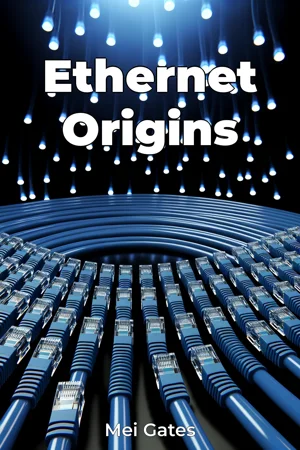
In 1973, a young engineer at Xerox PARC conceived an idea that would revolutionize how computers communicate, laying the groundwork for today's interconnected world. "Ethernet Origins" traces the development of this fundamental networking technology from its inception through its evolution into the backbone of modern digital communications. The book presents a detailed examination of three pivotal aspects of Ethernet's development: the technical challenges that drove its creation, the standardization process that enabled its widespread adoption, and its transformation from a local area network solution to a global connectivity standard. Through careful analysis of historical documents, patents, and interviews with key figures, readers gain insight into both the engineering principles and the human story behind this technological breakthrough. Beginning with the problems faced by early computer networks, the narrative explores how Bob Metcalfe and his colleagues developed the initial Ethernet concepts. The book explains the fundamental principles of packet switching, carrier sense multiple access with collision detection (CSMA/CD), and the significance of the original 2.94 Mbps data rate. These technical concepts are presented in accessible language while maintaining their scientific accuracy. The text progresses through distinct phases of Ethernet's evolution, examining how the technology moved from experimental implementations to commercial products. Readers learn about the formation of the DIX consortium (Digital, Intel, and Xerox), which established the first Ethernet specifications, and the subsequent IEEE 802.3 standardization process that helped cement Ethernet's dominance in networking. Through detailed technical illustrations and case studies, the book demonstrates how Ethernet overcame competing technologies like Token Ring and ARCNET. It explores the development of faster Ethernet variants, from 10 Mbps to today's 400 Gbps speeds, explaining the engineering challenges and solutions at each step. The work connects Ethernet's technical evolution with broader developments in computing, telecommunications, and internet technology. It examines how Ethernet's influence extends beyond traditional networking into fields such as industrial automation, automotive systems, and the Internet of Things. Written in a technical yet accessible style, the book balances engineering detail with historical context. It includes original diagrams, technical specifications, and firsthand accounts from industry pioneers, providing both theoretical understanding and practical insights into network implementation. The target audience includes networking professionals, electrical engineers, IT specialists, and technology historians. The content serves both as a technical reference and a historical account, offering value to readers interested in understanding both the how and why of network evolution. The book addresses ongoing debates about Ethernet's future role in emerging technologies, including 5G networks, cloud computing, and edge computing. It examines current standardization efforts and the challenges of maintaining backward compatibility while pushing performance boundaries. While focusing primarily on the technical and historical aspects of Ethernet, the book also considers its economic impact, examining how the technology's open standards and scalability contributed to the growth of the global internet economy. It concludes by exploring current developments in Ethernet technology and its potential future applications, from industrial automation to smart cities. This comprehensive examination of Ethernet's origins and evolution provides readers with both theoretical knowledge and practical understanding of the technology that connects our digital world, making it an essential resource for anyone interested in network technology or the history of computing.
In 1973, a young engineer at Xerox PARC conceived an idea that would revolutionize how computers communicate, laying the groundwork for today's interconnected world. "Ethernet Origins" traces the development of this fundamental networking technology from its inception through its evolution into the backbone of modern digital communications. The book presents a detailed examination of three pivotal aspects of Ethernet's development: the technical challenges that drove its creation, the standardization process that enabled its widespread adoption, and its transformation from a local area network solution to a global connectivity standard. Through careful analysis of historical documents, patents, and interviews with key figures, readers gain insight into both the engineering principles and the human story behind this technological breakthrough. Beginning with the problems faced by early computer networks, the narrative explores how Bob Metcalfe and his colleagues developed the initial Ethernet concepts. The book explains the fundamental principles of packet switching, carrier sense multiple access with collision detection (CSMA/CD), and the significance of the original 2.94 Mbps data rate. These technical concepts are presented in accessible language while maintaining their scientific accuracy. The text progresses through distinct phases of Ethernet's evolution, examining how the technology moved from experimental implementations to commercial products. Readers learn about the formation of the DIX consortium (Digital, Intel, and Xerox), which established the first Ethernet specifications, and the subsequent IEEE 802.3 standardization process that helped cement Ethernet's dominance in networking. Through detailed technical illustrations and case studies, the book demonstrates how Ethernet overcame competing technologies like Token Ring and ARCNET. It explores the development of faster Ethernet variants, from 10 Mbps to today's 400 Gbps speeds, explaining the engineering challenges and solutions at each step. The work connects Ethernet's technical evolution with broader developments in computing, telecommunications, and internet technology. It examines how Ethernet's influence extends beyond traditional networking into fields such as industrial automation, automotive systems, and the Internet of Things. Written in a technical yet accessible style, the book balances engineering detail with historical context. It includes original diagrams, technical specifications, and firsthand accounts from industry pioneers, providing both theoretical understanding and practical insights into network implementation. The target audience includes networking professionals, electrical engineers, IT specialists, and technology historians. The content serves both as a technical reference and a historical account, offering value to readers interested in understanding both the how and why of network evolution. The book addresses ongoing debates about Ethernet's future role in emerging technologies, including 5G networks, cloud computing, and edge computing. It examines current standardization efforts and the challenges of maintaining backward compatibility while pushing performance boundaries. While focusing primarily on the technical and historical aspects of Ethernet, the book also considers its economic impact, examining how the technology's open standards and scalability contributed to the growth of the global internet economy. It concludes by exploring current developments in Ethernet technology and its potential future applications, from industrial automation to smart cities. This comprehensive examination of Ethernet's origins and evolution provides readers with both theoretical knowledge and practical understanding of the technology that connects our digital world, making it an essential resource for anyone interested in network technology or the history of computing.
"Ethernet Origins" chronicles the remarkable journey of one of computing's most influential innovations, beginning with Bob Metcalfe's groundbreaking work at Xerox PARC in 1973. This comprehensive exploration reveals how a solution for local computer communication evolved into the global standard for digital connectivity, examining both the technical innovations and human ingenuity that drove its development. The book skillfully navigates through Ethernet's evolution, from its initial 2.94 Mbps data rate to today's lightning-fast 400 Gbps speeds. It demystifies complex concepts like packet switching and CSMA/CD protocols while highlighting pivotal moments in networking history, such as the formation of the DIX consortium and the IEEE 802.3 standardization process. Through a blend of technical illustrations, case studies, and firsthand accounts from industry pioneers, readers gain deep insights into how Ethernet overcame competing technologies to become the backbone of modern digital communications. Moving beyond pure technical analysis, the narrative examines Ethernet's broader impact on computing and telecommunications, including its role in emerging technologies like 5G networks and cloud computing. The book maintains an accessible approach while delving into engineering principles, making it invaluable for both networking professionals and technology enthusiasts seeking to understand the foundation of our interconnected world.
Book Details
ISBN
9788233959067
Publisher
Publifye AS
Your Licenses
You don't own any licenses for this book
Purchase a license below to unlock this book and download the EPUB.
Purchase License
Select a tier to unlock this book
Need bulk licensing?
Contact us for enterprise agreements.