
About This Book
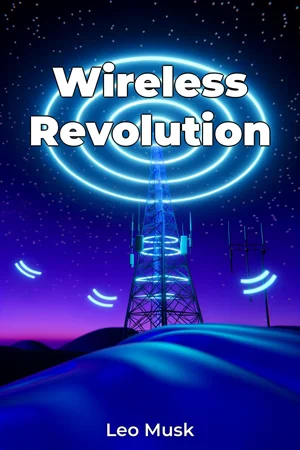
"Wireless Revolution" begins with a pivotal moment in 1895 when Guglielmo Marconi transmitted the first radio signal across his family's estate in Italy, marking the dawn of wireless communication. This comprehensive examination traces how that initial breakthrough evolved into the complex web of wireless technologies that now connects billions of devices worldwide. The book presents three fundamental technological waves that transformed human communication: radio transmission, cellular networks, and short-range wireless protocols. Through detailed technical analysis and historical context, it demonstrates how each wave built upon previous innovations while introducing new capabilities and challenges. The narrative follows a chronological progression, beginning with the physics of electromagnetic waves and Maxwell's equations that laid the theoretical foundation for wireless communication. Readers gain insight into how early pioneers converted these mathematical principles into practical applications, leading to the first radio broadcasts in the early 1900s. Moving through the 20th century, the book examines the development of military communication systems during World War II, which later influenced civilian applications. The emergence of cellular technology in the 1970s represents a crucial turning point, with detailed coverage of the transition from analog to digital systems and the subsequent generations of mobile networks. The final sections focus on modern short-range wireless technologies, particularly Bluetooth and Wi-Fi, explaining their technical protocols, security considerations, and impact on device connectivity. The book provides specific examples of how these technologies enable everything from wireless headphones to smart home systems. Supporting its analysis with technical diagrams, patent documentation, and industry standards, "Wireless Revolution" draws from both historical records and current engineering specifications. The research incorporates interviews with key industry figures and access to corporate archives from major telecommunications companies. The work connects electrical engineering principles with computer science, showing how advances in processing power and miniaturization enabled increasingly sophisticated wireless systems. It also explores the intersection with regulatory policy, examining how international standards and frequency allocation shaped technological development. Written in a technical yet accessible style, the book balances engineering details with practical explanations. While it includes necessary mathematical concepts, these are presented with clear explanations and real-world applications, making the content accessible to both engineering professionals and informed general readers. The target audience includes electrical engineering students, telecommunications professionals, and technology enthusiasts seeking a deeper understanding of wireless communication systems. The book serves as both a historical reference and a technical guide to current wireless technologies. Particular attention is given to emerging challenges in wireless communication, including spectrum management, energy efficiency, and the increasing demand for bandwidth. The book addresses ongoing debates about 5G implementation, electromagnetic radiation safety, and the future of wireless protocols. The scope encompasses both theoretical foundations and practical implementations, though it intentionally limits detailed coverage of satellite communications and optical wireless systems to maintain focus on terrestrial radio-frequency communications. This work provides readers with the technical background to understand current wireless technologies while offering insights into future developments in the field. It concludes by examining emerging trends in wireless communication, including the Internet of Things, machine-to-machine communication, and the potential impact of quantum communication systems.
"Wireless Revolution" begins with a pivotal moment in 1895 when Guglielmo Marconi transmitted the first radio signal across his family's estate in Italy, marking the dawn of wireless communication. This comprehensive examination traces how that initial breakthrough evolved into the complex web of wireless technologies that now connects billions of devices worldwide. The book presents three fundamental technological waves that transformed human communication: radio transmission, cellular networks, and short-range wireless protocols. Through detailed technical analysis and historical context, it demonstrates how each wave built upon previous innovations while introducing new capabilities and challenges. The narrative follows a chronological progression, beginning with the physics of electromagnetic waves and Maxwell's equations that laid the theoretical foundation for wireless communication. Readers gain insight into how early pioneers converted these mathematical principles into practical applications, leading to the first radio broadcasts in the early 1900s. Moving through the 20th century, the book examines the development of military communication systems during World War II, which later influenced civilian applications. The emergence of cellular technology in the 1970s represents a crucial turning point, with detailed coverage of the transition from analog to digital systems and the subsequent generations of mobile networks. The final sections focus on modern short-range wireless technologies, particularly Bluetooth and Wi-Fi, explaining their technical protocols, security considerations, and impact on device connectivity. The book provides specific examples of how these technologies enable everything from wireless headphones to smart home systems. Supporting its analysis with technical diagrams, patent documentation, and industry standards, "Wireless Revolution" draws from both historical records and current engineering specifications. The research incorporates interviews with key industry figures and access to corporate archives from major telecommunications companies. The work connects electrical engineering principles with computer science, showing how advances in processing power and miniaturization enabled increasingly sophisticated wireless systems. It also explores the intersection with regulatory policy, examining how international standards and frequency allocation shaped technological development. Written in a technical yet accessible style, the book balances engineering details with practical explanations. While it includes necessary mathematical concepts, these are presented with clear explanations and real-world applications, making the content accessible to both engineering professionals and informed general readers. The target audience includes electrical engineering students, telecommunications professionals, and technology enthusiasts seeking a deeper understanding of wireless communication systems. The book serves as both a historical reference and a technical guide to current wireless technologies. Particular attention is given to emerging challenges in wireless communication, including spectrum management, energy efficiency, and the increasing demand for bandwidth. The book addresses ongoing debates about 5G implementation, electromagnetic radiation safety, and the future of wireless protocols. The scope encompasses both theoretical foundations and practical implementations, though it intentionally limits detailed coverage of satellite communications and optical wireless systems to maintain focus on terrestrial radio-frequency communications. This work provides readers with the technical background to understand current wireless technologies while offering insights into future developments in the field. It concludes by examining emerging trends in wireless communication, including the Internet of Things, machine-to-machine communication, and the potential impact of quantum communication systems.
"Wireless Revolution" masterfully chronicles the transformative journey of wireless communication, from Guglielmo Marconi's groundbreaking 1895 radio signal to today's interconnected world of 5G networks and smart devices. The book identifies three pivotal waves of wireless innovation: radio transmission, cellular networks, and short-range wireless protocols, examining how each breakthrough built upon previous developments while introducing new capabilities and challenges. Through a blend of technical analysis and historical narrative, the book explores the fundamental physics of electromagnetic waves and their practical applications in telecommunications. Readers follow the evolution from early radio broadcasts through the military communications of World War II to the revolutionary emergence of cellular technology in the 1970s. The text skillfully balances engineering principles with accessible explanations, using real-world examples to illustrate complex concepts in wireless protocols, security systems, and network architecture. What sets this book apart is its comprehensive approach to connecting electrical engineering fundamentals with modern applications, supported by technical diagrams, patent documentation, and industry insights. While maintaining technical accuracy, it presents information in a way that appeals to both engineering professionals and technology enthusiasts. The progression from basic principles to advanced concepts like 5G technology and the Internet of Things provides readers with a thorough understanding of both the historical context and future possibilities in wireless communication.
Book Details
ISBN
9788233959043
Publisher
Publifye AS
Your Licenses
You don't own any licenses for this book
Purchase a license below to unlock this book and download the EPUB.
Purchase License
Select a tier to unlock this book
Need bulk licensing?
Contact us for enterprise agreements.