
About This Book
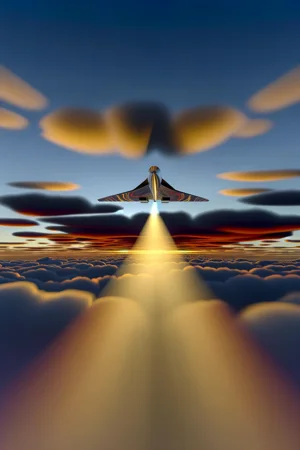
"Plane Revolution" traces the pivotal technological leaps that transformed human flight from a seemingly impossible dream into a cornerstone of modern civilization. Beginning with the Wright brothers' first controlled flight at Kitty Hawk in 1903, the book examines how aviation evolved from wooden frames and fabric to supersonic aircraft capable of breaking the sound barrier. This comprehensive examination of aviation history is structured chronologically across three major epochs: the pioneering era (1903-1945), the jet age (1945-1969), and the supersonic period (1969-present). Through detailed technical analysis and historical documentation, the book demonstrates how each advancement in aeronautical engineering shaped not only transportation but also warfare, commerce, and global connectivity. The narrative delves into the fundamental principles of aerodynamics and aircraft design, explaining how early aviators like Glenn Curtiss and Anthony Fokker refined the Wright brothers' initial concepts. Readers gain insight into the critical role of World War I in accelerating aviation development, as military necessity drove rapid improvements in aircraft performance and reliability. The book's core argument centers on how aviation represents one of humanity's most significant technological achievements, fundamentally altering the pace of human interaction and commerce. This thesis is supported by extensive technical documentation, patent records, engineering drawings, and firsthand accounts from aviation pioneers. Particular attention is given to the transition from propeller-driven aircraft to jet engines, with detailed analysis of Frank Whittle's and Hans von Ohain's parallel development of jet propulsion. The text examines how this revolutionary technology enabled higher altitudes, greater speeds, and improved fuel efficiency, making mass air travel economically viable. The development of supersonic flight receives thorough treatment, including the engineering challenges of breaking the sound barrier, the creation of the Concorde, and the complex interplay between technological capability and commercial viability. The book incorporates wind tunnel data, flight test records, and engineering specifications to illustrate the technical hurdles overcome in achieving supersonic flight. Interdisciplinary connections are drawn between aviation development and materials science, highlighting how advances in metallurgy and later composite materials enabled aircraft to become faster, lighter, and more fuel-efficient. The text also explores the economic impact of aviation, discussing how air travel catalyzed globalization and international trade. Written in a technical yet accessible style, the book balances detailed engineering concepts with historical context and human interest. While primarily targeted at engineering students, aviation enthusiasts, and historians, the content remains accessible to general readers interested in technological development. The scope encompasses both military and civilian aviation developments, though it focuses primarily on fixed-wing aircraft, acknowledging that rotary-wing aviation deserves its own dedicated study. The book addresses ongoing debates about aviation's environmental impact and the future of supersonic commercial travel, presenting current research on noise reduction and fuel efficiency improvements. Through careful analysis of historical documents, technical specifications, and engineering principles, "Plane Revolution" provides readers with a thorough understanding of how aviation progressed from basic wooden aircraft to modern supersonic jets, and how this transformation continues to influence contemporary transportation and technology.
"Plane Revolution" traces the pivotal technological leaps that transformed human flight from a seemingly impossible dream into a cornerstone of modern civilization. Beginning with the Wright brothers' first controlled flight at Kitty Hawk in 1903, the book examines how aviation evolved from wooden frames and fabric to supersonic aircraft capable of breaking the sound barrier. This comprehensive examination of aviation history is structured chronologically across three major epochs: the pioneering era (1903-1945), the jet age (1945-1969), and the supersonic period (1969-present). Through detailed technical analysis and historical documentation, the book demonstrates how each advancement in aeronautical engineering shaped not only transportation but also warfare, commerce, and global connectivity. The narrative delves into the fundamental principles of aerodynamics and aircraft design, explaining how early aviators like Glenn Curtiss and Anthony Fokker refined the Wright brothers' initial concepts. Readers gain insight into the critical role of World War I in accelerating aviation development, as military necessity drove rapid improvements in aircraft performance and reliability. The book's core argument centers on how aviation represents one of humanity's most significant technological achievements, fundamentally altering the pace of human interaction and commerce. This thesis is supported by extensive technical documentation, patent records, engineering drawings, and firsthand accounts from aviation pioneers. Particular attention is given to the transition from propeller-driven aircraft to jet engines, with detailed analysis of Frank Whittle's and Hans von Ohain's parallel development of jet propulsion. The text examines how this revolutionary technology enabled higher altitudes, greater speeds, and improved fuel efficiency, making mass air travel economically viable. The development of supersonic flight receives thorough treatment, including the engineering challenges of breaking the sound barrier, the creation of the Concorde, and the complex interplay between technological capability and commercial viability. The book incorporates wind tunnel data, flight test records, and engineering specifications to illustrate the technical hurdles overcome in achieving supersonic flight. Interdisciplinary connections are drawn between aviation development and materials science, highlighting how advances in metallurgy and later composite materials enabled aircraft to become faster, lighter, and more fuel-efficient. The text also explores the economic impact of aviation, discussing how air travel catalyzed globalization and international trade. Written in a technical yet accessible style, the book balances detailed engineering concepts with historical context and human interest. While primarily targeted at engineering students, aviation enthusiasts, and historians, the content remains accessible to general readers interested in technological development. The scope encompasses both military and civilian aviation developments, though it focuses primarily on fixed-wing aircraft, acknowledging that rotary-wing aviation deserves its own dedicated study. The book addresses ongoing debates about aviation's environmental impact and the future of supersonic commercial travel, presenting current research on noise reduction and fuel efficiency improvements. Through careful analysis of historical documents, technical specifications, and engineering principles, "Plane Revolution" provides readers with a thorough understanding of how aviation progressed from basic wooden aircraft to modern supersonic jets, and how this transformation continues to influence contemporary transportation and technology.
"Plane Revolution" presents a comprehensive journey through the remarkable transformation of human flight, from the Wright brothers' historic Kitty Hawk flight to modern supersonic aircraft. This engaging narrative examines three distinct epochs in aviation history: the pioneering era (1903-1945), the jet age (1945-1969), and the supersonic period (1969-present), demonstrating how each phase revolutionized transportation, warfare, and global connectivity. The book masterfully weaves together technical engineering principles with compelling historical context, exploring how pivotal innovations like Frank Whittle's jet engine development and breakthrough achievements in aerodynamics shaped modern aviation. Through detailed analysis of wind tunnel data, flight test records, and engineering specifications, readers gain insight into the complex challenges overcome in achieving supersonic flight and the development of iconic aircraft like the Concorde. What sets this work apart is its interdisciplinary approach, connecting aviation development with advances in materials science and economic impact. While maintaining technical accuracy, the book remains accessible to both engineering professionals and aviation enthusiasts, offering clear explanations of complex concepts supported by historical documentation and firsthand accounts from aviation pioneers. The narrative progresses logically through technological milestones while examining the broader implications of each advancement, from military applications to commercial air travel's role in globalization.
Book Details
ISBN
9788233959029
Publisher
Publifye AS
Your Licenses
You don't own any licenses for this book
Purchase a license below to unlock this book and download the EPUB.
Purchase License
Select a tier to unlock this book
Need bulk licensing?
Contact us for enterprise agreements.