
About This Book
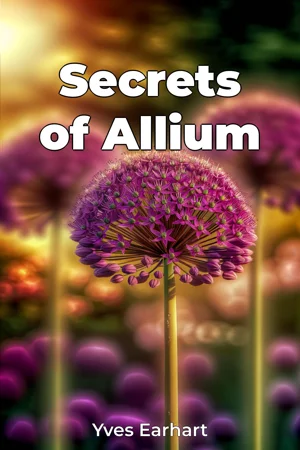
"Secrets of Allium" unveils the captivating world of ornamental alliums, tracing their journey from wild Asian steppes to cultivated gardens across continents. These architectural plants, with their perfectly spherical flower heads held aloft on sturdy stems, represent one of horticulture's most significant success stories. The book presents three main sections that comprehensively explore these remarkable members of the onion family. The first delves into their botanical heritage, documenting the natural evolution of over 750 species, from the modest wild varieties to the imposing giants that now grace modern gardens. Through detailed botanical illustrations and photographs, readers discover the genetic diversity that has enabled alliums to adapt to various climates and conditions. The second section examines the historical significance of alliums in human culture, from their early medicinal uses in Central Asia to their emergence as prestigious ornamental plants in European royal gardens during the 17th century. The book draws on archaeological findings, historical documents, and botanical records to piece together the fascinating story of how these plants captured the attention of botanists and gardeners worldwide. The final section provides practical guidance for contemporary gardeners, incorporating recent horticultural research and cultivation techniques. It addresses soil requirements, planting depths, companion planting strategies, and solutions to common growing challenges. The book includes detailed profiles of 50 notable varieties, complete with growth characteristics and optimal growing conditions. Supporting these main themes, the work presents findings from recent botanical studies, including breakthrough research on allium genetics and hybridization. It features contributions from leading horticulturists and botanical gardens, offering insights into successful cultivation practices across different climate zones. The book makes important connections to landscape design, sustainable gardening, and biodiversity conservation. It demonstrates how alliums support pollinator populations and contribute to eco-friendly garden practices, while their architectural forms provide valuable design elements in contemporary landscaping. Written in an informative yet accessible style, the text combines scientific accuracy with practical application. Detailed botanical terminology is carefully explained, making complex concepts understandable for both amateur gardeners and horticultural professionals. The target audience includes serious gardeners, landscape designers, and botanical enthusiasts seeking in-depth knowledge about these versatile plants. The book serves as both a comprehensive reference guide and a practical manual for growing alliums successfully. Modern debates about native versus non-native plant species are addressed, with the book presenting balanced perspectives on responsible cultivation and garden biodiversity. It explores current challenges in allium breeding and conservation, including efforts to preserve wild species in their native habitats. The scope encompasses both widely available commercial varieties and rare species, providing insights into ongoing conservation efforts and future breeding potential. While focusing primarily on ornamental varieties, the book acknowledges the broader Allium genus, including culinary species, to provide complete context. Readers will find practical applications throughout, from design principles for incorporating alliums into various garden styles to specific maintenance schedules and propagation techniques. The work concludes with a forward-looking chapter on emerging trends in allium breeding and their potential impact on future garden designs.
"Secrets of Allium" unveils the captivating world of ornamental alliums, tracing their journey from wild Asian steppes to cultivated gardens across continents. These architectural plants, with their perfectly spherical flower heads held aloft on sturdy stems, represent one of horticulture's most significant success stories. The book presents three main sections that comprehensively explore these remarkable members of the onion family. The first delves into their botanical heritage, documenting the natural evolution of over 750 species, from the modest wild varieties to the imposing giants that now grace modern gardens. Through detailed botanical illustrations and photographs, readers discover the genetic diversity that has enabled alliums to adapt to various climates and conditions. The second section examines the historical significance of alliums in human culture, from their early medicinal uses in Central Asia to their emergence as prestigious ornamental plants in European royal gardens during the 17th century. The book draws on archaeological findings, historical documents, and botanical records to piece together the fascinating story of how these plants captured the attention of botanists and gardeners worldwide. The final section provides practical guidance for contemporary gardeners, incorporating recent horticultural research and cultivation techniques. It addresses soil requirements, planting depths, companion planting strategies, and solutions to common growing challenges. The book includes detailed profiles of 50 notable varieties, complete with growth characteristics and optimal growing conditions. Supporting these main themes, the work presents findings from recent botanical studies, including breakthrough research on allium genetics and hybridization. It features contributions from leading horticulturists and botanical gardens, offering insights into successful cultivation practices across different climate zones. The book makes important connections to landscape design, sustainable gardening, and biodiversity conservation. It demonstrates how alliums support pollinator populations and contribute to eco-friendly garden practices, while their architectural forms provide valuable design elements in contemporary landscaping. Written in an informative yet accessible style, the text combines scientific accuracy with practical application. Detailed botanical terminology is carefully explained, making complex concepts understandable for both amateur gardeners and horticultural professionals. The target audience includes serious gardeners, landscape designers, and botanical enthusiasts seeking in-depth knowledge about these versatile plants. The book serves as both a comprehensive reference guide and a practical manual for growing alliums successfully. Modern debates about native versus non-native plant species are addressed, with the book presenting balanced perspectives on responsible cultivation and garden biodiversity. It explores current challenges in allium breeding and conservation, including efforts to preserve wild species in their native habitats. The scope encompasses both widely available commercial varieties and rare species, providing insights into ongoing conservation efforts and future breeding potential. While focusing primarily on ornamental varieties, the book acknowledges the broader Allium genus, including culinary species, to provide complete context. Readers will find practical applications throughout, from design principles for incorporating alliums into various garden styles to specific maintenance schedules and propagation techniques. The work concludes with a forward-looking chapter on emerging trends in allium breeding and their potential impact on future garden designs.
"Secrets of Allium" presents a comprehensive exploration of ornamental alliums, charting their remarkable transformation from humble wildflowers of Asian steppes to striking garden showstoppers. The book skillfully weaves together botanical science, historical narrative, and practical gardening wisdom, offering readers an unprecedented look into these architectural plants known for their perfectly spherical flower heads and sturdy stems. Through three distinct sections, the book first uncovers the botanical heritage of over 750 allium species, showcasing their incredible genetic diversity through detailed illustrations and photographs. The historical journey reveals fascinating insights, including their prestigious status in 17th-century European royal gardens and their ancient medicinal uses in Central Asia. The final section transforms scientific knowledge into practical application, featuring detailed profiles of 50 notable varieties and expert guidance on cultivation techniques, from soil requirements to companion planting strategies. What sets this work apart is its balanced approach to both scientific depth and practical utility, making complex botanical concepts accessible to gardeners of all levels. The book addresses contemporary gardening challenges while emphasizing the vital role of alliums in supporting pollinators and promoting biodiversity. For landscape designers, gardening enthusiasts, and botanical professionals alike, it serves as both an authoritative reference and a practical manual, incorporating recent research findings and sustainable gardening practices throughout its pages.
Book Details
ISBN
9788233958954
Publisher
Publifye AS
Your Licenses
You don't own any licenses for this book
Purchase a license below to unlock this book and download the EPUB.
Purchase License
Select a tier to unlock this book
Need bulk licensing?
Contact us for enterprise agreements.