
About This Book
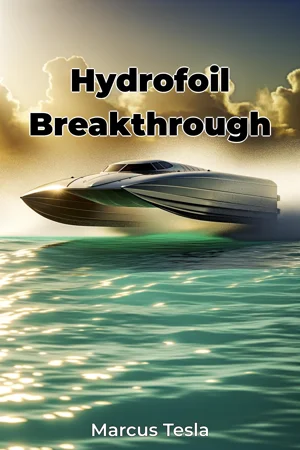
"Hydrofoil Breakthrough" reveals how a relatively simple principle of fluid dynamics revolutionized maritime transportation and continues to shape the future of water-based travel. This comprehensive exploration of hydrofoil technology examines the engineering principles, practical applications, and evolving innovations that enable vessels to achieve remarkable speeds while maintaining stability and efficiency. The book begins with a fundamental explanation of hydrofoil physics, demonstrating how these wing-like structures generate lift beneath the water's surface, effectively raising a vessel's hull above the waves. This reduction in drag and water resistance allows craft to achieve speeds previously thought impossible, while consuming less fuel than conventional hull designs. Through detailed technical analysis and historical perspective, readers learn about the three primary components that make hydrofoil systems work: the strut design that connects the foil to the vessel, the control systems that maintain stability, and the foil configurations that determine performance characteristics. The author presents extensive research data from naval engineering studies, commercial applications, and racing developments to support the technical discussions. The narrative traces hydrofoil development from Alexander Graham Bell's early experiments to modern military vessels and commercial ferries, examining how each iteration solved specific challenges in design and control systems. Particular attention is given to breakthrough moments in computational fluid dynamics that enabled more precise foil designs and automated stability systems. Practical applications form a central theme throughout the book, with detailed case studies of successful implementations in passenger ferries, military craft, and recreational vessels. These examples illustrate how hydrofoil technology addresses specific maritime challenges, from rough-water performance to fuel efficiency and passenger comfort. The text connects hydrofoil engineering to broader fields, including aerospace engineering (through shared principles of lift and fluid dynamics), materials science (in the development of corrosion-resistant and lightweight materials), and environmental science (through reduced wake impact and improved fuel efficiency). These interdisciplinary links provide context for understanding how advances in one field often catalyze improvements in others. The book's technical content is presented in a structured, accessible manner, making complex engineering concepts understandable to readers with basic scientific knowledge. Detailed diagrams, computational models, and performance data support the technical discussions without overwhelming the reader. Intended for engineering professionals, maritime enthusiasts, and students of naval architecture, the book provides both theoretical foundations and practical insights. It serves as both a technical reference and a guide to the future of maritime transportation. While focusing primarily on current technology and near-future developments, the book acknowledges ongoing challenges in hydrofoil design, including cavitation at high speeds, mechanical complexity, and maintenance requirements. These limitations are presented alongside potential solutions being developed by researchers and engineers. The final chapters examine emerging trends in hydrofoil technology, including hybrid systems that combine traditional hull designs with retractable foils, autonomous control systems, and applications in renewable energy. These developments suggest new possibilities for both commercial and recreational maritime applications. The book maintains a balanced perspective, acknowledging both the benefits and limitations of hydrofoil technology while providing readers with the technical understanding needed to evaluate future developments in this field. This comprehensive treatment of hydrofoil technology serves as both an educational resource and a practical guide for those interested in the future of maritime transportation.
"Hydrofoil Breakthrough" reveals how a relatively simple principle of fluid dynamics revolutionized maritime transportation and continues to shape the future of water-based travel. This comprehensive exploration of hydrofoil technology examines the engineering principles, practical applications, and evolving innovations that enable vessels to achieve remarkable speeds while maintaining stability and efficiency. The book begins with a fundamental explanation of hydrofoil physics, demonstrating how these wing-like structures generate lift beneath the water's surface, effectively raising a vessel's hull above the waves. This reduction in drag and water resistance allows craft to achieve speeds previously thought impossible, while consuming less fuel than conventional hull designs. Through detailed technical analysis and historical perspective, readers learn about the three primary components that make hydrofoil systems work: the strut design that connects the foil to the vessel, the control systems that maintain stability, and the foil configurations that determine performance characteristics. The author presents extensive research data from naval engineering studies, commercial applications, and racing developments to support the technical discussions. The narrative traces hydrofoil development from Alexander Graham Bell's early experiments to modern military vessels and commercial ferries, examining how each iteration solved specific challenges in design and control systems. Particular attention is given to breakthrough moments in computational fluid dynamics that enabled more precise foil designs and automated stability systems. Practical applications form a central theme throughout the book, with detailed case studies of successful implementations in passenger ferries, military craft, and recreational vessels. These examples illustrate how hydrofoil technology addresses specific maritime challenges, from rough-water performance to fuel efficiency and passenger comfort. The text connects hydrofoil engineering to broader fields, including aerospace engineering (through shared principles of lift and fluid dynamics), materials science (in the development of corrosion-resistant and lightweight materials), and environmental science (through reduced wake impact and improved fuel efficiency). These interdisciplinary links provide context for understanding how advances in one field often catalyze improvements in others. The book's technical content is presented in a structured, accessible manner, making complex engineering concepts understandable to readers with basic scientific knowledge. Detailed diagrams, computational models, and performance data support the technical discussions without overwhelming the reader. Intended for engineering professionals, maritime enthusiasts, and students of naval architecture, the book provides both theoretical foundations and practical insights. It serves as both a technical reference and a guide to the future of maritime transportation. While focusing primarily on current technology and near-future developments, the book acknowledges ongoing challenges in hydrofoil design, including cavitation at high speeds, mechanical complexity, and maintenance requirements. These limitations are presented alongside potential solutions being developed by researchers and engineers. The final chapters examine emerging trends in hydrofoil technology, including hybrid systems that combine traditional hull designs with retractable foils, autonomous control systems, and applications in renewable energy. These developments suggest new possibilities for both commercial and recreational maritime applications. The book maintains a balanced perspective, acknowledging both the benefits and limitations of hydrofoil technology while providing readers with the technical understanding needed to evaluate future developments in this field. This comprehensive treatment of hydrofoil technology serves as both an educational resource and a practical guide for those interested in the future of maritime transportation.
"Hydrofoil Breakthrough" presents a fascinating exploration of how wing-like structures beneath watercraft revolutionized maritime transportation through the principles of fluid dynamics. The book demystifies the core concept - how hydrofoils generate lift to raise vessel hulls above water, dramatically reducing drag and enabling unprecedented speeds while improving fuel efficiency. Through a blend of historical perspective and technical analysis, readers discover the three crucial components of hydrofoil systems: strut design, control systems, and foil configurations. The narrative traces an engaging journey from Alexander Graham Bell's initial experiments to modern applications in military vessels and commercial ferries. Particular attention is given to pivotal developments in computational fluid dynamics that enabled more sophisticated designs and automated stability systems. The author presents complex engineering concepts in an accessible manner, supported by real-world examples from passenger ferries, military craft, and recreational vessels. Moving beyond pure engineering, the book connects hydrofoil technology to broader fields including aerospace engineering and environmental science, highlighting the interconnected nature of technological advancement. The text progresses logically from fundamental principles to practical applications, emerging trends, and future possibilities, including hybrid systems and autonomous controls. This comprehensive approach makes it an invaluable resource for both engineering professionals and maritime enthusiasts seeking to understand the technology shaping the future of water transportation.
Book Details
ISBN
9788233958886
Publisher
Publifye AS
Your Licenses
You don't own any licenses for this book
Purchase a license below to unlock this book and download the EPUB.
Purchase License
Select a tier to unlock this book
Need bulk licensing?
Contact us for enterprise agreements.