
About This Book
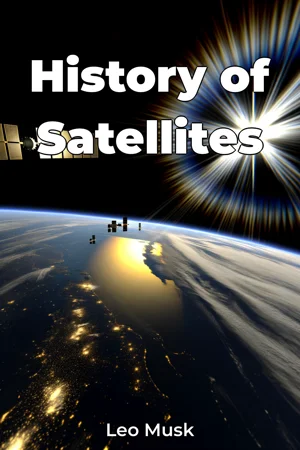
"History of Satellites" traces the technological evolution that transformed our understanding of Earth and revolutionized global connectivity. From the launch of Sputnik 1 in 1957 to today's advanced satellite networks, this comprehensive examination reveals how orbital technology reshaped modern civilization. The book presents three fundamental shifts driven by satellite technology: the democratization of global communication, the emergence of accurate weather prediction systems, and the development of Earth observation capabilities for scientific research. These advancements collectively altered how humans interact with their environment and each other. Through detailed technical analysis and historical documentation, the text explores the initial Space Race context that spurred satellite development, followed by the rapid commercialization and scientific applications that emerged. Each chapter builds upon this foundation, examining how satellites evolved from experimental projects to essential infrastructure supporting daily life. The first section focuses on communication satellites, detailing the transition from early experimental systems to current high-throughput satellites enabling internet connectivity, television broadcasting, and mobile phone networks. The text examines key technological breakthroughs, including the development of geosynchronous orbits and digital signal processing. Weather forecasting capabilities are analyzed in the second section, explaining how satellite-based meteorological systems revolutionized atmospheric science. The book details the integration of various sensing technologies, from infrared imaging to microwave sounding, showing how these tools enable accurate weather prediction and climate monitoring. The final section examines satellites' role in scientific research, covering applications in oceanography, forest management, urban planning, and climate science. The text presents specific case studies demonstrating how remote sensing data supports evidence-based decision-making across multiple disciplines. The book incorporates technical specifications, orbital mechanics principles, and real-world applications while maintaining accessibility for readers with basic scientific knowledge. It draws from NASA archives, international space agency documents, and interviews with satellite industry pioneers to provide authoritative coverage of the field. The interdisciplinary nature of satellite technology is emphasized through examples connecting aerospace engineering with environmental science, telecommunications, and data analytics. The text demonstrates how satellite applications span multiple sectors, from agriculture to disaster response. Written in a systematic, technical style appropriate for both professionals and interested general readers, the book provides clear explanations of complex concepts without oversimplification. It serves as a valuable resource for students, researchers, and practitioners in remote sensing, telecommunications, and environmental science. The content addresses current debates in satellite technology, including space debris management, international orbital rights, and the impact of mega-constellations on astronomical observation. These discussions provide context for ongoing developments in the field. By examining both historical developments and current applications, the book offers readers a comprehensive understanding of how satellites have become integral to modern civilization, while also exploring future possibilities in Earth observation, communication, and scientific research.
"History of Satellites" traces the technological evolution that transformed our understanding of Earth and revolutionized global connectivity. From the launch of Sputnik 1 in 1957 to today's advanced satellite networks, this comprehensive examination reveals how orbital technology reshaped modern civilization. The book presents three fundamental shifts driven by satellite technology: the democratization of global communication, the emergence of accurate weather prediction systems, and the development of Earth observation capabilities for scientific research. These advancements collectively altered how humans interact with their environment and each other. Through detailed technical analysis and historical documentation, the text explores the initial Space Race context that spurred satellite development, followed by the rapid commercialization and scientific applications that emerged. Each chapter builds upon this foundation, examining how satellites evolved from experimental projects to essential infrastructure supporting daily life. The first section focuses on communication satellites, detailing the transition from early experimental systems to current high-throughput satellites enabling internet connectivity, television broadcasting, and mobile phone networks. The text examines key technological breakthroughs, including the development of geosynchronous orbits and digital signal processing. Weather forecasting capabilities are analyzed in the second section, explaining how satellite-based meteorological systems revolutionized atmospheric science. The book details the integration of various sensing technologies, from infrared imaging to microwave sounding, showing how these tools enable accurate weather prediction and climate monitoring. The final section examines satellites' role in scientific research, covering applications in oceanography, forest management, urban planning, and climate science. The text presents specific case studies demonstrating how remote sensing data supports evidence-based decision-making across multiple disciplines. The book incorporates technical specifications, orbital mechanics principles, and real-world applications while maintaining accessibility for readers with basic scientific knowledge. It draws from NASA archives, international space agency documents, and interviews with satellite industry pioneers to provide authoritative coverage of the field. The interdisciplinary nature of satellite technology is emphasized through examples connecting aerospace engineering with environmental science, telecommunications, and data analytics. The text demonstrates how satellite applications span multiple sectors, from agriculture to disaster response. Written in a systematic, technical style appropriate for both professionals and interested general readers, the book provides clear explanations of complex concepts without oversimplification. It serves as a valuable resource for students, researchers, and practitioners in remote sensing, telecommunications, and environmental science. The content addresses current debates in satellite technology, including space debris management, international orbital rights, and the impact of mega-constellations on astronomical observation. These discussions provide context for ongoing developments in the field. By examining both historical developments and current applications, the book offers readers a comprehensive understanding of how satellites have become integral to modern civilization, while also exploring future possibilities in Earth observation, communication, and scientific research.
"History of Satellites" presents a comprehensive exploration of how orbital technology has fundamentally transformed human civilization since the launch of Sputnik 1 in 1957. The book illuminates three pivotal shifts that satellites enabled: democratized global communication, advanced weather prediction, and sophisticated Earth observation capabilities. Through a blend of technical analysis and historical documentation, it reveals how these space-based technologies evolved from experimental projects to become essential infrastructure supporting modern life. The narrative progresses systematically through three main sections, each focusing on a distinct aspect of satellite technology. Beginning with communication satellites, the book examines the evolution from early experimental systems to today's high-throughput networks that enable global internet connectivity and telecommunications. The second section delves into meteorological applications, explaining how satellite-based systems revolutionized weather forecasting and climate monitoring through various sensing technologies. The final section explores satellites' critical role in scientific research, from oceanography to urban planning. What sets this book apart is its ability to bridge technical complexity with accessibility, making it valuable for both professionals and general readers interested in space technology. Drawing from NASA archives, international space agency documents, and pioneer interviews, it provides authoritative coverage while maintaining readability. The text thoughtfully addresses contemporary challenges like space debris management and mega-constellations, while demonstrating how satellite applications continue to shape our understanding of Earth and our capacity for global connectivity.
Book Details
ISBN
9788233958848
Publisher
Publifye AS
Your Licenses
You don't own any licenses for this book
Purchase a license below to unlock this book and download the EPUB.
Purchase License
Select a tier to unlock this book
Need bulk licensing?
Contact us for enterprise agreements.