
About This Book
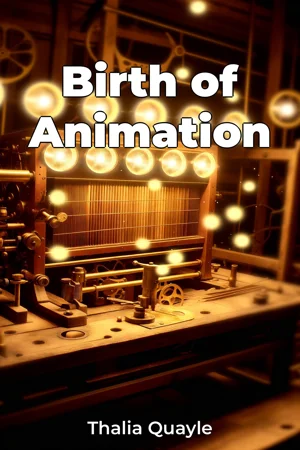
"Birth of Animation" traces the technological and artistic evolution of animation from its humble beginnings in the late 1800s to the sophisticated digital productions of the present day. Through meticulous research and industry insights, this comprehensive exploration reveals how each advancement in animation technology has shaped storytelling possibilities and visual expression. The book examines three pivotal eras that transformed animation: the hand-drawn period (1900-1960), the transitional phase (1960-1990), and the digital revolution (1990-present). Readers will discover how early pioneers like Émile Cohl and Winsor McCay established fundamental animation principles that remain relevant in today's digital studios. The text details the technical processes, from the invention of cel animation to the development of rotoscoping and the multiplane camera, showing how each innovation expanded creative boundaries. Central to the narrative is the assertion that animation's development mirrors broader technological and social changes throughout the 20th and 21st centuries. The book presents evidence through original patents, artist testimonials, studio documentation, and technical manuscripts that showcase the intricate relationship between artistic vision and technical capability. Industry veterans and animation historians contribute their expertise, offering unique perspectives on crucial developments and their impact on the medium. The content progresses chronologically, beginning with pre-cinema optical toys and ending with current real-time rendering technologies. Key chapters examine Walt Disney's contributions to industrial animation processes, the rise of international animation studios, and the computer graphics revolution that began with Pixar. The book analyzes how each era built upon previous techniques while introducing new methodologies that would reshape the industry. Drawing from multiple disciplines, the text connects animation development to advances in computer science, materials engineering, and digital imaging. It explores how mathematics and physics influence character movement and how color theory and psychology affect audience perception. The book maintains an academic foundation while remaining accessible to animation enthusiasts and industry professionals. Original interviews with contemporary animators and technical directors provide insights into modern production pipelines and workflow evolution. The text examines specific case studies of landmark animated features, analyzing their technical innovations and lasting influence on the field. Detailed illustrations and diagrams help readers understand complex concepts and historical equipment. The book addresses ongoing debates within the animation community, including the balance between artistic expression and technological efficiency, the preservation of traditional techniques, and the standardization of digital tools. It presents various perspectives on these issues while maintaining objectivity. For students, professionals, and enthusiasts of animation, film history, or digital arts, "Birth of Animation" serves as both a historical record and a technical reference. The content supports practical application through detailed explanations of animation principles and techniques that readers can incorporate into their own work. The scope encompasses major commercial studios and independent animators worldwide, though it focuses primarily on technological developments that have had lasting impact on the industry. While celebrating technological progress, the book also emphasizes the continuing importance of fundamental artistic skills in creating compelling animation.
"Birth of Animation" traces the technological and artistic evolution of animation from its humble beginnings in the late 1800s to the sophisticated digital productions of the present day. Through meticulous research and industry insights, this comprehensive exploration reveals how each advancement in animation technology has shaped storytelling possibilities and visual expression. The book examines three pivotal eras that transformed animation: the hand-drawn period (1900-1960), the transitional phase (1960-1990), and the digital revolution (1990-present). Readers will discover how early pioneers like Émile Cohl and Winsor McCay established fundamental animation principles that remain relevant in today's digital studios. The text details the technical processes, from the invention of cel animation to the development of rotoscoping and the multiplane camera, showing how each innovation expanded creative boundaries. Central to the narrative is the assertion that animation's development mirrors broader technological and social changes throughout the 20th and 21st centuries. The book presents evidence through original patents, artist testimonials, studio documentation, and technical manuscripts that showcase the intricate relationship between artistic vision and technical capability. Industry veterans and animation historians contribute their expertise, offering unique perspectives on crucial developments and their impact on the medium. The content progresses chronologically, beginning with pre-cinema optical toys and ending with current real-time rendering technologies. Key chapters examine Walt Disney's contributions to industrial animation processes, the rise of international animation studios, and the computer graphics revolution that began with Pixar. The book analyzes how each era built upon previous techniques while introducing new methodologies that would reshape the industry. Drawing from multiple disciplines, the text connects animation development to advances in computer science, materials engineering, and digital imaging. It explores how mathematics and physics influence character movement and how color theory and psychology affect audience perception. The book maintains an academic foundation while remaining accessible to animation enthusiasts and industry professionals. Original interviews with contemporary animators and technical directors provide insights into modern production pipelines and workflow evolution. The text examines specific case studies of landmark animated features, analyzing their technical innovations and lasting influence on the field. Detailed illustrations and diagrams help readers understand complex concepts and historical equipment. The book addresses ongoing debates within the animation community, including the balance between artistic expression and technological efficiency, the preservation of traditional techniques, and the standardization of digital tools. It presents various perspectives on these issues while maintaining objectivity. For students, professionals, and enthusiasts of animation, film history, or digital arts, "Birth of Animation" serves as both a historical record and a technical reference. The content supports practical application through detailed explanations of animation principles and techniques that readers can incorporate into their own work. The scope encompasses major commercial studios and independent animators worldwide, though it focuses primarily on technological developments that have had lasting impact on the industry. While celebrating technological progress, the book also emphasizes the continuing importance of fundamental artistic skills in creating compelling animation.
"Birth of Animation" presents a fascinating journey through the technological and artistic evolution of animation, from its Victorian-era origins to today's sophisticated digital productions. This comprehensive exploration divides animation history into three transformative periods: the hand-drawn era (1900-1960), the transitional phase (1960-1990), and the digital revolution (1990-present). Through meticulous research and industry insights, the book reveals how pioneering animators like Émile Cohl and Winsor McCay established fundamental principles that continue to influence modern digital studios. The narrative skillfully weaves together technical innovations and artistic developments, examining crucial breakthroughs from cel animation to real-time rendering technologies. Particular attention is given to Walt Disney's revolutionary industrial processes and Pixar's groundbreaking computer graphics achievements. The book's strength lies in its ability to connect animation development with broader technological and social changes, supported by original patents, artist testimonials, and studio documentation. What sets this work apart is its multidisciplinary approach, combining insights from computer science, materials engineering, and digital imaging while remaining accessible to both enthusiasts and professionals. Through interviews with contemporary animators and technical directors, detailed case studies, and practical explanations of animation principles, readers gain a comprehensive understanding of how each technological advancement has expanded creative possibilities in animation. The book maintains an objective stance while addressing ongoing debates about the balance between artistic expression and technological efficiency.
Book Details
ISBN
9788233958817
Publisher
Publifye AS
Your Licenses
You don't own any licenses for this book
Purchase a license below to unlock this book and download the EPUB.
Purchase License
Select a tier to unlock this book
Need bulk licensing?
Contact us for enterprise agreements.