
About This Book
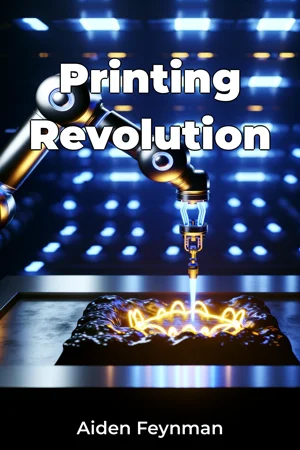
"Printing Revolution" examines how 3D printing technology has fundamentally transformed modern manufacturing, challenging traditional production methods and opening new possibilities across multiple industries. The book traces the evolution of additive manufacturing from its inception as a prototyping tool to its current status as a disruptive force in global production systems. The narrative begins with the core principles of 3D printing technology, explaining how digital designs are translated into physical objects through layer-by-layer construction. This foundation sets the stage for understanding how the technology has advanced from basic plastic modeling to working with diverse materials including metals, ceramics, and even biological tissues. Through comprehensive case studies and research data, the book explores three major transformations driven by 3D printing: the democratization of manufacturing, the revolution in medical device production, and the emergence of large-scale architectural applications. Each section draws from documented industry examples and peer-reviewed research to demonstrate how additive manufacturing overcomes traditional production limitations. The medical section delves into the creation of customized prosthetics, dental implements, and surgical guides, backed by clinical studies and patient outcomes. The architectural component examines how 3D printing addresses housing challenges through reduced construction times and lower costs, supported by data from completed projects across different continents. Industrial applications receive detailed attention, with analysis of how companies have integrated 3D printing into their production lines. The book presents comparative studies of traditional versus additive manufacturing methods, including metrics on speed, cost, material waste, and energy consumption. This data-driven approach helps readers understand the concrete advantages and current limitations of the technology. The text connects 3D printing to broader themes in sustainability, customization, and supply chain management. It examines how localized production can reduce transportation costs and environmental impact, supported by carbon footprint analyses and economic models. The book also addresses technical challenges, including material limitations, quality control, and scaling issues that currently face the industry. Written in a technical yet accessible style, the book serves both industry professionals and informed general readers. It maintains objectivity while discussing various competing technologies and approaches, acknowledging both successful applications and areas where traditional manufacturing methods remain superior. The final chapters look toward future developments, examining emerging technologies in 4D printing, bio-printing, and new materials. These sections are grounded in current research from leading institutions and industry laboratories, providing realistic assessments of both possibilities and limitations. Throughout the text, technical concepts are explained through practical examples and clear illustrations, making complex processes understandable without oversimplifying them. The book includes references to key patents, research papers, and industry standards that have shaped the field's development. "Printing Revolution" demonstrates how 3D printing has moved beyond its initial role as a prototyping tool to become a catalyst for innovation across multiple sectors. It provides readers with a comprehensive understanding of current capabilities and future potential, while maintaining a practical focus on real-world applications and limitations.
"Printing Revolution" examines how 3D printing technology has fundamentally transformed modern manufacturing, challenging traditional production methods and opening new possibilities across multiple industries. The book traces the evolution of additive manufacturing from its inception as a prototyping tool to its current status as a disruptive force in global production systems. The narrative begins with the core principles of 3D printing technology, explaining how digital designs are translated into physical objects through layer-by-layer construction. This foundation sets the stage for understanding how the technology has advanced from basic plastic modeling to working with diverse materials including metals, ceramics, and even biological tissues. Through comprehensive case studies and research data, the book explores three major transformations driven by 3D printing: the democratization of manufacturing, the revolution in medical device production, and the emergence of large-scale architectural applications. Each section draws from documented industry examples and peer-reviewed research to demonstrate how additive manufacturing overcomes traditional production limitations. The medical section delves into the creation of customized prosthetics, dental implements, and surgical guides, backed by clinical studies and patient outcomes. The architectural component examines how 3D printing addresses housing challenges through reduced construction times and lower costs, supported by data from completed projects across different continents. Industrial applications receive detailed attention, with analysis of how companies have integrated 3D printing into their production lines. The book presents comparative studies of traditional versus additive manufacturing methods, including metrics on speed, cost, material waste, and energy consumption. This data-driven approach helps readers understand the concrete advantages and current limitations of the technology. The text connects 3D printing to broader themes in sustainability, customization, and supply chain management. It examines how localized production can reduce transportation costs and environmental impact, supported by carbon footprint analyses and economic models. The book also addresses technical challenges, including material limitations, quality control, and scaling issues that currently face the industry. Written in a technical yet accessible style, the book serves both industry professionals and informed general readers. It maintains objectivity while discussing various competing technologies and approaches, acknowledging both successful applications and areas where traditional manufacturing methods remain superior. The final chapters look toward future developments, examining emerging technologies in 4D printing, bio-printing, and new materials. These sections are grounded in current research from leading institutions and industry laboratories, providing realistic assessments of both possibilities and limitations. Throughout the text, technical concepts are explained through practical examples and clear illustrations, making complex processes understandable without oversimplifying them. The book includes references to key patents, research papers, and industry standards that have shaped the field's development. "Printing Revolution" demonstrates how 3D printing has moved beyond its initial role as a prototyping tool to become a catalyst for innovation across multiple sectors. It provides readers with a comprehensive understanding of current capabilities and future potential, while maintaining a practical focus on real-world applications and limitations.
"Printing Revolution" offers a comprehensive exploration of how 3D printing has revolutionized manufacturing across industries, evolving from a simple prototyping tool into a transformative production technology. The book methodically traces the journey of additive manufacturing, demonstrating its impact through real-world applications in medical device production, architectural construction, and industrial manufacturing. Through detailed case studies and research data, readers gain insight into how this technology enables the creation of everything from customized prosthetics to large-scale building components, all while potentially reducing costs and environmental impact. The narrative skillfully weaves together technical concepts with practical applications, making complex processes accessible to both industry professionals and general readers. Notable examples include the production of personalized medical devices that have improved patient outcomes and architectural projects that have significantly reduced construction timeframes. The book's data-driven approach presents compelling comparisons between traditional and additive manufacturing methods, examining crucial metrics like production speed, material waste, and energy consumption. Moving beyond current applications, the book explores emerging developments in the field, including 4D printing and bio-printing, while maintaining a realistic perspective on both possibilities and limitations. What sets this work apart is its balanced approach to discussing competing technologies, supported by concrete examples and clear illustrations that help readers understand the practical implications of this manufacturing revolution. The exploration of sustainability and supply chain optimization adds another crucial dimension, making it particularly relevant in today's manufacturing landscape.
Book Details
ISBN
9788233958763
Publisher
Publifye AS
Your Licenses
You don't own any licenses for this book
Purchase a license below to unlock this book and download the EPUB.
Purchase License
Select a tier to unlock this book
Need bulk licensing?
Contact us for enterprise agreements.