
About This Book
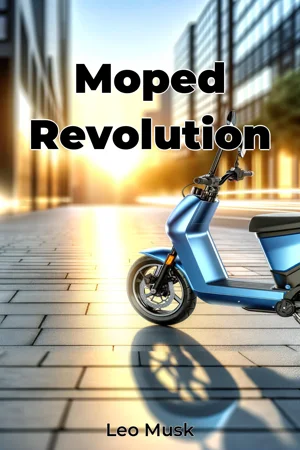
"Moped Revolution" examines how these compact motorized vehicles have transformed urban mobility and offers a comprehensive analysis of their technical evolution, social impact, and future potential in sustainable transportation. The book presents a detailed exploration of moped development from their post-World War II origins to their current role in modern transportation. Drawing from engineering data, market research, and urban planning studies, it demonstrates how mopeds have consistently adapted to changing technological capabilities and social needs. The text explains why mopeds, with their optimal balance of efficiency, affordability, and practicality, are positioned to address contemporary transportation challenges. Through three main sections, the book analyzes the technical aspects of moped design, their socioeconomic impact, and their role in future mobility solutions. The first section delves into engine efficiency, examining how modern moped designs achieve maximum performance with minimal fuel consumption. Readers learn about the engineering principles behind two-stroke and four-stroke engines, transmission systems, and the integration of new electric powertrains. The second section addresses the societal implications of moped adoption, supported by case studies from cities worldwide. It presents data on reduced traffic congestion, lower transportation costs, and decreased carbon emissions where moped use has been embraced. The research draws from transportation studies in Southeast Asian countries, where mopeds serve as primary vehicles, and European cities, where they complement public transit systems. The final section explores the future of moped technology, focusing on emerging trends in electric mobility, smart vehicle integration, and urban planning. It examines how moped designs are evolving to incorporate battery technology, regenerative braking, and connectivity features that enhance safety and user experience. The book connects mechanical engineering principles with urban planning, environmental science, and economics. It presents technical information through clear explanations and practical examples, making complex concepts accessible to both engineering professionals and general readers interested in transportation solutions. Detailed diagrams, performance charts, and real-world applications support the technical content. Written in a methodical, evidence-based style, the text maintains a balance between technical depth and practical application. It includes contributions from transportation engineers, urban planners, and environmental scientists, providing a multi-dimensional perspective on moped integration in modern cities. The target audience includes engineering students, transportation professionals, urban planners, and individuals interested in sustainable mobility solutions. The book addresses ongoing debates about urban transportation infrastructure, emissions regulations, and the role of personal vehicles in future cities. While focusing primarily on urban applications, the book acknowledges the limitations of moped transportation in certain contexts, such as long-distance travel or extreme weather conditions. It provides realistic assessments of where moped integration works best and where alternative solutions might be more appropriate. The practical applications section offers guidelines for potential moped owners, fleet managers, and city planners. It includes maintenance schedules, cost-benefit analyses, and implementation strategies for moped-sharing programs. The book concludes by examining how mopeds fit into broader transportation ecosystems, including their relationship with public transit, bicycles, and emerging mobility technologies.
"Moped Revolution" examines how these compact motorized vehicles have transformed urban mobility and offers a comprehensive analysis of their technical evolution, social impact, and future potential in sustainable transportation. The book presents a detailed exploration of moped development from their post-World War II origins to their current role in modern transportation. Drawing from engineering data, market research, and urban planning studies, it demonstrates how mopeds have consistently adapted to changing technological capabilities and social needs. The text explains why mopeds, with their optimal balance of efficiency, affordability, and practicality, are positioned to address contemporary transportation challenges. Through three main sections, the book analyzes the technical aspects of moped design, their socioeconomic impact, and their role in future mobility solutions. The first section delves into engine efficiency, examining how modern moped designs achieve maximum performance with minimal fuel consumption. Readers learn about the engineering principles behind two-stroke and four-stroke engines, transmission systems, and the integration of new electric powertrains. The second section addresses the societal implications of moped adoption, supported by case studies from cities worldwide. It presents data on reduced traffic congestion, lower transportation costs, and decreased carbon emissions where moped use has been embraced. The research draws from transportation studies in Southeast Asian countries, where mopeds serve as primary vehicles, and European cities, where they complement public transit systems. The final section explores the future of moped technology, focusing on emerging trends in electric mobility, smart vehicle integration, and urban planning. It examines how moped designs are evolving to incorporate battery technology, regenerative braking, and connectivity features that enhance safety and user experience. The book connects mechanical engineering principles with urban planning, environmental science, and economics. It presents technical information through clear explanations and practical examples, making complex concepts accessible to both engineering professionals and general readers interested in transportation solutions. Detailed diagrams, performance charts, and real-world applications support the technical content. Written in a methodical, evidence-based style, the text maintains a balance between technical depth and practical application. It includes contributions from transportation engineers, urban planners, and environmental scientists, providing a multi-dimensional perspective on moped integration in modern cities. The target audience includes engineering students, transportation professionals, urban planners, and individuals interested in sustainable mobility solutions. The book addresses ongoing debates about urban transportation infrastructure, emissions regulations, and the role of personal vehicles in future cities. While focusing primarily on urban applications, the book acknowledges the limitations of moped transportation in certain contexts, such as long-distance travel or extreme weather conditions. It provides realistic assessments of where moped integration works best and where alternative solutions might be more appropriate. The practical applications section offers guidelines for potential moped owners, fleet managers, and city planners. It includes maintenance schedules, cost-benefit analyses, and implementation strategies for moped-sharing programs. The book concludes by examining how mopeds fit into broader transportation ecosystems, including their relationship with public transit, bicycles, and emerging mobility technologies.
"Moped Revolution" presents a compelling exploration of how these compact motorized vehicles have shaped urban transportation and their potential to address modern mobility challenges. The book masterfully weaves together technical engineering principles with practical applications, examining the evolution of moped technology from post-World War II to today's advanced electric designs. Through comprehensive analysis of engine efficiency, transmission systems, and emerging electric powertrains, it demonstrates why mopeds represent an optimal balance of affordability, practicality, and sustainability in urban settings. The narrative progresses through three distinct sections, beginning with detailed technical aspects of moped engineering, including both two-stroke and four-stroke engines, before moving into real-world impact studies. Drawing from diverse case studies across Southeast Asia and Europe, the book presents convincing evidence of mopeds' positive effects on traffic congestion, transportation costs, and carbon emissions. These examples illustrate how mopeds can effectively complement existing public transit systems while providing independent mobility solutions. The final portion of the book looks toward the future, exploring cutting-edge developments in electric mobility and smart vehicle integration. It offers practical insights for various stakeholders, from individual owners to city planners, including maintenance guidelines and implementation strategies for moped-sharing programs. While acknowledging limitations in certain contexts, the book provides a balanced perspective on how mopeds fit into the broader transportation ecosystem, making it an invaluable resource for engineering professionals, urban planners, and anyone interested in sustainable urban mobility solutions.
Book Details
ISBN
9788233958725
Publisher
Publifye AS
Your Licenses
You don't own any licenses for this book
Purchase a license below to unlock this book and download the EPUB.
Purchase License
Select a tier to unlock this book
Need bulk licensing?
Contact us for enterprise agreements.