
About This Book
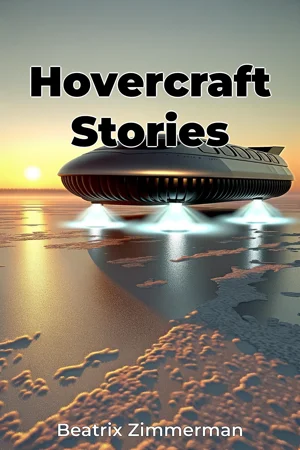
From the earliest attempts to break free from ground friction to modern military transport vessels, "Hovercraft Stories" chronicles the remarkable journey of these versatile vehicles that operate at the intersection of land, sea, and air. This comprehensive exploration delves into the fundamental principles of hovercraft engineering, tracing their development from Christopher Cockerell's initial experiments in the 1950s to contemporary applications. The book presents a detailed analysis of the core mechanisms enabling hover technology, including pressure differential systems, skirt designs, and propulsion methods that allow these craft to glide effortlessly across diverse surfaces. Through three main sections, the book examines the technical evolution, practical applications, and future prospects of hovercraft technology. The first part details the physics behind air cushion vehicles, explaining how the combination of lift fans, propulsion systems, and flexible skirts creates the characteristic hover effect. The second section explores real-world applications, from maritime search and rescue operations to arctic exploration vessels and commercial passenger transport. The final portion investigates emerging technologies and potential innovations in hover systems. The text supports its technical discussions with extensive research data, including wind tunnel testing results, performance metrics from various hovercraft models, and case studies of successful and failed designs. Engineering drawings, computational fluid dynamics simulations, and historical documentation provide readers with a thorough understanding of both theoretical principles and practical implementations. The book makes significant connections between mechanical engineering, aerodynamics, and marine technology, demonstrating how hovercraft development has influenced multiple fields. These interdisciplinary insights reveal how solutions developed for hover technology have contributed to advancements in aircraft design, maritime vessels, and land transportation systems. Written in a technical yet accessible style, the book balances detailed engineering concepts with clear explanations suitable for both professionals and interested general readers. Each chapter builds upon fundamental principles while introducing increasingly complex aspects of hovercraft design and operation. The target audience includes mechanical engineers, transportation technology professionals, and students in related fields. However, the careful explanation of technical concepts makes the material accessible to anyone interested in understanding how these vehicles function and their role in transportation history. Particular attention is given to current challenges in hovercraft engineering, including efficiency improvements, noise reduction, and environmental considerations. The book addresses ongoing debates about the role of hover technology in future transportation systems, particularly in contexts where traditional vehicles face limitations. The work maintains a focused scope on the engineering and developmental aspects of hovercrafts while acknowledging their broader impact on transportation technology. It examines specific design challenges, such as skirt durability, power-to-weight ratios, and stability control systems, providing readers with practical insights into real engineering problems and their solutions. This technical narrative is enhanced by discussions of specific applications, including military logistics, disaster response capabilities, and commercial operations. These examples demonstrate how theoretical principles translate into practical solutions for complex transportation challenges. The book concludes by examining emerging trends and potential future developments in hover technology, including hybrid systems, autonomous operation capabilities, and sustainable power solutions, positioning hovercrafts within the broader context of evolving transportation technologies.
From the earliest attempts to break free from ground friction to modern military transport vessels, "Hovercraft Stories" chronicles the remarkable journey of these versatile vehicles that operate at the intersection of land, sea, and air. This comprehensive exploration delves into the fundamental principles of hovercraft engineering, tracing their development from Christopher Cockerell's initial experiments in the 1950s to contemporary applications. The book presents a detailed analysis of the core mechanisms enabling hover technology, including pressure differential systems, skirt designs, and propulsion methods that allow these craft to glide effortlessly across diverse surfaces. Through three main sections, the book examines the technical evolution, practical applications, and future prospects of hovercraft technology. The first part details the physics behind air cushion vehicles, explaining how the combination of lift fans, propulsion systems, and flexible skirts creates the characteristic hover effect. The second section explores real-world applications, from maritime search and rescue operations to arctic exploration vessels and commercial passenger transport. The final portion investigates emerging technologies and potential innovations in hover systems. The text supports its technical discussions with extensive research data, including wind tunnel testing results, performance metrics from various hovercraft models, and case studies of successful and failed designs. Engineering drawings, computational fluid dynamics simulations, and historical documentation provide readers with a thorough understanding of both theoretical principles and practical implementations. The book makes significant connections between mechanical engineering, aerodynamics, and marine technology, demonstrating how hovercraft development has influenced multiple fields. These interdisciplinary insights reveal how solutions developed for hover technology have contributed to advancements in aircraft design, maritime vessels, and land transportation systems. Written in a technical yet accessible style, the book balances detailed engineering concepts with clear explanations suitable for both professionals and interested general readers. Each chapter builds upon fundamental principles while introducing increasingly complex aspects of hovercraft design and operation. The target audience includes mechanical engineers, transportation technology professionals, and students in related fields. However, the careful explanation of technical concepts makes the material accessible to anyone interested in understanding how these vehicles function and their role in transportation history. Particular attention is given to current challenges in hovercraft engineering, including efficiency improvements, noise reduction, and environmental considerations. The book addresses ongoing debates about the role of hover technology in future transportation systems, particularly in contexts where traditional vehicles face limitations. The work maintains a focused scope on the engineering and developmental aspects of hovercrafts while acknowledging their broader impact on transportation technology. It examines specific design challenges, such as skirt durability, power-to-weight ratios, and stability control systems, providing readers with practical insights into real engineering problems and their solutions. This technical narrative is enhanced by discussions of specific applications, including military logistics, disaster response capabilities, and commercial operations. These examples demonstrate how theoretical principles translate into practical solutions for complex transportation challenges. The book concludes by examining emerging trends and potential future developments in hover technology, including hybrid systems, autonomous operation capabilities, and sustainable power solutions, positioning hovercrafts within the broader context of evolving transportation technologies.
"Hovercraft Stories" offers a fascinating journey through the evolution and engineering marvels of air cushion vehicles, from Christopher Cockerell's groundbreaking experiments in the 1950s to modern applications. This comprehensive exploration reveals how these unique vessels operate at the intersection of land, sea, and air, utilizing sophisticated pressure differential systems and flexible skirts to achieve their characteristic hovering capability. The book progresses logically through three main sections, beginning with the fundamental physics behind hover technology, moving into real-world applications, and concluding with future developments. Readers gain deep insights into the technical aspects of hovercraft design, including lift fan mechanisms, propulsion systems, and aerodynamic principles. The text particularly shines in its analysis of practical applications, from maritime search and rescue operations to arctic exploration, demonstrating the versatility of these remarkable vehicles. What sets this book apart is its balanced approach to technical content, making complex engineering concepts accessible while maintaining scientific rigor. Through detailed case studies, engineering drawings, and computational fluid dynamics simulations, readers understand both the theoretical foundations and practical challenges of hovercraft development. The book effectively bridges the gap between pure engineering text and general interest, offering valuable insights for professionals while remaining engaging for enthusiasts interested in transportation technology and mechanical engineering.
Book Details
ISBN
9788233958633
Publisher
Publifye AS
Your Licenses
You don't own any licenses for this book
Purchase a license below to unlock this book and download the EPUB.
Purchase License
Select a tier to unlock this book
Need bulk licensing?
Contact us for enterprise agreements.